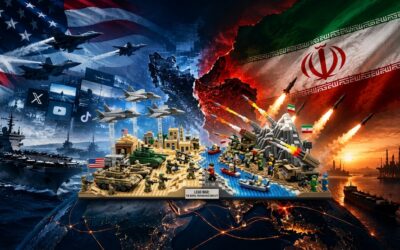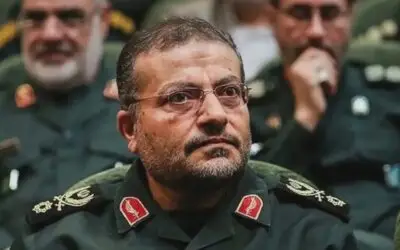





Iran’s Islamic Revolutionary Guard Corps (IRGC) issued a sweeping threat on Wednesday to shut down all remaining energy and trade corridors in the Middle East that benefit the United States and its partners.
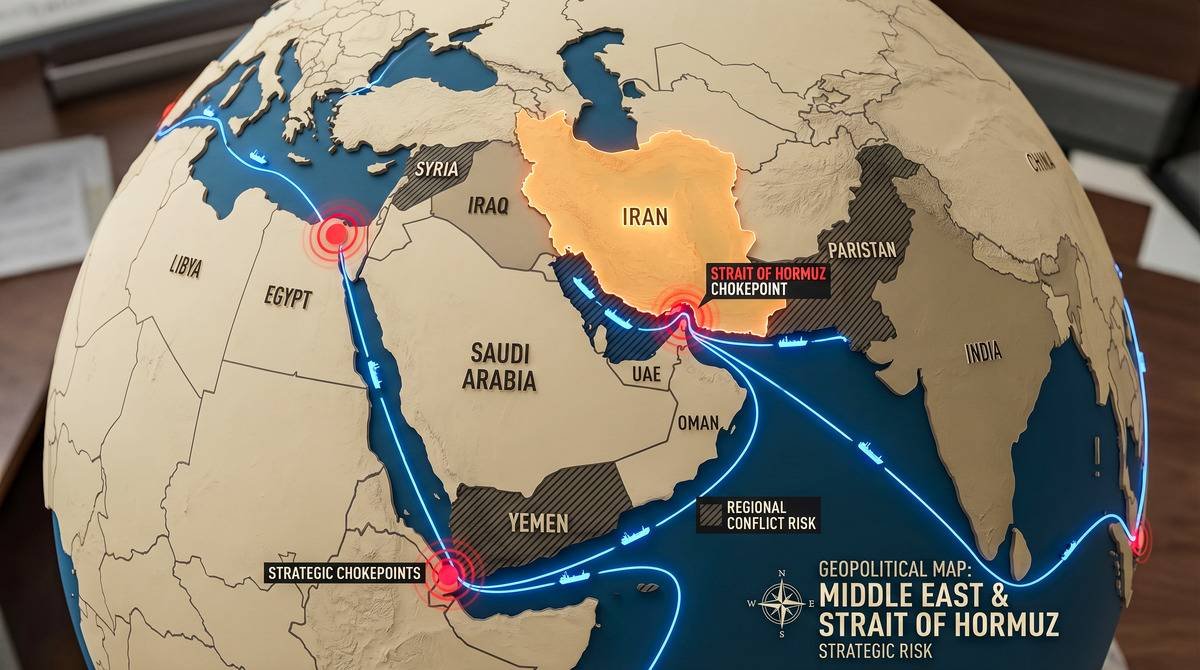
The military declaration came immediately after Iran officially sealed off the Strait of Hormuz, the world’s most critical maritime energy artery, in response to a newly reimposed U.S. naval blockade of Iranian ports.
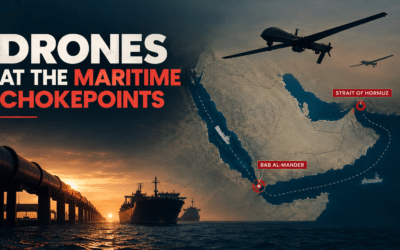
With the primary passage for one-fifth of global oil and gas supply completely closed to international shipping, global energy markets have been plunged into chaos. Intelligence analysts warn that Tehran is actively positioning its regional allies, including Yemen’s Houthi movement, to close the Bab-el-Mandeb gateway to the Red Sea—a move that would simultaneously throttle the region’s two most critical maritime chokepoints and cripple Western supply chains.
Trump: “Next week comes the power plants, next week comes the bridges. We’re gonna knock out all their power plants, we’re gonna knock out all their bridges unless they get to the table and negotiate.” pic.twitter.com/sDdhqbgRZM
— Aaron Rupar (@atrupar) July 14, 2026
Chokepoints Under Siege
The twin maritime corridors now targeted by Iran and its proxy network control the vast majority of commercial and energy transit between Asia, the Middle East, and Europe.
The IRGC justified its drastic measures by asserting that the hostile blockade deployed by the United States has unilaterally severed Iran’s ability to sell its own natural resources.
“Regional energy exports are either shared by all or denied to all,” the IRGC said in a formal statement carried by state news agency IRNA. The elite military branch warned that the Strait of Hormuz would remain strictly closed to international traffic until the “end of America’s evils.”
The threat to utilize the Houthis to choke the Bab-el-Mandeb represents a massive expansion of the conflict. The narrow corridor between Yemen and the Horn of Africa connects the Red Sea to the Gulf of Aden, serving as the primary conduit for Saudi Arabia’s western oil exports and nearly all shipping transiting the Suez Canal. The Houthis have already demonstrated their ability to severely disrupt this corridor, having launched sustained drone and missile attacks against Western-linked commercial vessels in late 2023.
Retaliation and Counter-Strikes: The Seven-Hour Air Campaign
The closure of Hormuz followed a massive, coordinated air campaign launched by U.S. Central Command on Tuesday. American officials claimed the strikes were initiated to degrade Iranian assets after Tehran allegedly attacked seven commercial ships over the preceding week, resulting in nearly a dozen merchant crew members being killed, injured, or reported missing.
The intensive U.S. bombardment lasted for seven hours, targeting military installations, command-and-control hubs, and missile batteries along the Iranian coastline. Major explosions were reported near the strategic port city of Bandar Abbas, on the island of Qeshm, and at Bandar Imam Khomeini. Projectiles also struck a grain storage silo in Hoveyzeh and coastal positions near Sirik.
The IRGC retaliated almost immediately, utilizing its network of regional proxies to target U.S. installations across the Middle East:
-
Bahrain: The Guards launched a direct drone and missile strike targeting command-and-control, logistics, and fuel infrastructure at the headquarters of the U.S. Fifth Fleet.
-
Kuwait: Iranian forces struck and set fire to a critical U.S. military logistics facility located in Mina Abdullah.
-
Jordan: The IRGC Air Force carried out long-range drone attacks against the Muwaffaq Salti Air Base in Azraq, directly targeting aircraft hangars hosting American fighter jets.
Air defense sirens wailed throughout Bahrain during the attacks, while military systems in Kuwait and Jordan reportedly intercepted several incoming projectiles.
The Collapse of Islamabad Memorandum
The rapid return to open warfare has completely undone the diplomatic progress achieved during months of back-channel negotiations. Iranian Deputy Foreign Minister Kazem Gharibabadi declared on Wednesday that the White House’s decision to restore its maritime blockade has “dismantled the Islamabad memorandum”—the fragile interim peace deal brokered with the help of Pakistani mediation in mid-June.
The collapse of the agreement came just hours after U.S. President Donald Trump backed down on a highly controversial plan to levy a 20 percent security fee on all commercial cargo passing through the Strait of Hormuz. Facing intense rebellion from international shipping giants and legal pushback from European allies, the White House abandoned the toll, choosing instead to return to direct military containment and the re-imposition of port blockades.
The renewed hostilities have already claimed the lives of at least 28 people inside Iran over the past week. With the truce shattered, President Trump issued a severe warning to Tehran on Tuesday night, threatening to expand the military target list to include Iran’s domestic power grids, civilian bridges, and heavy infrastructure.
“Next week it gets really bad for them,” Trump told Fox News, raising fears that the Middle East is rapidly sliding toward an all-out, multi-front war.