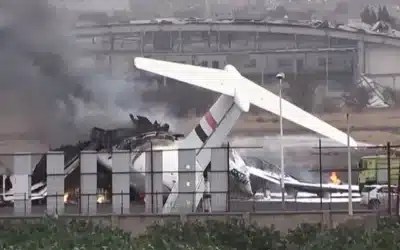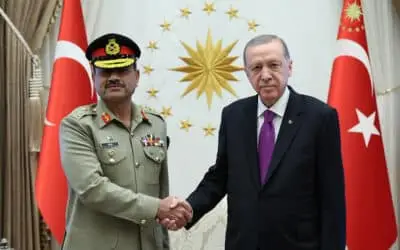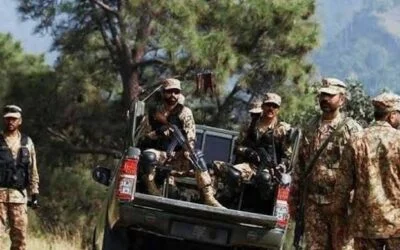



The Middle East has spiraled into an unprecedented multi-state military crisis after Iran retaliated against a massive weekend wave of American bombings by launching coordinated missile and drone strikes against U.S. military bases across five Arab nations. The explosive escalation has effectively shattered last month’s interim ceasefire, plunging the strategically vital Strait of Hormuz back into a state of active warfare.
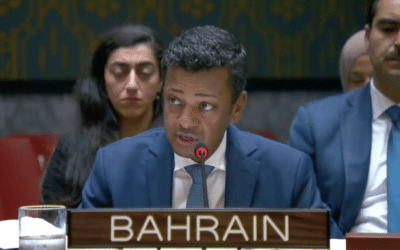
The Islamic Revolutionary Guard Corps (IRGC) targeted major U.S. military assets in Kuwait, Bahrain, Jordan, Oman, and Qatar. Air raid sirens sounded for the third consecutive time in Bahrain on Monday morning as IRGC forces successfully targeted American installations on the island nation and destroyed critical western-linked radar tracking systems in the Sultanate of Oman.
BREAKING 🔴
🇺🇸🇮🇷 U.S. CENTCOM
“U.S. Central Command (CENTCOM) completed a new wave of offensive strikes against Iran, July 12, hitting dozens of targets at multiple locations with precision munitions to degrade Iran’s ability to continue attacking international shipping… pic.twitter.com/amolflMlxN
— The Observer Lens (@TheObserverLens) July 13, 2026
Centcom Deploys Autonomous Kinetic Weaponry
The latest regional flare-up began after U.S. Central Command executed a massive, pre-planned campaign over the weekend designed to permanently degrade Tehran’s anti-ship capabilities. For the first time in modern naval history, Washington deployed a hybrid force of conventional aircraft, warships, one-way attack aerial drones, and highly classified, autonomous one-way attack sea drones.
According to Pentagon briefings, the robotic sea units and fighter jets targeted a wide array of coastal targets:
-
Hardened Iranian military air defense installations.
-
IRGC coastal radar monitoring stations.
-
Mobile ballistic missile launchers and suicide drone warehouses.
-
Fast-attack swarm boats hidden along the Iranian coastline.
Following the strikes, Washington and Tehran issued diametrically opposed reports regarding the operational status of the Strait of Hormuz. While the U.S. maintained that freedom of navigation had been preserved, maritime tracking data showed a total halt in traffic, with commercial vessels and supertankers dropping anchor outside the danger zone along the eastern coast of the United Arab Emirates.
Energy Markets Surge as Article 5 Protections Collapse
The absolute collapse of the 60-day diplomatic roadmap sent immediate shockwaves through global financial markets on Monday morning. The Strait of Hormuz, a narrow chokepoint nestled between Oman and Iran, handles roughly 20% of the world’s total crude oil supplies.
In early trading, international benchmark Brent crude futures for September delivery advanced 2.8% to reach 78.14 dollars per barrel. Concurrently, U.S. West Texas Intermediate futures for August delivery climbed 2.5% to trade at 73.24 dollars per barrel, as energy analysts warned of prolonged supply chain disruptions.
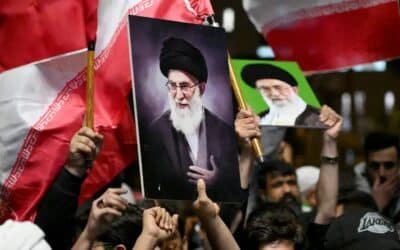
Political hardliners in Tehran made it clear that they consider the previous diplomatic framework void. Iran’s Parliament Speaker, Mohammad Bagher Ghalibaf, posted a stern warning on social media alongside an image of Article 5 of the U.S.-Iran memorandum of understanding—the precise clause governing the mutual agreement to keep the waterway open.
“The era of one-sided deals is OVER,” Ghalibaf declared. “We told you: keep your word or pay the price. Reality is knocking.”
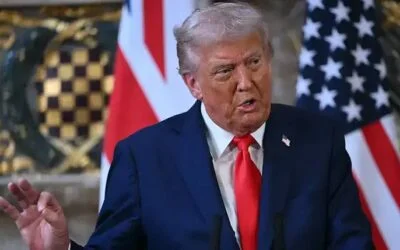
The statement directly countered U.S. President Donald Trump’s Friday announcement, in which he claimed that while peace negotiations would technically remain active, the security guarantees and ceasefire established under last month’s deal were officially scrapped by the White House.
U.S. Accused of Sabotaging Transit Fees
Iran’s Ministry of Foreign Affairs issued an aggressive diplomatic condemnation of the latest U.S. air campaign, stating that the continuous American bombardments represent a lethal threat to international peace and security while rendering months of intense regional mediation entirely futile.
Furthermore, Tehran leveled a sharp accusation against Washington, claiming the U.S. exerted immense overt and covert pressure on the Sultanate of Oman. This interference, according to Iranian diplomats, intentionally sabotaged bilateral maritime talks in Muscat, where Iran and Oman were actively drawing up a new joint security order to manage the shipping lanes.
The Muscat negotiations reportedly included a highly controversial plan for Iran and Oman to bypass international sanctions by imposing specific maritime “service fees” on all commercial traffic traversing the strait. Under long-standing international law, the Strait of Hormuz is governed by the strict legal principle of “transit passage,” which forbids bordering nations from charging vessels for standard passage. Maritime legal analysts note that redefining these costs as mandatory technical or environmental service fees was Muscat and Tehran’s primary legal loophole to monetize the chokepoint—a strategy that Washington’s heavy-handed military and diplomatic intervention appears to have successfully paralyzed.