

Armed insurgents opened fire on local commercial shops in the remote border town of Mashkel on Sunday, killing five laborers originating from Punjab. The cross-border violence struck Washuk District just as Pakistani security forces reported killing seven more insurgents under the banner of Operation Shaban, bringing the state’s total elimination count to 109 targeted militants within the span of eight days.
Balochistan: At least five laborers (barbers) from Punjab have been killed by unidentified armed motorcyclists in Mashkel town, Washuk district, near the Pak-Iran border. The victims, identified as Muhammad Hassan, Abdul Qadir, Mohsin and Bilal from Sialkot, have lost their lives… pic.twitter.com/RQwzJOhtZu
— Frontier Files (@frontier_files) July 12, 2026
The calculated target-killing of non-local workers has drawn swift, unified condemnation from both federal and provincial leaders. Prime Minister Shehbaz Sharif and Balochistan Chief Minister Sarfraz Bugti strongly denounced the cross-border assault, labeling the attack an explicit and cowardly attempt by hostile external proxies to fracture national cohesion and disrupt ongoing counter-insurgency operations.
Targeted Border Ambush: Casualties in Washuk
According to official briefings provided by Washuk Deputy Commissioner Abdul Majeed Sarparah, the lethal assault unfolded when armed insurgents riding motorcycles entered Mashkel, a border town located along the porous Pakistan-Iran boundary. The attackers deliberately targeted localized commercial storefronts where civilian laborers from Punjab were engaged in daily routine work.
The assailants opened fire indiscriminately using automatic weapons. Police officials confirmed that all five laborers sustained multiple high-velocity bullet wounds to vital areas, causing them to die on the spot. The armed cell managed to flee into the surrounding arid terrain immediately following the shooting.
Local law enforcement and Frontier Corps paramilitary units rushed to the scene upon receiving intelligence of the gunfire. The bodies of the deceased were transferred to a regional government health facility in Mashkel to fulfill mandatory legal and medical formalities. Regional administrative officials confirmed that specialized arrangements were actively underway to transport the remains of the fallen workers back to their respective native towns in Punjab.
Following the targeted assault, joint law enforcement contingents cordoned off the entire sub-district and launched an aggressive tactical search operation to trace the escape routes of the armed perpetrators.
State Denounces India-Backed “Fitna al-Hindustan”
The targeted execution of unarmed civilian workers prompted a fierce response from the Prime Minister’s Office in Islamabad. Prime Minister Shehbaz Sharif strongly condemned the killings, explicitly identifying the attackers as members of “Fitna al-Hindustan”—the specific operational term deployed by the Pakistani state to designate Balochistan-based separatist insurgent groups operating as regional proxies with alleged financial and logistical backing from Indian intelligence.
Extending his deep-rooted sympathies to the grieving families, Prime Minister Sharif categorized the targeting of unarmed, working-class civilians as an exceptionally barbaric act that defies basic tenets of humanity.
“The elements involved in such heinous crimes against humanity deserve absolutely no leniency,” Prime Minister Sharif declared. “The government and our frontline security forces remain unyielding in our operational commitment to completely eradicate terrorism from our soil and guarantee the protection of every single citizen’s life and property.”
Balochistan Chief Minister Sarfraz Bugti mirrored the prime minister’s stance, emphasizing that the victims should not be viewed merely through an ethnic or provincial lens. He asserted that the fallen workers were Pakistani citizens, honest laborers, and foundational brothers of the local community.
Chief Minister Bugti observed that insurgent factions operating under the banner of a pseudo-freedom movement had utterly exposed their true ideological agenda by picking soft targets instead of facing armed security personnel. The overarching objective of these hostile cells, Bugti stated, is not a legitimate socio-political struggle but a calculated campaign to propagate communal fear, inject ethnic hatred, and destabilize the institutional authority of the state.
Operation Shaban Steps Up High-Tempo Kinetic Offensives
The fatal incident in Washuk unfolded against the backdrop of Operation Shaban, a sweeping, multi-agency counter-insurgency offensive launched jointly by the Pakistan Army, Frontier Corps, and the Balochistan Police on July 5. The high-intensity operation was initiated following a coordinated insurgent raid on a critical infrastructure-guarding police post near Mangi Dam in Ziarat District, which left 27 police personnel dead.
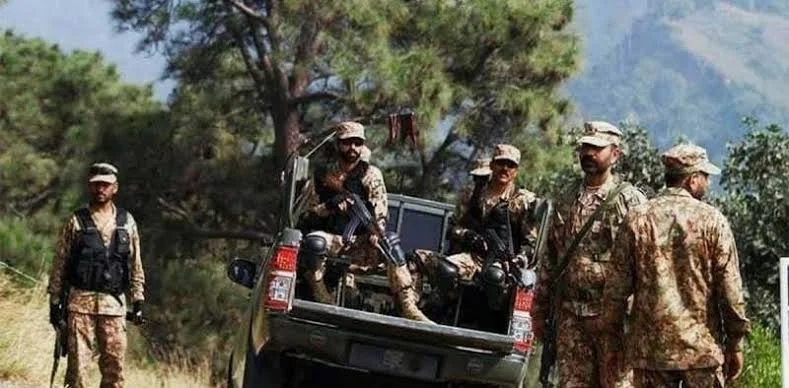
Official state media networks, citing front-line military security briefs, confirmed that the tactical death toll of neutralized insurgents during Operation Shaban rose to 109 on Sunday. Over the last 24 hours alone, seven additional high-value insurgent targets were eliminated during close-quarters engagements. The tactical operations culminated when security units closed in on active militant hideouts located in the rugged Saran Tangi sector, successfully neutralizing four fighters after a fierce exchange of automatic gunfire.
Front-line search sweeps across recovered insurgent hideouts yielded a significant cache of military-grade arms and ammunition. Recovered items cataloged by the Frontier Corps included:
-
M4 tactical carbines and high-caliber submachine guns.
-
Shoulder-fired rocket launchers and anti-personnel ordnance.
-
Encrypted mobile communication devices and tactical electronic equipment.
Interior Minister Mohsin Naqvi lauded the tactical precision and combat courage demonstrated by the combined forces of the Pakistan Army, Frontier Corps, and provincial police. Naqvi reiterated that the joint kinetic actions are foundational to preserving long-term national security, noting that the entire country stands firmly behind law enforcement personnel as they systematic purge insurgent infrastructure from the mountains.
Bugti Mobilizes Frontline Units in Hanna Urak
In tandem with the kinetic deployment, Chief Minister Bugti conducted an active field visit to Babri village, situated within the strategic Hanna Urak valley area outside Quetta. The area had previously witnessed a severe security breach on July 5 when insurgents assaulted local tribesmen, resulting in five civilian casualties and multiple abductions.
During his operational review, the chief minister interacted directly with frontline Balochistan Police and Levies personnel currently engaged in clearing operations. Bugti highly praised the personnel for their battlefield professionalism and unwavering morale under asymmetric warfare conditions, stating that the immense sacrifices rendered by local law enforcement remain a primary source of national honor.
Chief Minister Bugti subsequently visited the immediate family members of the victims killed during the initial valley incursions. While offering solemn condolences and performing traditional funeral prayers (Fateha), Bugti formally assured the bereaved families that the provincial government will provide comprehensive financial support and complete official security backing to ensure the long-term protection of the local populace.
Massive Provincial Crackdown
In a parallel law enforcement effort designed to choke the logistical and criminal networks feeding active insurgent factions, the Balochistan Police executed a massive, three-week province-wide security sweep. Directed by Inspector General of Police Balochistan Muhammad Tahir, the highly coordinated campaign was carried out across all seven provincial police ranges, including the capital city of Quetta.
The overarching anti-crime operation resulted in the arrest of 108 highly wanted suspects, proclaimed offenders, and long-term court absconders. During the multi-district raids, tactical police teams successfully recovered a vast collection of illegal small arms, counting 93 handguns, 10 Kalashnikov assault rifles, eight combat shotguns, and hundreds of rounds of live ammunition.
The provincial crackdown simultaneously dealt a major blow to illegal narcotics networks and cross-border black market smuggling, which security analysts believe are used to bankroll armed insurgent groups. Law enforcement cells intercepted and seized over 153 kilograms of high-grade hashish, extensive quantities of synthetic ice drugs, multiple kilograms of opium, and hundreds of capsules filled with pure heroin.
Furthermore, police units safely recovered 11 kidnapped individuals during the targeted raids, impounded dozens of stolen motor vehicles, and seized 3,296 commercial boxes of black-market Iranian cigarettes smuggled across the southwestern border, effectively severing a key financial artery utilized by hostile anti-state networks.