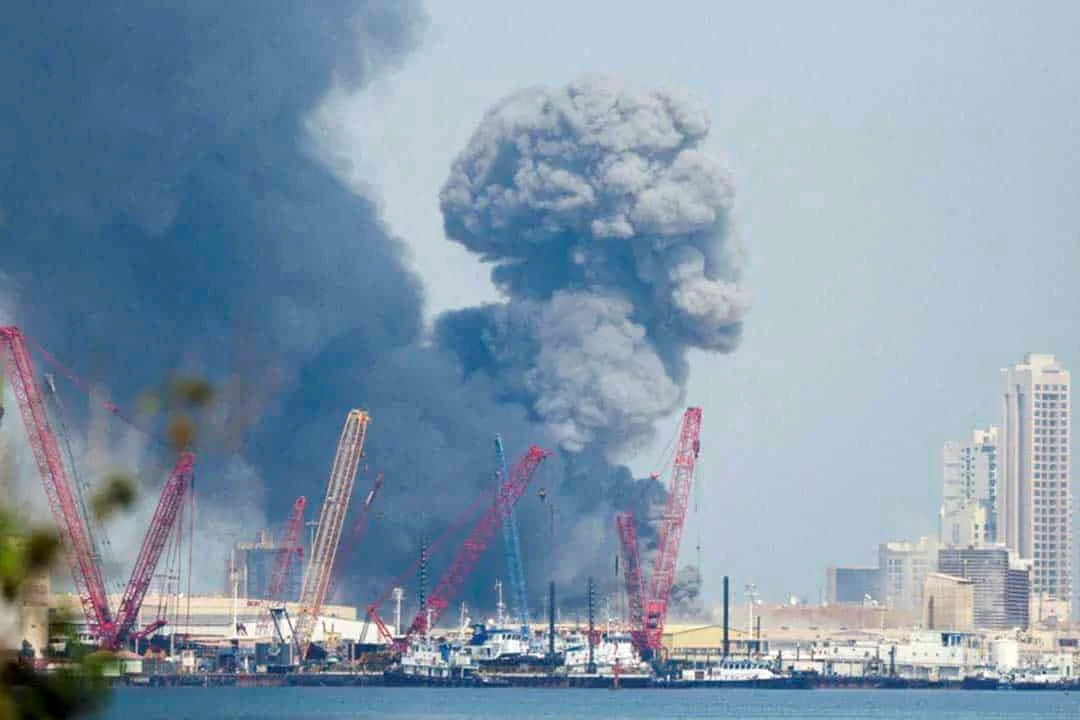



The fragile, four-year-old relative calm in Yemen has officially collapsed, threatening to plunge the Middle East’s poorest nation back into a state of total, active warfare.
The escalation follows a dangerous cycle of direct military provocations: first, a daytime bombing of the runway at Houthi-controlled Sanaa International Airport by the Saudi-backed Yemeni government, followed swiftly by a retaliatory Houthi ballistic missile barrage directed at southern Saudi Arabia.
The flare-up has shattered the de-escalation framework that had largely frozen the conflict since 2022. With Yemen’s warring parties mobilizing thousands of fighters along key domestic front lines, international security experts warn that the country is being rapidly drawn into the wider, boiling regional confrontation between Iran and the United States.
Yemen faces renewed war risk as Saudi Arabia and Houthis exchange airstrikes
A fragile truce in Yemen is under severe strain as the Iran-backed Houthis and a Saudi-led coalition exchanged airstrikes, raising fears of a return to full-scale conflict. The confrontation began with…
— PiQ (@PiQMarkets) July 14, 2026
Airspace Sovereignty and the Sanaa Runway Strike
Tensions between the Houthis and the internationally recognized Yemeni government began rising sharply in late June as both sides started aggressively mobilizing troops. On July 3, the situation escalated when the first publicly announced direct flight between Tehran and Sanaa in over a decade landed in the Houthi-controlled capital, carrying a Houthi political delegation returning from the state funeral of Iran’s late Supreme Leader.
The direct flight path bypassed the standard clearance protocols mandated by the Saudi-led coalition, which has legally monitored Yemeni airspace since its military intervention in 2015. The Yemeni government strongly objected, accusing the Houthis of using civilian aviation as a cover to allow unauthorized Iranian aircraft into sovereign territory.
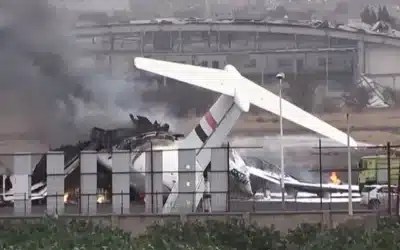
The government’s patience officially ran out on Monday, July 13, 2026. When a second Iranian flight attempted to land at Sanaa, government forces executed a targeted missile strike directly on the airport’s runway to prevent the landing. The targeted Iranian plane was forced to divert and land at the Houthi-held Red Sea port city of Hudaydah.
Regional Retaliation and Threat to Gulf Security
The Houthis reacted by declaring the runway bombing an act of war, pointing the finger directly at Saudi Arabia despite the Yemeni government claiming sole responsibility for the attack. Within hours, Houthi military spokesperson Yahya Saree declared the “de-escalation phase” officially over, unleashing a salvo of ballistic missiles and explosive drones targeting the southern region of Saudi Arabia.
Prominent Houthi official Mohammed al-Bukhaiti issued an explicit warning to Riyadh:
“Their willingness to attack Sanaa airport to prevent flights from arriving or departing gives Yemen the right to strike their airports and to impose on them a siege just as they have done to us.”
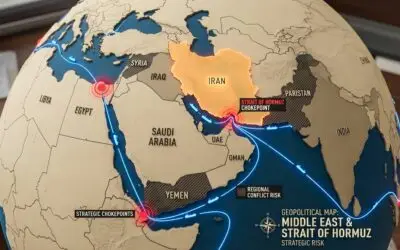
Security analysts warn that the Houthis possess both the geographic advantages and the military capabilities to exert massive pressure on the Gulf states and disrupt international energy arteries. As the U.S. and Iran engage in direct military confrontations further east—clashing over the Strait of Hormuz—the risk of the Houthis opening a aggressive southern front has skyrocketed.
Humanitarian Crisis Deepens
A return to full-scale ground war would be catastrophic for Yemen’s civilian population, which is already enduring one of the worst humanitarian emergencies in modern history.
According to United Nations reports, roughly 18.3 million people in Yemen currently face acute food insecurity. Additionally, more than 2.2 million children under the age of five suffer from acute malnutrition, and 2.6 million children are entirely out of school. The country’s GDP per capita has collapsed by an astonishing 58 percent since the civil war first erupted in 2014.
Despite these grim statistics, the Houthis have successfully capitalized on anti-Western and anti-Saudi public sentiment to recruit and train thousands of fresh fighters. Houthi officials claim these new popular committees are fully trained for frontline combat and stand ready to execute any operational orders they receive.
For many ordinary citizens living in the crossfire, the endless diplomatic deadlock and economic limbo have become unbearable. Some, like Abdullah, a school teacher in Sanaa, express a desperate desire for any swift resolution, regardless of who emerges on top.
“The side that will win the coming war should be responsible for improving the livelihood of people, fixing the economic ordeal and stabilizing the country,” Abdullah said. “It needs to be swift and decisive, ending with one winner.”