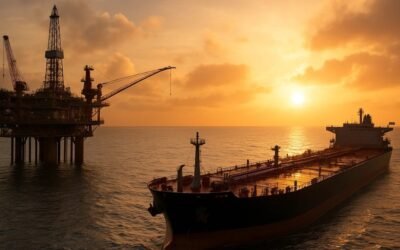




International maritime associations and global shipping executives issued a series of stark warnings on Tuesday, asserting that President Donald Trump’s radical proposal to levy a 20 percent tariff on commercial cargo transiting the Strait of Hormuz could backfire catastrophically. Industry leaders warned that the unprecedented toll will likely choke off what little merchant traffic remains in the strategic waterway, driving global supply chains to bypass the Middle East altogether.
The mounting commercial anxiety comes as the fragile, mid-June U.S.-Iran interim ceasefire lay in ruins. On Tuesday, Washington and Tehran exchanged heavy military strikes for a third consecutive day, dragging the Persian Gulf back into a state of active, high-intensity warfare.
Global shipping braces for Trump’s 20% Strait of Hormuz fee, as analysts warn of soaring oil transport costs, supply chain disruption and legal challenges.https://t.co/syClRgKDD7 pic.twitter.com/3ZlVJuevAT
— Gulf News (@gulf_news) July 14, 2026
The White House Shifts Policy
Under the provisions of the short-lived June peace pact, Tehran had been strictly barred from imposing any sovereign transit fees on commercial ships passing through the international waterway. However, following the collapse of the negotiations, the White House has decisively abandoned its defense of a completely toll-free Strait.
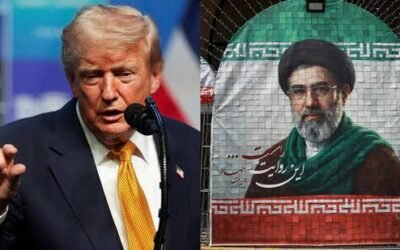
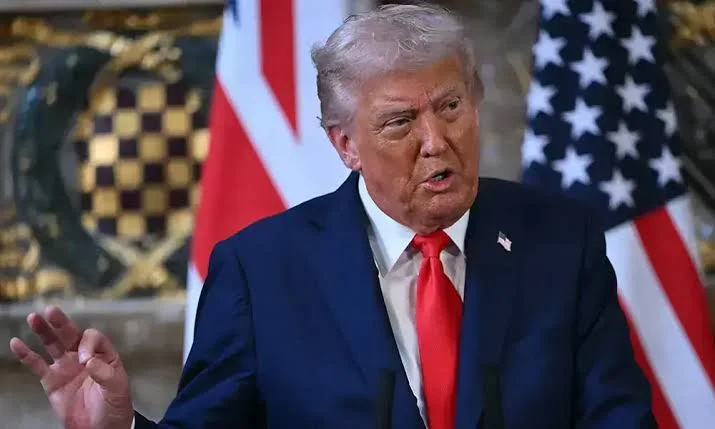
In a series of highly charged public statements and social media declarations on Monday, President Trump announced that the United States would formally assume total operational control over the chokepoint, declaring the nation “THE GUARDIAN OF THE HORMUZ STRAIT”.
Rather than allowing free navigation, the U.S. administration intends to establish a system of mandatory compensation. Under this plan, any commercial vessel attempting to cross the passage must reimburse the U.S. government at a flat rate of 20 percent of its total cargo value to cover the massive military expenditures incurred by American naval forces providing maritime escort and safety. Concurrently, the Pentagon has moved to reinstate a complete naval blockade on all Iranian domestic ports, effectively barring Iranian-linked vessels entirely.
Unprecedented Costs: $27 Million Per Voyage
The shipping industry’s reaction to the proposed American toll has been overwhelmingly hostile, with executives pointing out that the plan completely ignores long-standing international maritime treaties.
German ocean shipping giant Hapag-Lloyd released a sharp public statement on Tuesday, rejecting the legal and operational premise of the White House plan.
“It is fundamentally wrong to charge tolls for passage through international waters, regardless of the country in charge,” the firm stated, drawing a sharp distinction between natural waterways and man-made canals. “Tolls for infrastructure such as the Suez Canal or Panama Canal are different, because they reflect major infrastructure investments. That is not the case in the Strait of Hormuz.”
The financial mechanics of the proposed tariff are staggering. According to an analytical impact assessment published by the Baltic and International Maritime Council (BIMCO)—the world’s largest international shipping association—the 20 percent cargo fee would impose an unsustainable financial burden on commercial operators.
Using the average Dubai crude price of $89 per barrel recorded between March and June, BIMCO calculated that a single transit by a standard Very Large Crude Carrier (VLCC) would require an astronomical payment of approximately $27 million to the U.S. Treasury. For context, this is more than ten times the illegal service fees previously attempted by Iran, which peaked at around $2 million per transit.
Jakob P. Larsen, BIMCO’s Chief Safety and Security Officer, warned that while funding security is a vital goal, the extreme costs of the tariff will act as a major deterrent. Shipowners, he suggested, will simply refuse to enter the Gulf unless the U.S. Navy can guarantee a total, near-impossible elimination of the military threat from Iranian shorelines.
Piracy Accusations and Free Transit Laws
The European Community Shipowners’ Association (ECSA) also strongly pushed back against the White House proposal, warning that the toll threatens the very foundation of global maritime commerce. ECSA Secretary-General Sotiris Raptis emphasized that “freedom of navigation” is a non-negotiable cornerstone of the United Nations Convention on the Law of the Sea (UNCLOS), which explicitly forbids any state from levying transit taxes on international straits.
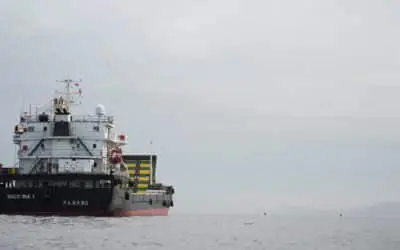
The economic deterrence is already highly visible on global tracking monitors. Data compiled by maritime intelligence platform Kpler revealed that vessel traffic through the Strait of Hormuz plummeted to just 14 transits on Sunday—including only four crude oil tankers—compared to 37 active transits recorded during the same period just a week prior. Industry analysts warn that if the 20 percent tariff is actively enforced by American warships, commercial traffic through the world’s most critical energy artery could dry up completely.
Meanwhile, Tehran has reacted to the American announcement with public mockery. Iranian Foreign Minister Abbas Araghchi took to social media to sarcastically agree with President Trump’s logic that the “guardian” of the waterway deserves financial compensation.
“POTUS is absolutely right,” Araghchi wrote, before asserting that Iran remains the permanent, historical guardian of the strait. “20% is of course too much. We will be fair.”
With both Washington and Tehran actively claiming sole authority to manage, patrol, and tax the Strait of Hormuz, global energy markets are bracing for a prolonged supply shock. Brent crude prices jumped another 4 percent on Tuesday, hovering past $86 a barrel as the prospect of a peaceful resolution in the Gulf grows increasingly remote.