

The tentative diplomatic path forged during last month’s Switzerland peace talks has completely dissolved into an active, multi-front war. Following the formal collapse of the short-lived June ceasefire, the United States military has completed its sixth consecutive night of heavy aerial bombardments across Iranian territory.
The latest waves of attacks have marked a significant shift in target selection, drawing sharp accusations from Tehran that Washington is systematically destroying indispensable civilian transit and logistics infrastructure. While U.S. Central Command (CENTCOM) maintains its standard position that the strikes are designed strictly to degrade Iran’s cross-strait military capabilities, local authorities have confirmed severe logistical disruptions, widespread power outages, and mounting casualties across the southern provinces.
Bridges and an Airport Struck
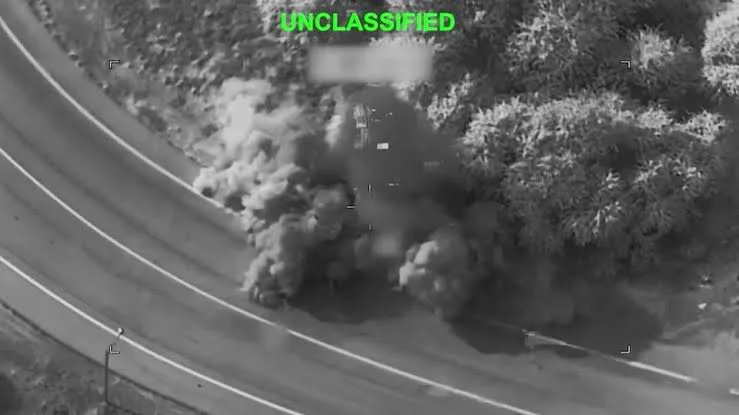
According to Iranian state media and provincial records in Hormozgan, Thursday night’s bombardment focused heavily on cutting off key arterial supply routes connecting coastal shipping hubs to the interior of the country. Independent open-source analysis via BBC Verify confirmed a direct missile strike on the Gariveh Bridge, a critical transit link connecting the major port city of Bandar Abbas to Khamir and Lar. Daylight imagery from the area revealed an entire section of the roadway completely pulverized, rendering the major transit route impassable.
Iranian media report that US air strikes hit five bridges in southern Hormozgan province, according to the provincial governor’s office.
Here’s what we know ⤵️
🔴LIVE updates: https://t.co/5LgpxqsrCv pic.twitter.com/bGUltjF42F
— Al Jazeera English (@AJEnglish) July 17, 2026
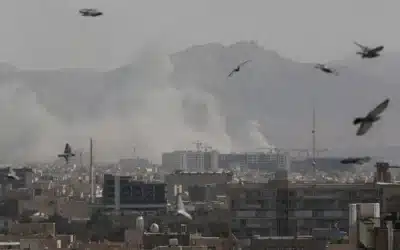
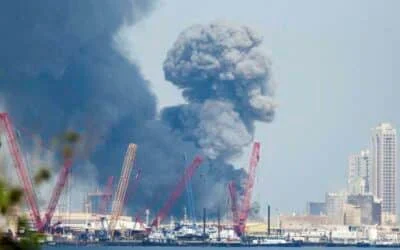
Provincial authorities reported that seven people were killed in the attacks on the Hormozgan bridge networks. Concurrently, to the southeast in Sistan and Baluchestan province, at least three powerful explosions tore through Iranshahr Airport. State television reported that a U.S. projectile struck the facility directly, igniting an aviation fuel tank and obliterating the local electrical substation, cutting off power to surrounding communities.
The Ministry of Energy confirmed that parallel strikes on power grids in Bandar Abbas have caused extensive electrical blackouts along the coast.
Infrastructure as a Political Tool
The direct hits on transport infrastructure align with explicit strategic warnings issued by President Donald Trump, who publicly threatened to neutralize Iran’s power stations and bridges unless Tehran capitulated to a revised, permanent diplomatic framework to end the war that originally erupted on February 28.
The deliberate expansion of the target list to include bridges and transportation hubs has drawn severe criticism from international observers. UN Human Rights Chief Volker Türk previously noted that targeting infrastructure indispensable to civilian survival risks violating the laws of war.
Despite the warnings, CENTCOM remains firm, stating that its fighter jets, warships, and drones are systematically targeting coastal surveillance towers, missile storage facilities, and air defense nodes to break Iran’s grip on maritime trade.
Revolutionary Guard Strikes Back
In immediate retaliation for the destruction of its infrastructure, Iran’s Islamic Revolutionary Guard Corps (IRGC) launched what it termed its 13th wave of synchronized drone and ballistic missile strikes against Western military assets scattered across the Middle East. The retaliatory wave rippled through five different sovereign nations:
-
Oman: The IRGC claimed to have destroyed a U.S. air control radar site in the Ghanim region, alongside a maritime monitoring radar station on the rocky coastline overlooking the Strait of Hormuz.
-
Kuwait: Iranian projectiles successfully bypassed regional defense layers to strike a U.S. military base, allegedly damaging a missile defense radar and two HIMARS launchers. Kuwaiti authorities reported that the fallout from the strikes also damaged local civilian power generation and water desalination plants.
-
Qatar: Early-morning air raid sirens echoed over Doha as Qatari defense forces engaged incoming Iranian missiles. While the military confirmed all projectiles were intercepted, falling shrapnel inside Doha left one child injured.
-
Jordan & Syria: Jordan’s Royal Engineering Corps intercepted and downed three incoming missiles crossing its airspace. Simultaneously, the IRGC targeted a U.S. special operations command center at the al-Tanf base in southeastern Syria, citing it as direct retaliation for the recent deaths of Iranian soldiers.
Global Energy Supply on a Knife-Edge
With the war rapidly intensifying, the Strait of Hormuz remains under a total naval blockade enforced by both Iranian coastal artillery and a retaliatory U.S. naval cordon. The complete closure of the waterway—which typically handles twenty percent of the world’s liquefied natural gas and crude oil transit—has sent shockwaves through global markets.
International Energy Agency head Fatih Birol issued an emergency warning, stating that global energy supplies face a historic crisis if the maritime gridlock is not broken within the next few weeks.
The political rift is widening even within Washington. During a media appearance on Wednesday, Vice President JD Vance openly acknowledged intense internal fractures, stating that certain factions within allied foreign governments have actively sought to steer the administration away from diplomatic negotiations in favor of an uninterrupted, permanent military campaign in the Persian Gulf.
With total casualties since the June 22 Switzerland talks now surpassing 38 dead and over 400 wounded, the region faces an unchecked slide into a broader global economic and military catastrophe.