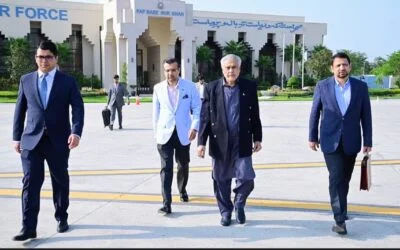


Amid a rapid and dangerous escalation in the Persian Gulf, China and Pakistan have launched a coordinated diplomatic intervention, calling on the United States and Iran to immediately cease hostilities and return to the negotiating table.
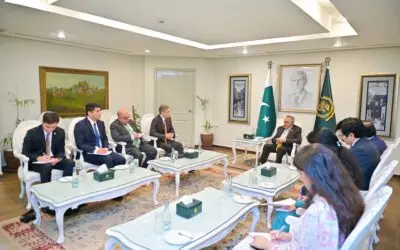
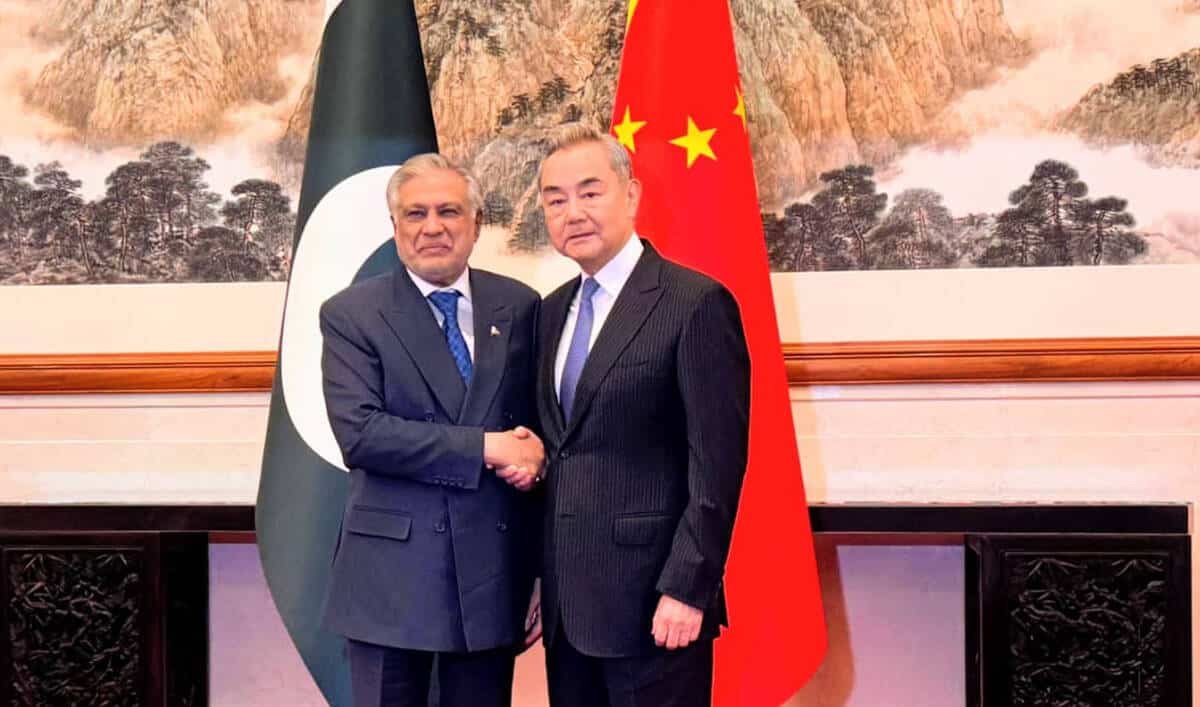
The joint appeal was formalised on Friday following a high-level bilateral meeting in Shanghai between Chinese Foreign Minister Wang Yi and Pakistan’s Deputy Prime Minister and Foreign Minister Ishaq Dar. Both nations expressed profound concern over the collapse of last month’s hard-won Islamabad Memorandum of Understanding (MoU), warning that an unmitigated military conflict carries catastrophic consequences for global economic stability and the Global South.
PR No. 1️⃣7️⃣4️⃣/2️⃣0️⃣2️⃣6️⃣
Deputy Prime Minister/Foreign Minister Meets Foreign Minister Wang Yi in Shanghai (16 July 2026)
🔗⬇️ pic.twitter.com/KZBdXT7mCD
— Ministry of Foreign Affairs – Pakistan (@ForeignOfficePk) July 17, 2026
Mediators Warn: “Cannot Fall at the Last Hurdle”
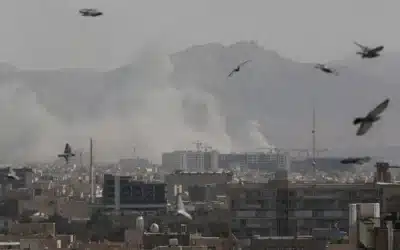
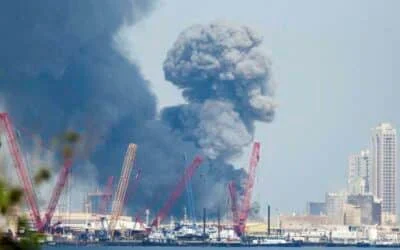
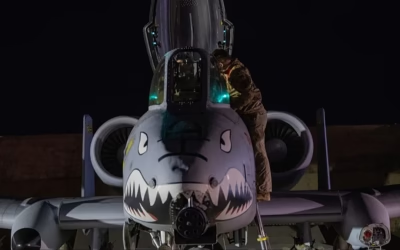
The bilateral summit in Shanghai coincided with a sixth consecutive night of heavy U.S. airstrikes across southern Iran, which have systematically targeted bridges, transport hubs, and power grids, prompting an expansive wave of retaliatory missile and drone strikes by Iran’s Islamic Revolutionary Guard Corps (IRGC) across five Gulf nations.
The renewed hostilities have cast an ominous shadow over the Islamabad MoU, which was brokered on June 17 by Pakistan and Qatar to establish an extendable 60-day negotiating window and restore maritime passage through the blockaded Strait of Hormuz.
Expressing deep anxiety over the unraveling truce, Chinese Foreign Minister Wang Yi emphasized that the initial peace framework was an extraordinary, delicate achievement:
“The preliminary agreement was hard-won. Peace is before our eyes, we cannot fall at the last hurdle, and even more so, we cannot lose what we have gained.”
Pakistan, playing a key structural role as one of the principal back-channel mediators between Washington and Tehran, reinforced this position through its Foreign Office in Islamabad. Foreign Office Spokesperson Tahir Andrabi stated that Prime Minister Shehbaz Sharif has been engaged in urgent, direct telephone diplomacy with Iranian President Masoud Pezeshkian and the Emir of Qatar, Sheikh Tamim bin Hamad Al Thani, to pull the warring parties back from the brink.
“There is no alternative to sustained engagement, dialogue, and diplomacy,” Andrabi stated during his weekly briefing, emphasizing that a wider conflict serves no regional or international interest.
🔴LIVE: Spokesperson’s Weekly Press Briefing 16-07-2026 at Ministry of Foreign Affairs, Islamabad https://t.co/v76caqFugZ
— Ministry of Foreign Affairs – Pakistan (@ForeignOfficePk) July 16, 2026
CPEC 2.0 and the Launch of WAICO
While the immediate focus of the Shanghai meeting was the preservation of Gulf stability, the two delegations utilized the forum to consolidate the broader canvas of the China-Pakistan All-Weather Strategic Cooperative Partnership.
Both nations reaffirmed their commitment to accelerating high-quality development under the China-Pakistan Economic Corridor (CPEC 2.0). Discussions focused heavily on transitioning from traditional infrastructure projects to advanced practical cooperation in trade, investment, science and technology, and the digital economy.
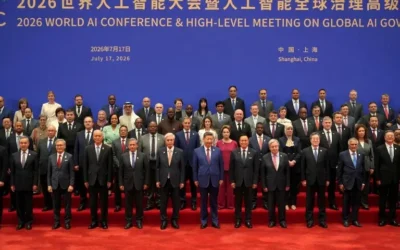
Crucially, Deputy Prime Minister Ishaq Dar’s presence in Shanghai marked a historic technological milestone for Pakistan. On the sidelines of the 2026 World Artificial Intelligence Conference (WAIC), Dar signed the founding instrument of the World Artificial Intelligence Cooperation Organisation (WAICO).
Headquartered in Shanghai and backed by a 29-country consensus—including China, Pakistan, Russia, Kazakhstan, and Indonesia—WAICO has been established as an independent intergovernmental body designed to champion inclusive AI governance and bridge the global technological divide for developing nations.
Global South Bears the Brunt of Maritime Gridlock
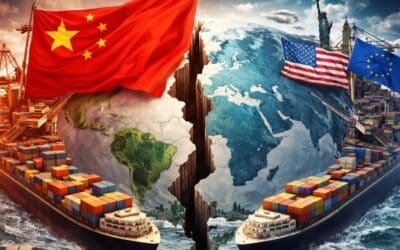
The joint diplomatic push by Beijing and Islamabad stems from a acute understanding of the broader economic vulnerabilities triggered by the Gulf war. The re-imposition of the U.S. naval blockade and Iran’s subsequent fortification of the Strait of Hormuz have locked down a waterway that handles a fifth of the world’s oil and liquefied natural gas (LNG) transits.
The International Energy Agency (IEA) has already sounded alarms over global energy security, a sentiment mirrored by Pakistan’s Foreign Office. Spokesperson Andrabi highlighted that the escalating maritime friction creates severe systemic supply shocks that disproportionately penalize the Global South, impacting critical container trade, food security pipelines, and domestic energy tariffs.
By invoking their joint Five-Point Initiative originally laid out in Beijing this March, China and Pakistan are attempting to build a multi-lateral diplomatic buffer. The strategy aims to leverage commitments from regional stakeholders, including Saudi Arabia and Qatar, to convince both the Trump administration and Tehran’s military command that technical-level talks under the Islamabad framework remain the only viable mechanism to safeguard freedom of navigation and prevent an absolute regional economic collapse.