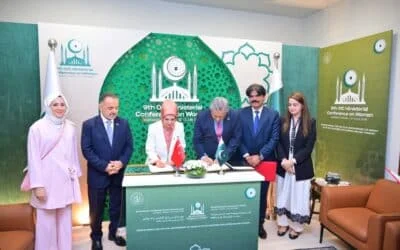



Deputy Prime Minister and Foreign Minister Senator Mohammad Ishaq Dar arrived in Shanghai on Thursday for a high-profile, two-day diplomatic visit. The cornerstone of his trip is the formal signing of an agreement to establish Pakistan as a founding member of the World Artificial Intelligence Cooperation Organisation (WAICO), a Chinese-proposed body aimed at shaping the future of international AI governance.
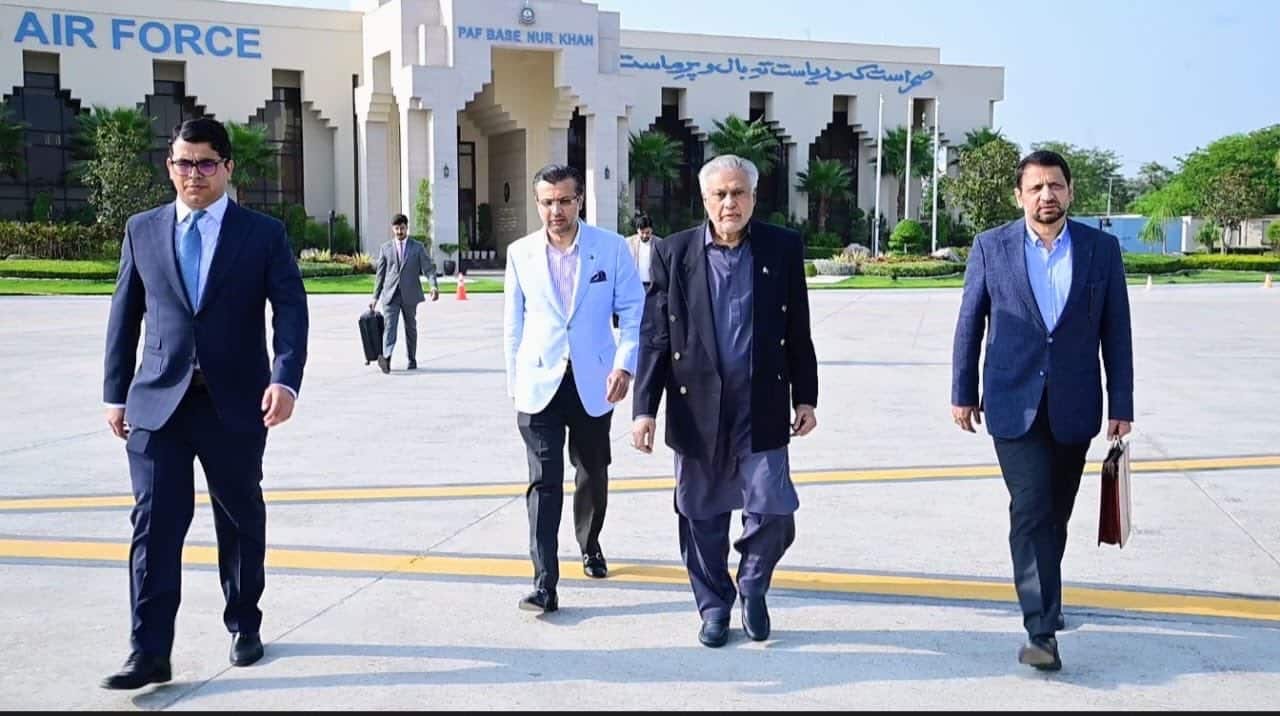
Upon his arrival at Shanghai Pudong International Airport, Dar was warmly received by Shanghai Vice Mayor Wu Wei, Pakistan’s Charge d’Affaires to China Aizaz Khan, and Consul General of Pakistan in Shanghai Shahzad Ahmad Khan.
Deputy Prime Minister @MIshaqDar50 arrives in #Shanghai for a two-day official visit to #China @ForeignOfficePk @PakinChina_ @CathayPak #RadioPakistan #news https://t.co/Wk6P2i6yPp pic.twitter.com/9H09ZOryhe
— Radio Pakistan (@RadioPakistan) July 16, 2026
Advocating for the Global South at WAIC 2026
In addition to the signing ceremony, the Deputy Prime Minister is set to participate in the prestigious World Artificial Intelligence Conference (WAIC) 2026 and the concurrent High-Level Meeting on Global AI Governance.
During these high-level sessions, Dar will hold bilateral discussions with his Chinese counterpart, Foreign Minister Wang Yi, and other global leaders. According to a statement issued by Pakistan’s Foreign Office, Dar’s talking points will heavily champion the technological and developmental needs of developing countries.
The mission aligns with Pakistan’s diplomatic commitments established earlier this year during Prime Minister Shehbaz Sharif’s state visit to China, during which Islamabad pledged to work hand-in-hand with Beijing to advance inclusive and equitable global governance in the digital sphere.
The Geopolitical Battle Over AI Standards
The timing of the conference coincides with a profound ideological rift between Washington and Beijing regarding the rules governing artificial intelligence.
While Western nations emphasize rigorous compliance, content security, and copyright frameworks, Beijing has framed its low-cost, open-source AI ecosystems as a public good designed to help developing nations bypass Western monopolies. This open-source strategy is heavily prioritized by countries across the Global South, who seek access to state-of-the-art technologies without political or value-based constraints.
The conference will see prominent representation from non-Western powers and international bodies, including UN Secretary-General António Guterres, Kazakh President Kassym-Jomart Tokayev, and Thai Prime Minister Anutin Charnvirakul, alongside leading deep learning pioneers and Turing Award laureates.
Showing Off Silicon Independence: The Rise of Domestic Hardware
In a clear signal of China’s resolve to build an AI ecosystem entirely independent of U.S. restrictions, Chinese hardware giants are using the conference to debut their latest breakthroughs.
Huawei is publicly unveiling its highly anticipated Atlas 950 SuperPoD, a massive AI computing cluster designed to operate without relying on advanced, restricted chips from U.S.-based Nvidia.
Technological Milestone: The computing cluster links thousands of Huawei’s proprietary Ascend processors together as a single supernode. Notably, Chinese AI firm DeepSeek has optimized its latest V4 model to run seamlessly across these Ascend clusters, proving that high-performance training and inference are actively being achieved within China’s domestic ecosystem.
Other major domestic silicon players, including Biren and MetaX, are similarly scheduled to launch their own supernode computing architectures during the event, showcasing the rapid speed at which China’s hardware industry is adapting to international technology bans.