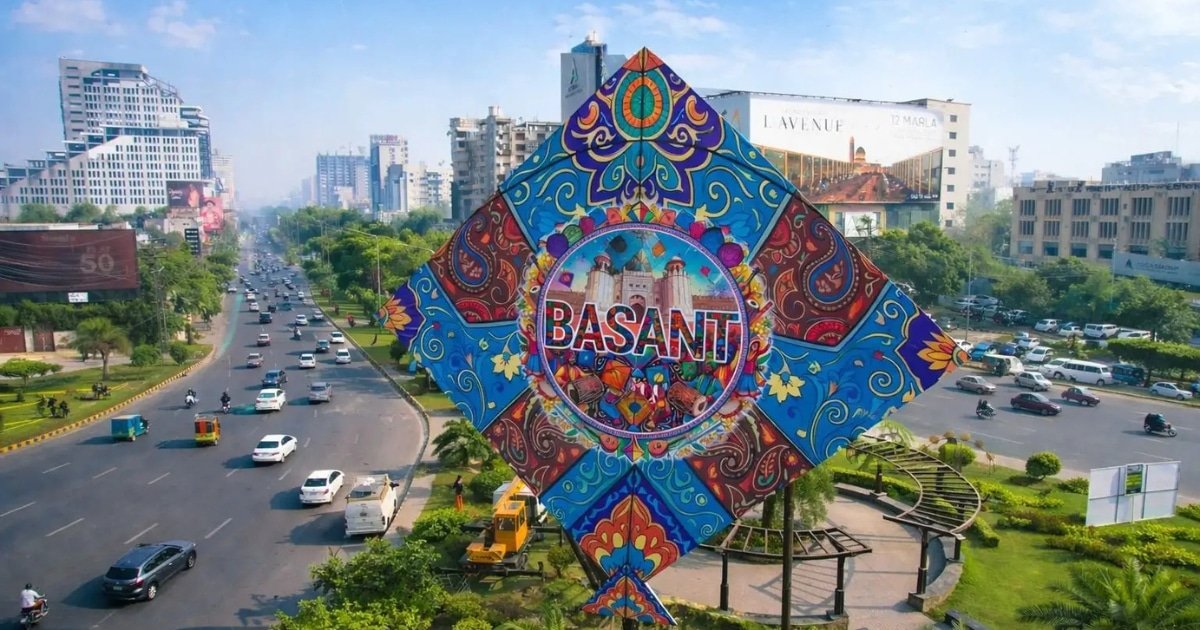


The arrival of February 08 saw the city of Lahore and several other urban centers in Pakistan transformed into a kaleidoscope of color as the third day of the Basant festival took center stage. Despite a nationwide call for political protests, the day was defined by a massive public turnout for cultural festivities, signaling a collective preference for social cohesion and economic activity over political confrontation.
A quarter century on, Basant proved Lahore’s spirit was only paused, never broken.This wasn’t the end of Basant; it was the return of Lahore 🩷 pic.twitter.com/y0wBO49XD5
— Maryam Nawaz Sharif (@MaryamNSharif) February 8, 2026
A Multicolored Skyline: Basant Revives Public Joy
From the early hours of the morning, the rooftops of Lahore were crowded with families participating in the traditional kite-flying Basant festival. For many citizens, the event served as a necessary outlet for community bonding and joyful engagement. The atmosphere across major cities remained vibrant, with traditional music and the cheers of “Bo-Kata” echoing through residential neighborhoods.
Observers noted that the festival drew participants from various cities, turning the weekend into a domestic tourism event. Families traveled to Lahore to experience the unique cultural heritage, reinforcing the city’s status as the heart of Pakistan’s folk traditions.
Lahore marked the conclusion of the Basant on Sunday with widespread celebrations across the city, as skies filled with colourful kites and residents gathered on rooftops, streets and public spaces to welcome spring in a display of tradition, endurance and cautious celebration… pic.twitter.com/sCAkzvjSGC
— The Express Tribune (@etribune) February 9, 2026
Economic Windfall: 100 Crore Stimulus
Beyond the cultural spectacle, Basant 2026 proved to be a significant catalyst for the local economy. Preliminary market estimates suggest that the festival generated economic activity worth approximately 100 Crores (1 billion PKR).
This financial influx was driven primarily by:
- Artisanal Production: The intensive sale of traditional kites and high-quality chord (manjha).
- Retail and Hospitality: Increased footfall in local eateries, street food stalls, and the apparel sector.
- Logistics: The movement of thousands of visitors across provincial borders.
Economists suggest that this surge provided a vital boost to small-scale vendors and cottage industries, many of whom rely on seasonal festivals for their annual livelihoods.
Political Protests Meet Lukewarm Response
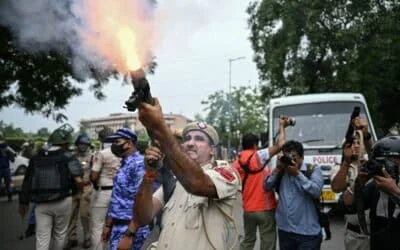
In stark contrast to the massive public participation in Basant, the nationwide call for protests saw a significantly low turnout. While law enforcement agencies remained on high alert to maintain order, reports from major urban centers indicated that general normalcy prevailed.
Statistics from the day’s events highlighted the disparity:
- Federal Capital: In Islamabad, approximately 60 to 70 individuals gathered near the Faisal Mosque for a brief demonstration before dispersing peacefully.
- Lahore: Despite being a political hub, the city saw only small, fragmented groups. A torch-bearing rally led by Salman Akram Raja involved roughly 40 to 50 participants, with other scattered groups in the Mall Road and Anarkali areas bringing the total estimated strength to fewer than 100 individuals.
- Rural Districts: In areas like Tehsil Darya Khan (Bhakkar), participation was recorded as low as 20 individuals.
A Mandate for Stability and Social Fabric
The low participation in political rallies, coinciding with the high-energy celebrations of Basant, has been interpreted by many analysts as a “silent mandate” for stability. Markets across the country remained open, and the shutter-down strike failed to materialize as business owners chose to capitalize on the festive weekend.
Sociologists argue that the public’s choice to prioritize cultural engagement over street agitation reflects a growing weariness toward futile confrontation. By choosing the kite-flying festival over the protest grounds, the populace effectively signaled a rejection of narratives that threaten the social fabric and the national economy.
As the country navigates a complex economic recovery, the events of February 08 suggest that the Pakistani public is increasingly leaning toward activities that promote national integration and economic productivity rather than political disintegration.
Pakistanis across Lahore city are taking to the rooftops to celebrate the three-day spring festival of Basant by flying colorful kites after a gap of several years.https://t.co/WyVdc1uik6 pic.twitter.com/zayPR1nqp6
— DW News (@dwnews) February 7, 2026
Fact-Checking the “Shutter-Down” Claims
The most striking aspect of the February 08 events was the significant gap between the political rhetoric projected on social media and the tangible reality of the streets. While protest organizers attempted to frame the lack of commercial activity as a successful “shutter-down strike” in response to their call, a basic situational analysis reveals a much more mundane truth. The day in question was a Sunday—a day when major wholesale markets, commercial centers, and retail hubs in Pakistan traditionally remain closed. By attempting to claim a routine weekly holiday as a political victory, the protest leadership relied on a narrative that was easily dismantled by local residents who witnessed a city not in mourning, but in celebration.
Furthermore, the “empty streets” depicted in selective political footage were often the result of the public moving vertically rather than horizontally. While the main thoroughfares in business districts were quiet due to the weekend, the rooftops of residential colonies were teeming with life. This shift in the “theater of activity” from the pavement to the terrace signifies a fundamental miscalculation by political strategists. They failed to recognize that the public’s absence from the protest grounds was not a sign of compliance with a strike, but an active choice to invest their time and resources into the cultural and economic vitality of Basant.
You May Like To Read: Investigation Underway Following Fatal Explosion at Shanxi Biotechnology Facility in China
Ultimately, the failure of the February 08 protest call highlights a growing “narrative fatigue” among the populace. The public’s refusal to sacrifice a 100 Crore economic windfall for a day of political agitation suggests that the era of traditional street power may be giving way to a more pragmatic, economy-first mindset. By choosing the kite-string over the protest banner, the people of Lahore and beyond did more than just celebrate a festival; they issued a definitive, silent mandate for social normalcy and economic continuity over manufactured instability.
Check out our latest video: