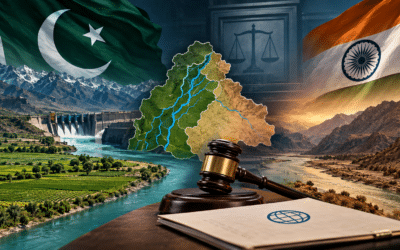





In a major escalation of diplomatic and strategic tensions in South Asia, the Foreign Office of Pakistan issued a stern warning to New Delhi on Thursday. Islamabad declared that any deliberate attempt by India to block river waters essential to Pakistan’s survival will be treated as an “act of war” under international law, triggering Pakistan’s inherent right to armed self-defense under the United Nations Charter.
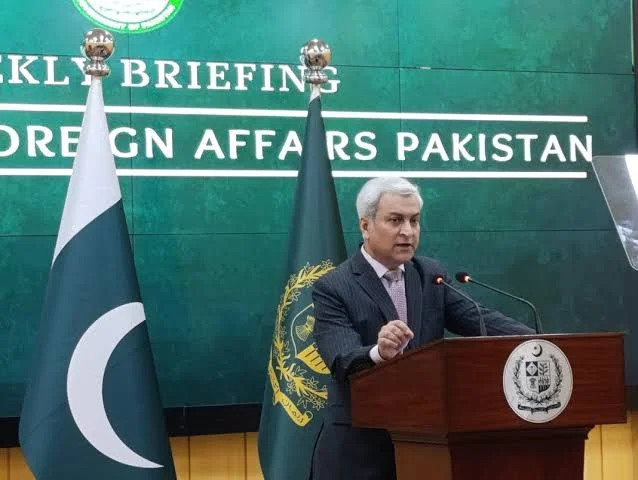
During his weekly press briefing in Islamabad, Foreign Office Spokesperson Tahir Andrabi described recent public declarations by Indian Union Minister for Water Resources C.R. Patil as “deeply irresponsible.” Minister Patil had stated in a public speech that India was actively executing “directives” from Prime Minister Narendra Modi to ensure that “not a single drop of water” flows down into neighboring Pakistan in the coming years.
🔴LIVE: Spokesperson’s Weekly Press Briefing 11-06-2026 at Ministry of Foreign Affairs, Islamabad https://t.co/K7TYojAFia
— Ministry of Foreign Affairs – Pakistan (@ForeignOfficePk) June 11, 2026
Strategic Flashpoints: Water Security, Nuclear Proliferation, and Maritime Piracy
The Foreign Office briefing addressed three critical areas impacting Pakistan’s national security and international diplomacy:
1. The Indus Waters Standoff
The row over transboundary water access directly threatens the survival of Pakistan’s agricultural economy. Under long-standing international legal treaties, the waters emerging from Indian-illegally Occupied Jammu and Kashmir (IIOJK) are vital to the life and livelihood of Pakistan’s 250 million citizens. The Foreign Office explicitly rejected the notion that water can be weaponized as a political tool of coercion.
2. Vertical Nuclear Proliferation Metrics
Andrabi highlighted the findings of the latest report by the Stockholm International Peace Research Institute (SIPRI) regarding South Asia’s nuclear balance. While noting that open-source estimates likely underreport the true scale of India’s operational nuclear program, Pakistan validated concerns regarding New Delhi’s rapid deployment of new strategic assets:
3. The Somali Hostage Crisis
The spokesperson provided a tactical update on Pakistani maritime crew members held hostage by Somali pirates on a captured cargo vessel for almost 50 days. Deputy Prime Minister and Foreign Minister Ishaq Dar has established a direct diplomatic channel with Somalia’s federal government and tribal leaders in the autonomous Puntland region. Pakistan’s embassy is currently leading an inter-ministerial task force to secure the release of a multi-national hostage group consisting of Pakistani, Indian, Indonesian, Myanmar, and Sri Lankan sailors.
Critical Analysis: Hydro-Warfare as Casus Belli, Strategic Submarine Postures, and Self-Determination
The uncompromising tone of the Foreign Office briefing signals a dangerous low point in bilateral relations, driven by an intersection of resource scarcity and shifting military doctrines:
1. Weaponizing the Indus Waters Treaty as a Casus Belli
By explicitly invoking Article 51 of the United Nations Charter—which guarantees a nation’s inherent right to individual or collective self-defense if an armed attack occurs—Pakistan has established a clear red line regarding its water security. This marks a significant shift in diplomatic language.
The Indus Waters Treaty (IWT) has survived multiple full-scale wars between India and Pakistan since 1960. By elevating C.R. Patil’s threats from a political speech to a formal casus belli (an act justifying war), Islamabad is signaling to the international community that it views hydro-engineering projects designed to divert western rivers as an existential threat. If India cuts off these waters, it would devastate Pakistan’s agriculture and economy, forcing a conventional military response to protect the country’s survival.
2. The Nuclear Triad and the Collapse of Crisis Stability
Pakistan’s response to the 2026 SIPRI report highlights deep anxieties within the region’s defense establishment regarding India’s “vertical proliferation.” The development of canister-launched ballistic missiles and multiple independently targetable re-entry vehicles (MIRVs), combined with an expanding fleet of nuclear-powered ballistic missile submarines (SSBNs), changes the nature of deterrence in South Asia.
These technologies allow India to transition toward a high-alert, pre-mated nuclear posture, significantly reducing decision-making time during a border crisis. The Foreign Office’s warning that these systems “complicate crisis stability” reveals a growing concern that the historic doctrine of “Credible Minimum Deterrence” is being undermined, forcing Pakistan to upgrade its own operational readiness to maintain a strategic balance.
3. Rejecting False Equivalences Across the Line of Control
Andrabi’s strong rejection of any “false equivalence” between the political situations in Azad Jammu and Kashmir (AJK) and Indian-illegally Occupied Jammu and Kashmir (IIOJK) is a direct pushback against recent Indian diplomatic rhetoric. New Delhi has frequently attempted to deflect international scrutiny from its actions in Kashmir by alleging administrative mismanagement in AJK.
By framing the situation in AJK as a functioning democratic and constitutional system while describing IIOJK as an internationally recognized disputed territory under repressive military occupation, Pakistan is reinforcing the legal framework established by UN Security Council resolutions. This narrative strategy ensures that India’s domestic actions, such as demographic changes and human rights violations, remain the primary focus of international legal evaluations.
4. Backchannel Middle East Mediation and Strategic Value
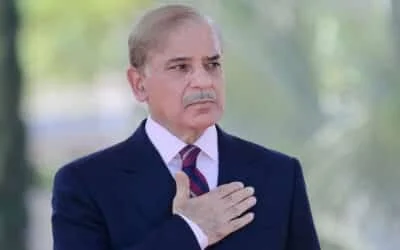
The Foreign Office’s confirmation that Pakistan actively facilitated the diplomatic engagement that led to the recent ceasefire between Israel and Lebanon highlights Islamabad’s continued value as a responsible international partner. Under the leadership of Prime Minister Shehbaz Sharif, Pakistan has used its unique, trusted access to both Washington and Tehran to serve as a reliable backchannel mediator.
By demonstrating its ability to help manage complex global crises, Pakistan is building diplomatic capital with major world powers. The state hopes to leverage this international goodwill to secure closer monitoring of India’s nuclear buildup and enforce compliance with transboundary water treaties in South Asia.