

The regional ceasefire brokered in April has broken down completely following a massive, coordinated military confrontation between the United States and the Islamic Republic of Iran.
Iran, US trade blows as Middle East peace deal draws no nearer.
Iran attacked US bases in Jordan and Bahrain on Wednesday, the latest salvo in tit-for-tat strikes with the United States after the downing of a US helicopter over the Strait of Hormuzhttps://t.co/FP3TXMwjfW pic.twitter.com/HQT0CcDsvY
— AFP News Agency (@AFP) June 10, 2026
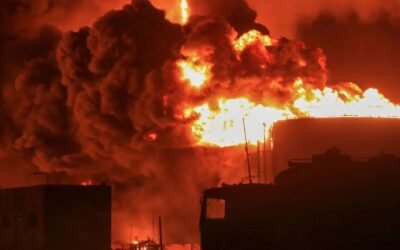
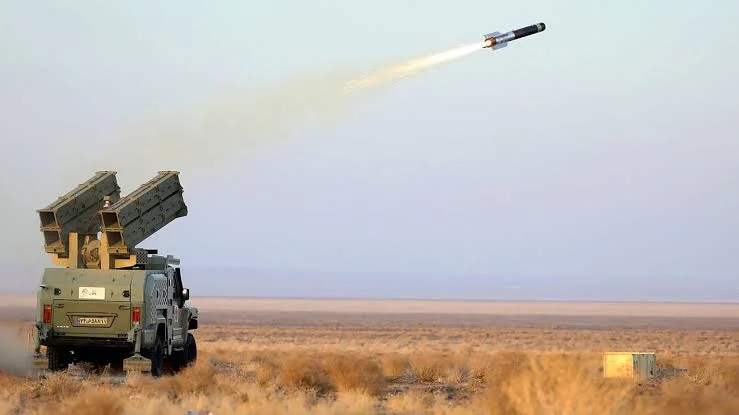
In a formal statement carried by Iranian state media on Wednesday, the Islamic Revolutionary Guard Corps (IRGC) officially claimed responsibility for a multi-axis retaliatory campaign. The operation featured drone swarms targeting the U.S. Fifth Fleet headquarters in Bahrain and the Ali Al Salem Air Base in Kuwait, alongside long-range ballistic missile salvos directed at the Muwaffaq Salti Air Base in Azraq, Jordan.
The IRGC asserted that its forces targeted 21 American installations, claiming the successful destruction of four high-value targets, including a fortified F-35 fighter jet hangar and an operational command-and-control center in Jordan. Defense ministries and regional command centers in Manama, Kuwait City, and Amman quickly disputed the extent of the damage.
Joint air defense networks—utilizing integrated Patriot and Aegis systems—successfully intercepted almost all incoming projectiles over their respective airspaces, resulting in zero American or allied casualties.
The Strategic Escalation and Theater Engagement Metrics
The rapid escalation across the Persian Gulf corridor is the direct result of a highly volatile series of events over the past 48 hours. The underlying metrics and operational details verified by regional military observers reveal the following:
-
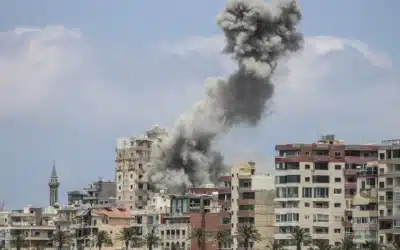
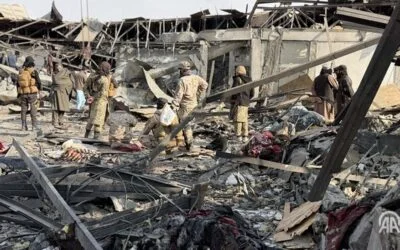
The Hormuz Coastal Bombardment: The escalation began after CENTCOM launched a four-hour precision bombing campaign targeting Iranian air defense positions, ground control stations, and surveillance radar arrays near the Strait of Hormuz. The strikes were ordered by President Donald Trump in retaliation for Monday’s downing of a U.S. Army Apache helicopter by an Iranian drone. The IRGC confirmed that the American strikes hit critical infrastructure on Qeshm Island and damaged a telecommunications tower and municipal water reservoirs in the port town of Sirik.
-
The New Defensive Doctrine: Regional defense experts note that the IRGC’s immediate, multi-axis counter-strike marks a deliberate shift in Iranian military doctrine. Rather than absorbing the strikes or utilizing covert proxies, Tehran chose to deliver a harsh, direct, and immediate conventional response. This move was designed to prevent Washington from establishing a “new normal” where the U.S. can strike Iranian soil with impunity.
-
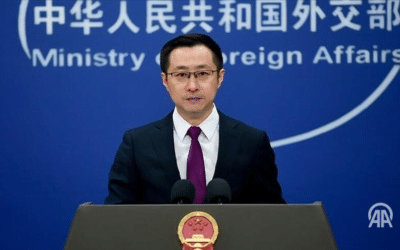
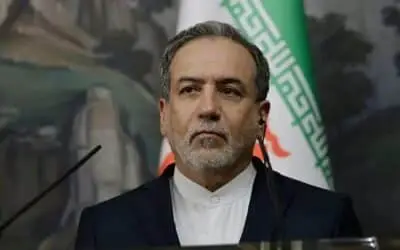
Sovereignty Invasions and the Qatari Mediation: As the Gulf Cooperation Council (GCC) states condemned the strikes as blatant violations of their territorial integrity and sovereignty, a high-level Qatari diplomatic delegation arrived unexpectedly in Tehran. Iranian Foreign Ministry Spokesperson Esmaeil Baghaei confirmed that Qatari envoys are holding urgent talks with top Iranian officials in a desperate effort to restore a diplomatic baseline before the conflict escalates into a full-scale regional war.
Critical Analysis: Coercive Escalation, Regional Sovereignty Violations, and the Deterioration of Diplomatic Trust
The intense military engagements of the past 24 hours reveal the precarious nature of Middle East security and highlight the deep-seated contradictions preventing a permanent peace agreement:
1. The Perils of Trump’s “Deal-Making” Leverage Strategy
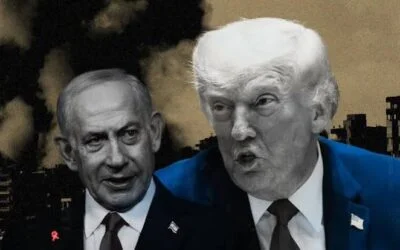
President Trump’s warning on Truth Social that Iran will “pay the price” because they “took too long to negotiate a deal” reveals the core assumption driving current U.S. foreign policy. The Trump administration is using a strategy of coercive escalation, intentionally using sharp military responses—such as the bombardment of Qeshm Island—to create maximum negotiating leverage.
However, this approach is based on a fundamental miscalculation of Iranian strategic culture. Rather than forcing Tehran into a quick compromise, sudden U.S. airstrikes force the Iranian leadership to respond aggressively to maintain its domestic credibility and regional deterrence, transforming what Washington intended as a brief show of strength into an open-ended, high-risk military confrontation.
2. The Structural Defiance of Iran’s New Proportionality Doctrine
As noted by senior Middle East analysts at the Quincy Institute for Responsible Statecraft, the IRGC’s rapid attack on U.S. bases across three different countries represents a significant evolution in its defensive strategy. Iran has adopted an uncompromising doctrine of immediate, direct retaliation to any attack on its soil, regardless of its scale.
By targeting core American assets in Bahrain, Kuwait, and Jordan simultaneously, Tehran is sending a clear message to Washington: any future strike on Iranian territory will automatically trigger a wider regional war that endangers America’s entire military footprint and alliances in the Middle East. This rigid stance effectively removes any room for gray-zone diplomacy, ensuring that even minor border incidents can rapidly escalate into full-scale state-on-state warfare.
3. The Forced Involvement of the Gulf States and Jordan
The missile and drone attacks on targets in Bahrain, Kuwait, and Jordan underscore how easily the region’s smaller nations can be drawn into a superpower confrontation against their will. Despite Iran’s warnings that its neighbors have a legal and moral responsibility to deny the U.S. military use of their airspace, countries like Kuwait and Bahrain host vital, long-standing American defensive installations that they cannot easily dismantle.
By directly firing ordnance into these sovereign nations, the IRGC is attempting to force these Arab governments to pressure Washington into a ceasefire. However, this strategy risks backfiring; these nations view the attacks as a direct threat to their own sovereignty, which could drive them to seek even closer integration with U.S. and Israeli air defense networks for self-preservation.
4. The Complete Collapse of Diplomatic Trust
The public statements by Foreign Ministry Spokesman Esmaeil Baghaei expose a fundamental breakdown of trust that will be exceptionally difficult to repair. Just 24 hours before these strikes, President Trump told journalists that both nations were in the “final throes” of a historic peace treaty.
The abrupt transition from closing a major peace deal to launching an extensive bombing campaign on coastal radar installations confirms Tehran’s deepest suspicions: that the United States is an unreliable negotiating partner that uses peace talks as a stalling tactic. With both sides now using escalation to prove they hold the upper hand, the diplomatic progress made during the Pakistan and Qatar sessions has been severely undermined, leaving the region on the brink of an unmanageable, multi-front war.