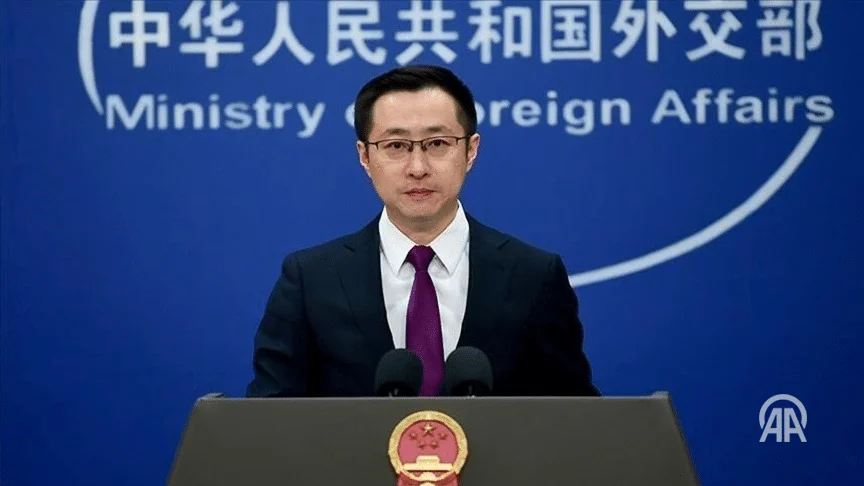





As the direct military confrontation between the United States and the Islamic Republic of Iran threatens to expand into an all-out regional war, the People’s Republic of China has issued an urgent diplomatic warning. Beijing has explicitly stated that the arbitrary use of military power by the U.S., Israel, and Iran has officially “proven” ineffective at resolving the fundamental security crisis in the Middle East.
🇨🇳 China reiterated its call on Washington and Tehran to stop escalating tensions after the US launched fresh attacks on Iran
📍 Beijing’s reaction comes after US military launched attacks on military targets in response to downing of a US Army Apache helicopter… pic.twitter.com/nWAd4s7tbG
— Anadolu English (@anadoluagency) June 10, 2026
Speaking from the Ministry of Foreign Affairs press briefing room in Beijing on Wednesday, spokesperson Lin Jian declared that China is “deeply concerned” by the overnight collapse of the regional ceasefire.
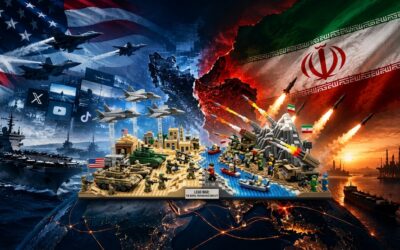
The statement follows a rapid series of events: U.S. Central Command (CENTCOM) launched a heavy naval and air bombardment against southern Iranian coastal assets on Tuesday to avenge the downing of a U.S. Army Apache helicopter, which was immediately followed by a wave of retaliatory IRGC ballistic missile and drone strikes against American bases in Jordan, Kuwait, and Bahrain early Wednesday morning.
The Costs of the Three-Month Conflict Matrix
The Chinese Foreign Ministry’s assessment focused on the broader regional damage caused by the conflict since hostilities originally broke out on February 28:
-
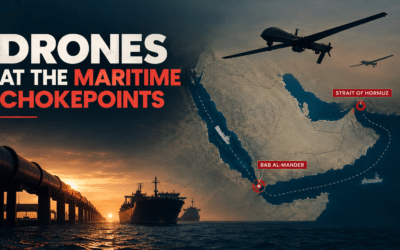
The Regional Economic Toll: Spokesperson Lin Jian highlighted that the conflict—which has dragged on for more than three months—has dealt a severe economic and security blow to the countries of the Gulf Cooperation Council (GCC) and the wider Middle East, destabilizing international energy shipping lanes and global food supply metrics.
-
The Interrupted Diplomatic Window: Beijing emphasized that the direct exchange of missile fire occurred at the exact moment when backchannel U.S.-Iran negotiations were entering a “crucial stage” in Pakistan and Qatar, warning that neither side should allow local border incidents to reignite a wider state-on-state war.
-
The Call for Sovereign Protection: China called on all combatants to immediately halt any confrontational actions, cool down the situation, and unconditionally respect the sovereignty, national security, and territorial integrity of Middle Eastern nations.
Critical Analysis: Strategic Mediation Deficit, the Failure of Superpower Coercion, and Beijing’s Multipolar Positioning
The public statements from the Chinese Foreign Ministry reveal the critical strategic calculations shaping Beijing’s diplomatic approach to the Middle East crisis:
1. The Total Failure of Coercive Escalation as a Diplomatic Tool
Lin Jian’s statement that “facts have proven military means cannot solve any problem and arbitrary use of force will only complicate the issues” is a direct challenge to the Trump administration’s current foreign policy doctrine. The United States and Israel have consistently operated on the assumption that launch-on-demand military strikes—such as the CENTCOM bombardment of Qeshm Island or Israel’s recent campaign against Hezbollah in Lebanon—will create negotiating leverage and force Tehran into signing a quick peace treaty.
Beijing’s analysis correctly identifies the flaw in this approach: in asymmetric warfare, sudden high-impact conventional strikes do not force a compromise. Instead, they destroy the minimal political trust required to sustain a dialogue, forcing Iranian hardliners to retaliate directly to maintain their deterrence. This transforms what Washington intended as a brief show of strength into an unstable, escalating conflict that derails months of diplomatic progress.
2. Protecting the Pakistan-Qatar Backchannel from Total Collapse
The timing of China’s diplomatic intervention is designed to protect the fragile negotiations currently taking place in Islamabad and Doha. Beijing understands that the sudden, emotional reaction from both Washington and Tehran following the Apache helicopter downing has put the entire peace process at risk.
By labeling the current negotiations as being at a “crucial stage,” China is reminding both adversaries that they are dangerously close to destroying a viable, long-term peace agreement over a localized border incident. Beijing is urging both capitals to look past the political noise and realize that returning to the compromise frameworks built during the Pakistan sessions is the only alternative to an unmanageable, multi-theater war that neither economy can afford.
3. Exploiting the Divergence in U.S.-Israeli Objectives
China’s sharp rhetoric regarding “ceasefire violations despite the U.S. pressing against strikes” highlights the growing division between Washington and Jerusalem. By publicly pointing out that Israel is executing unauthorized strikes in Lebanon that undermine the wider U.S.-Iran negotiations, Beijing is using diplomacy to isolate Israel’s political leadership.
This positioning allows China to frame itself as the mature, stable global power acting in the interest of the wider international community, while contrasting its approach with what it views as a disorganized American foreign policy structure that is incapable of restraining its closest regional ally.
4. Positioning Beijing as the Neutral Alternative for Peace
By citing President Xi Jinping’s “four propositions” for Middle East peace, China is positioning itself to play a larger role as a mediator in the region. Unlike the United States, which is an active combatant through CENTCOM’s actions, China maintains strong diplomatic and economic ties with all major players in the conflict, including Iran, the GCC states, and Israel.
As the economic fallout from closed shipping lanes in the Strait of Hormuz continues to drive up global energy costs, Beijing is building an international diplomatic consensus. This strategy signals to the global community that if Washington’s approach of military coercion fails to stabilize the Middle East, China is fully prepared to use its economic influence to lead a alternative, multipolar peace process.