




In a major diplomatic validation of Islamabad’s backchannel peace efforts, Egyptian Foreign Minister Badr Abdelatty has formally conveyed Cairo’s deep appreciation for Pakistan’s continued mediation in the conflict involving the United States, Israel, and Iran.
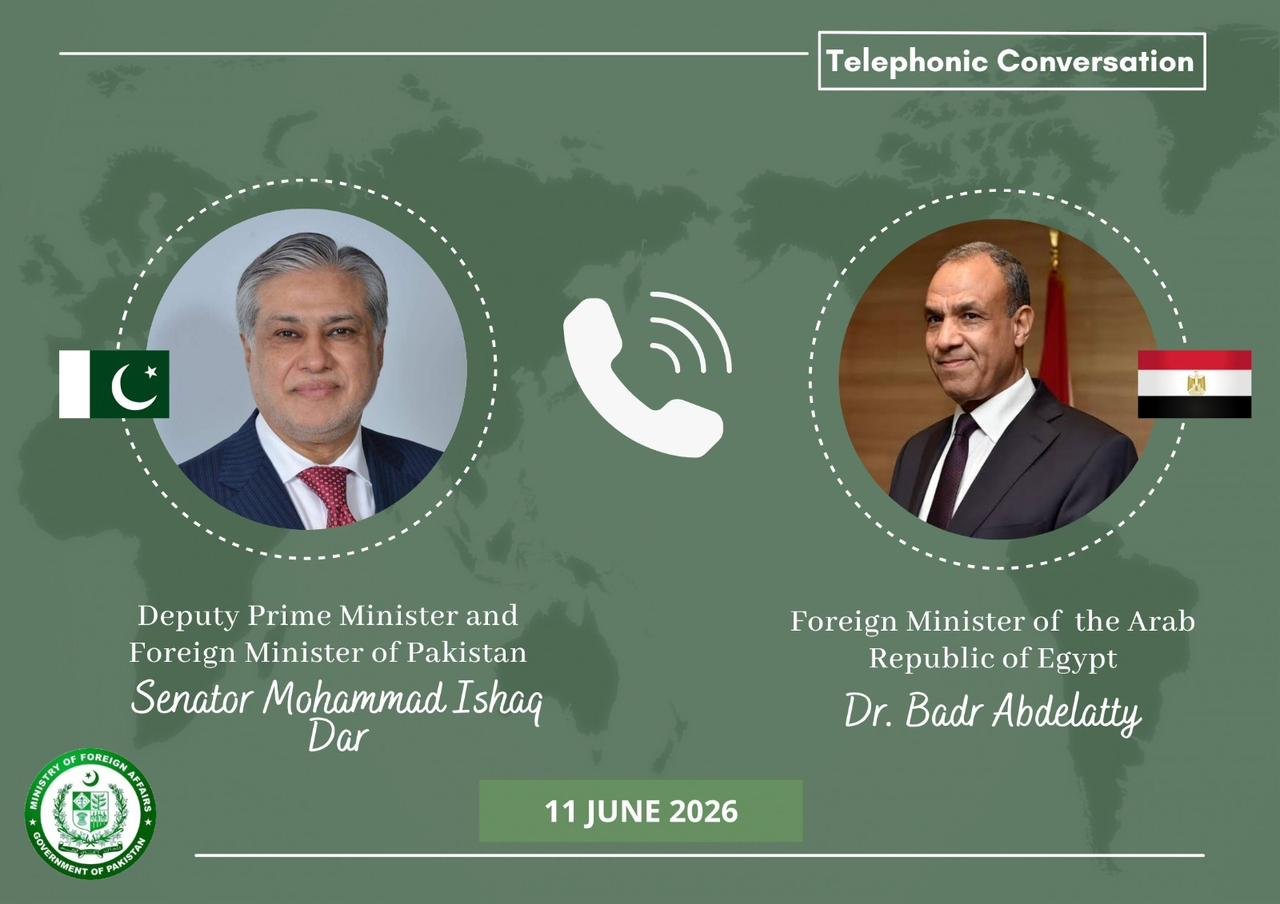
The high-level endorsement came during an urgent telephonic consultation on Thursday between Egypt’s Foreign Minister and Pakistan’s Deputy Prime Minister and Minister for Foreign Affairs, Senator Mohammad Ishaq Dar.
With the Middle East ceasefire facing severe pressure following recent direct military exchanges in the Persian Gulf and ongoing operations in the Levant, the two top diplomats held detailed discussions on volatile regional developments. Both leaders strongly emphasized the critical importance of keeping diplomatic channels open, expressing a shared hope that Pakistan’s ongoing backchannel efforts will secure an early understanding between the warring parties to restore long-term regional stability.
Deputy Prime Minister/Foreign Minister Senator Mohammad Ishaq Dar @MIshaqDar50 held a telephone conversation today with Egypt’s Foreign Minister Badr Abdelatty.
They discussed regional developments and stressed the importance of continued dialogue and diplomatic engagement. FM… pic.twitter.com/robrhq6M1r
— Ministry of Foreign Affairs – Pakistan (@ForeignOfficePk) June 11, 2026
The Regional Four (R-4) Diplomatic Track
As a direct result of Pakistan’s central role in managing the crisis, Cairo has moved to integrate Islamabad into the primary Arab-African diplomatic framework:
-
The Ministerial Invitation: Foreign Minister Abdelatty extended an official invitation to Deputy Prime Minister Ishaq Dar to participate in the upcoming emergency meeting of the Regional Four (R-4) Foreign Ministers, scheduled to convene in Egypt later this month.
-
The Strategic Acceptance: Recognizing the critical timing of the summit, DPM Ishaq Dar graciously accepted the invitation, securing Pakistan a direct seat at the table with key regional power brokers.
-
Continuous Coordination: Both ministries officially agreed to maintain a continuous, high-level line of communication to coordinate policy responses and stabilize the fluid security situation across the Suez and Persian Gulf corridors.
Critical Analysis: Strategic Shift in Arab Diplomacy, the R-4 Vector, and Rawalpindi-Cairo Alignment
The diplomatic breakthrough achieved during the Dar-Abdelatty call reveals a significant repositioning of Pakistan within the shifting geopolitical landscape of the Middle East:
1. Cairo’s Recognition of Pakistan’s Unique Backchannel Position
Egypt’s explicit praise for Pakistan’s mediation represents a major shift in how traditional Arab powers view Islamabad’s foreign policy. For decades, Middle Eastern crises were managed almost exclusively by an inner circle of Arab states, primarily Egypt, Qatar, and Saudi Arabia.
However, because the current war features direct, conventional military clashes between U.S. forces, Israel, and Iran, the conflict requires a mediator that carries weight with both Washington and Tehran. Pakistan’s military and diplomatic establishment—led by Field Marshal Asim Munir and managed by DPM Ishaq Dar—is uniquely positioned to fill this role. By publicly backing Pakistan’s efforts, Egypt is acknowledging that the traditional Arab diplomatic toolkit is no longer sufficient on its own, and that Rawalpindi’s trusted connection to Iran’s military command is essential to halting the cycle of retaliation.
2. The Geopolitical Importance of the Regional Four (R-4) Invitation
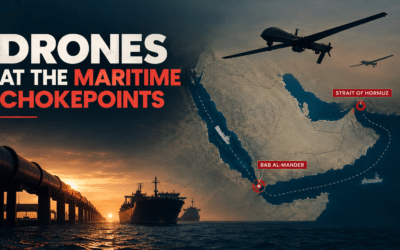
The invitation for DPM Ishaq Dar to join the Regional Four (R-4) summit in Egypt elevates Pakistan from an ad-hoc backchannel messenger to an active partner in shaping the post-war security architecture of the Middle East. The R-4 framework brings together the key frontline states most exposed to the economic fallout of the conflict, particularly the disruption of shipping lanes in the Red Sea and the Strait of Hormuz.
Pakistan’s inclusion in this ministerial meeting ensures that the country’s own economic and security concerns—including the protection of its massive diaspora workforce in the Gulf and the stability of its domestic fuel prices—will be directly integrated into the broader regional peace template.
3. De-escalating the “Final Throes” Volatility
The urgency of the telephonic consultation is underscored by the high volatility of current U.S.-Iran negotiations. While international mediators have repeatedly noted that the core peace treaty is in its “final throes,” localized military incidents—such as the downing of the U.S. Apache helicopter and the subsequent IRGC missile strikes on American bases—continue to threaten the entire process.
The coordination between Cairo and Islamabad is designed to create a diplomatic cushion against these sudden military flare-ups. By aligning their diplomatic responses, Egypt and Pakistan are signaling to both Washington and Tehran that the wider international community expects them to look past short-term provocations and return to the compromise frameworks established during the Pakistan and Qatar sessions.
4. Preserving State Sovereignty and Preventing Regional Contagion
For Egypt, the continuation of a multi-theater war is an existential threat to its economy, as maritime security directly impacts Suez Canal revenues. By partnering with Pakistan, Cairo is trying to build a strong diplomatic front that can pressure external actors to respect the sovereignty, security, and territorial integrity of Middle Eastern nations.
The joint call by Dar and Abdelatty for “concrete diplomatic actions” serves as a direct message to both Israel and the IRGC command structure: the regional states will not allow their sovereign territories, airspaces, or economic zones to be converted into a permanent battleground for a superpower proxy war.