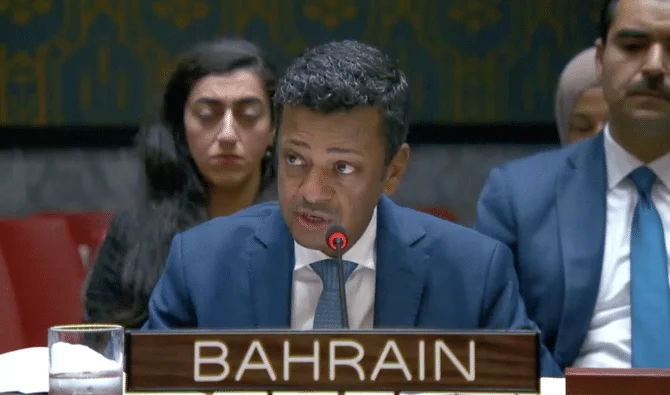





In a blistering address before the United Nations Security Council, Bahrain’s permanent representative, Jamal Al-Rowaiei, accused Iran of treating international diplomacy as a cynical crisis-management tool designed to buy time while simultaneously launching devastating aerial assaults against neighboring Gulf states.
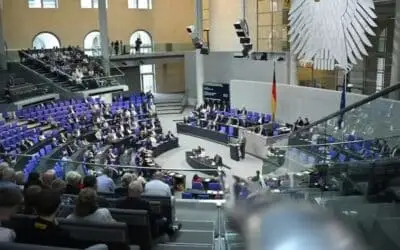
The emergency Council session, convened to review the UN Secretary-General’s 21st report on the implementation of Security Council Resolution 2231—the framework that originally endorsed the 2015 nuclear deal (JCPOA)—was requested by Bahrain alongside the Council’s five European members: Denmark, France, Greece, Latvia, and the United Kingdom.
🔴 Iranian UN envoy after Bahraini envoy said Iran using diplomacy to ‘manage crises, gain time’:
🔴 Rejects “unfounded accusations” made on Friday by Bahrain, France, and the UK, who condemned Iran’s continued attacks on the Gulf states.
🔴 “Rather than condemn unlawful… pic.twitter.com/WBhH7mbO0F— Arab News (@arabnews) July 10, 2026
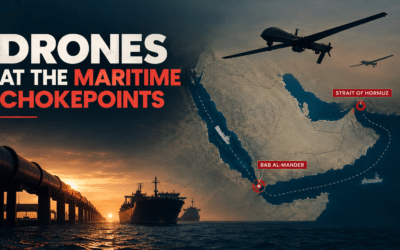
Escalation in the Gulf: The Strait of Hormuz Chokepoint
Al-Rowaiei informed the Council that the Middle East has entered one of the most volatile and dangerous phases in its modern history. He traced the genesis of the current crisis to late February, when Iran initiated a brutal wave of drone and ballistic missile strikes targeting civilian objects, energy facilities, and critical infrastructure across Jordan and the Gulf Cooperation Council (GCC) states.
The envoy highlighted the catastrophic economic fallout from Iran’s unilateral closure of the Strait of Hormuz to international shipping, a move that choked off vital maritime corridors, triggering unprecedented shocks to the global economy, food security networks, and international energy supplies.
Systematic Violations of the Islamabad Memorandum
The focal point of Bahrain’s argument was Tehran’s persistent refusal to honor its signature on recent peace initiatives. Al-Rowaiei explicitly stated that Iran is already in direct violation of the Islamabad Memorandum, an interim peace framework brokered by Pakistan and signed just weeks ago on June 17, which had aimed to permanently halt hostilities and restore safe commercial passage through the Persian Gulf.
Furthermore, the envoy noted that Iran has entirely ignored its obligations under UNSC Resolution 2817, adopted on March 11, which formally commanded Tehran to immediately cease all cross-border hostilities against regional sovereign states.
“This reinforces the impression that for Iran, diplomacy is not a path for resolving disputes, but rather a means of managing crises and gaining time,” Al-Rowaiei told the Council. “Its true positions and aggressions on the ground are expressed through ballistic missiles, drones, and the continuous support, financing, training, and arming of regional proxies.”
Verification Blackout and the Call for Council Action
Turning to the nuclear file, the Bahraini representative emphasized that any diplomatic progress on Iran’s nuclear program is fundamentally unsustainable without full, transparent compliance with international obligations. He referenced the Secretary-General’s latest report, which issued a stark warning regarding active verification challenges, inadequate monitoring capabilities, and a critical “loss of continuity of knowledge” regarding Iran’s advanced nuclear facilities.
Al-Rowaiei concluded with a firm appeal to the Security Council, warning that the body’s global credibility hangs in the balance. He asserted that regional confidence cannot be restored if the UN permits its binding texts and international obligations to remain unforced, urging members to ensure that Council resolutions do not degenerate into mere “ink on paper.”