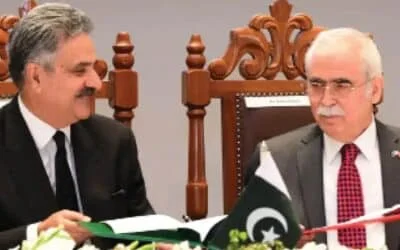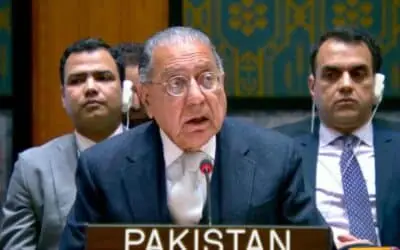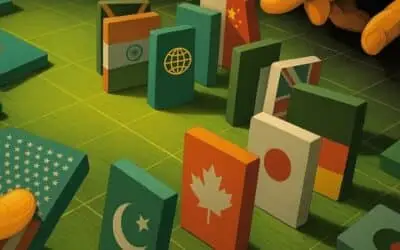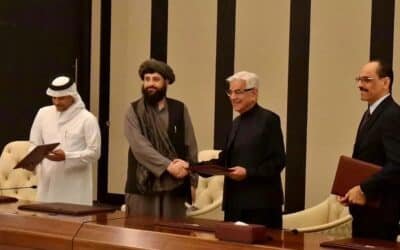


Belt and Road Initiative (BRI) is a global infrastructure project and intercontinental economic development project by China, which aims to boost trade and connectivity in the region in Asia, Europe, and Africa. The China-Pakistan Economic Corridor (CPEC), which is a multi-billion-dollar road-energy-port grid aimed at enhancing the Pakistani economy and the integration of the region, is its most visible aspect in South Asia. Although the project is expected to yield economic gains, including investment and employment opportunities, issues of increased debt, low local contribution, and plans of strategic reliance on China have also been raised. The article addresses the question of whether BRI has become a real prospect for the economic development of Pakistan or leads to a dependency trap.
Economic Opportunities
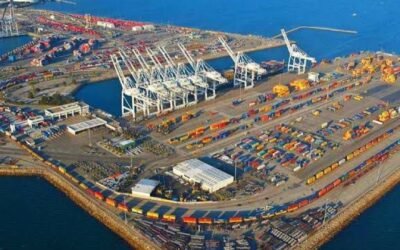
Pakistan, especially with the aid of the Belt and Road Initiative (BRI) and China-Pakistan Economic Corridor (CPEC), is developing its infrastructure. The introduction of mega schemes such as the highways, energy generation plants, and the Gwadar port construction has minimised power cuts and enhanced road linkages within the nation. The improvements enable the goods and people to move within Pakistan and to other regional countries with ease, increasing the potential for both trade and investments.
CPEC has also brought billions worth of foreign direct investment (FDI) from China and resulted in special economic zones (SEZs) and industrial hubs in various regions of Pakistan. These areas are meant to encourage local production as well as exports through the provision of improved infrastructure and facilities. Trade with Central Asia and also with China is going to expand due to shorter transportation conditions and improved logistics. Furthermore, CPEC initiatives have generated thousands of jobs in such areas as building and transportation, as well as providing the opportunity to transfer technology and skills to Pakistani labour.
Dependency Risks
Although the Belt and Road Initiative (BRI) has given rise to significant investments, it has also raised serious issues over the increasing debt burden of Pakistan. Most of the CPEC schemes are funded on a loan basis and not grants. As of 2023, Pakistan had more than 30 billion dollars in debt to Chinese institutions, which means that there is fiscal pressure on the economy. This has caused apprehensions like a debt trap, Pakistan may struggle to repay China or uphold its commitments on strategic assets and policy agreements.
The other significant issue at hand involves the minimal participation of the local industries in CPEC initiatives. The majority of the big contracts have been awarded to Chinese firms, with little possibility for Pakistani small and medium-sized enterprises (SMEs) to expand and develop at the industrial level. Sovereignty has also been a problem due to the long-term leasing and operational control of the strategic infrastructure, such as Gwadar Port; the opponents argue that there is the possibility of overreliance and the loss of policy autonomy. Also, the BRI projects have been subject to the attractions of environmental degradation and the displacement of communities with minimal transparency and consultation in environmental studies.
Pakistan’s future is being built, sector by sector.
CPEC Phase 2 focuses on innovation, jobs, and inclusive development to empower the next generation.#CPEC2025 #UraanPakistan #YouthForDevelopment #EconomicTransformation pic.twitter.com/IsoXN49zLj— Ministry of Planning and Development (@PlanComPakistan) July 1, 2025
Business Perspective for Pakistan under BRI
Belt and Road Initiative (BRI), especially CPEC, has provided Pakistani businesses with opportunities to expand by going into joint ventures with Chinese stakeholders. These alliances are capable of giving local companies access to new technologies, capital, and the local supply chain. Companies within the sphere of Special Economic Zones (SEZs) have more advantageous infrastructure and incentives for export-oriented production. Pakistan has also received Chinese financing and investment, as some of its firms can access financing and investment in sectors, including energy, logistics, and agriculture.
Nevertheless, structural barriers present a great challenge. Local firms have a hard time competing with giant Chinese firms when it comes to winning the big contracts of CPEC. Small and medium businesses in Pakistan often struggle to participate in CPEC projects or access clear information on tender rules. Poor regulatory structures and minimal participation in project preparation have also placed Pakistani entrepreneurs at the receiving end regarding the full execution of the initiative.
Among the most interesting examples of successful local engagement in CPEC is the cooperation between Power China and the HUBCO (Hub Power Company), one of the largest energy companies in Pakistan. They jointly came up with China Power Hub Generation Company (CPHGC), a power plant with a cost of 2 billion dollars, consisting of coal-fired power stations that started functioning in the year 2019, which is located in Balochistan. HUBCO owns 46 per cent share, and it is a good illustration of a joint venture between a state-owned enterprise in China and a Pakistani company that is privately owned. The addition of 1320 MW to the national grid by the project was not only effective, but it also created hundreds of jobs and involved local subcontractors in the construction.
Conclusion
CPEC comes with great prospects for Pakistan in terms of infrastructure building, growth of trade, and investment inflows through the Belt and Road Initiative. Nevertheless, such advantages are associated with severe issues, such as increasing debts, insignificant local business involvement, and environmental effects. The initiative poses a growth platform and competitive pressure to Pakistani businesses. As the country looks ahead, Pakistan should implement transparent policies, secure the presence of local industries, and contain strategic risks to make BRI a sustainable means of national growth, nurturing state development but not dependency.