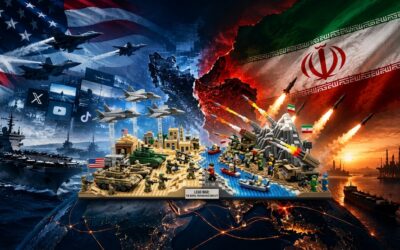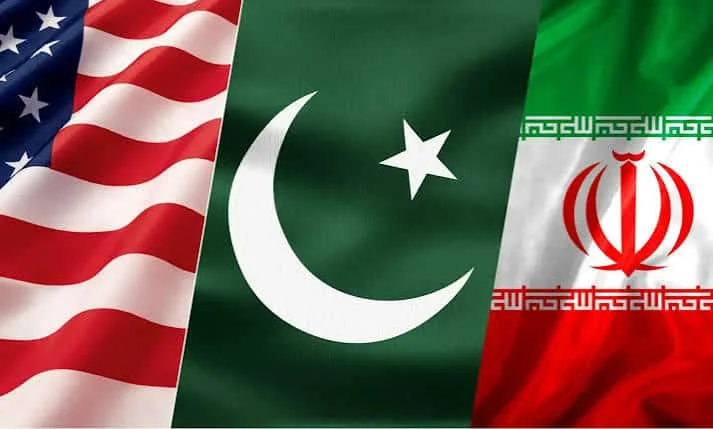





The Government of Pakistan has issued an urgent, high-stakes appeal to both the United States and Iran, imploring all participating actors to exercise immediate tactical restraint after a fragile three-week ceasefire collapsed into an expansive wave of regional missile strikes and heavy air bombardments.
In an official diplomatic communique released by the Ministry of Foreign Affairs on Wednesday, Islamabad warned that a renewed all-out conflict is in absolutely no one’s interest. The ministry strongly urged both Washington and Tehran to honor their strategic commitments under the Islamabad Memorandum of Understanding (MoU), characterizing the framework as an enduring foundation for regional stabilization, mutual respect, and shared prosperity.
The statement explicitly affirmed that Pakistan remains actively prepared to continue leveraging its unique diplomatic channels to de-escalate the volatile situation, even as its flagship mediation initiative faces its most severe operational trial since the war initially erupted in late February.
A Brokered Peace Crumbles Under Kinetic Strikes
The Foreign Ministry’s intervention followed a massive, multi-axis escalation on Wednesday and Thursday. The U.S. military executed a second consecutive night of intense air strikes, dropping ordnance on roughly 90 military targets inside Iran. The operation aimed to degrade coastal radar arrays, anti-ship cruise missile storage depots, and small fast-attack naval crafts. Iranian state media subsequently confirmed multiple military casualties, including an army soldier killed during a strike in the border city of Iranshahr and eight navy and air force personnel killed across the southern military hubs of Bandar Abbas and Bushehr.
In a rapid, symmetrical response, Iran’s Islamic Revolutionary Guard Corps (IRGC) launched heavy waves of ballistic missiles and suicide drones targeting forward American installations across neighboring Gulf states:
-
Kuwait: Heavily targeted at Camp Arifjan and Ali Al Salem Air Base, with Kuwaiti officials denouncing the strikes as a flagrant violation of national sovereignty.
-
Bahrain: Targeted at NSA Juffair, the operational headquarters of the U.S. Fifth Fleet, prompting sharp condemnation from Gulf Cooperation Council (GCC) Secretary-General Jasem Mohamed AlBudaiwi for undermining regional peace efforts.
-
Qatar: Hit by separate drone incursions, drawing a swift condemnation from Doha.
This destructive tit-for-tat cycle was ignited early in the week when three commercial tankers—including a Qatari-owned LNG vessel—were disabled by projectiles in the Strait of Hormuz, prompting the U.S. Department of the Treasury to immediately reinstate crippling oil sanctions and revoke economic waivers granted under the original June agreement.
Sharp Rhetoric and Post-Summit Backtracking
The diplomatic friction has been exacerbated by highly volatile rhetoric from the executive branches of both primary combatants. Speaking from the NATO summit in Ankara, Turkey, U.S. President Donald Trump declared the Islamabad ceasefire effectively “over,” referring to the Iranian leadership in highly derogatory terms while threatening to re-impose a total naval blockade on the country and launch targeted operations to seize Kharg Island, Iran’s primary energy export terminal.
However, while traveling aboard Air Force One later on Thursday, President Trump shifted his narrative, revealing to traveling reporters that Iranian representatives had recently initiated a phone call seeking a revised settlement. While Trump expressed public skepticism regarding Tehran’s worthiness as a negotiating partner, he left a narrow window open for continued technical engagement. Trump also reiterated his personal security concerns, stating that he considers himself the Iranian regime’s primary target for assassination in retaliation for the February air strikes that killed Supreme Leader Ayatollah Ali Khamenei.
In a parallel diplomatic track, Qatari Prime Minister Sheikh Mohammed bin Abdulrahman bin Jassim Al Thani held an emergency phone call with Iranian Foreign Minister Abbas Araghchi, echoing Pakistan’s plea for both nations to return to the baseline parameters established in the June 17 MoU.
Regional Mediators under Extreme Duress
Aviation and geopolitical experts note that the current crisis places Pakistan’s foreign policy apparatus under immense pressure. Islamabad successfully managed the initial round of delicate, indirect negotiations back in April and June, successfully constructing a 60-day cooling-off window that was slated to run until August 21.
Jauhar Saleem, a veteran former Pakistani diplomat and current president of the Islamabad-based Institute of Regional Studies, noted that the mediation track is under extreme structural stress. Saleem emphasized that for the peace process to survive, both protagonists must demonstrate immediate flexibility and avoid overplaying their strategic cards.
According to Saleem, the path forward requires a dual compromise: Iran must accept that maintaining an unimpeded, secure shipping flow through the Strait of Hormuz is entirely non-negotiable for the global economy, while Washington must adopt a more responsible public posture to avoid creating an unworkable atmosphere of animosity. Saleem concluded that while independent intermediaries like Pakistan have historically managed to pull the process back from total derailment, permanent de-escalation ultimately relies on the direct cooperation of the two primary protagonists.