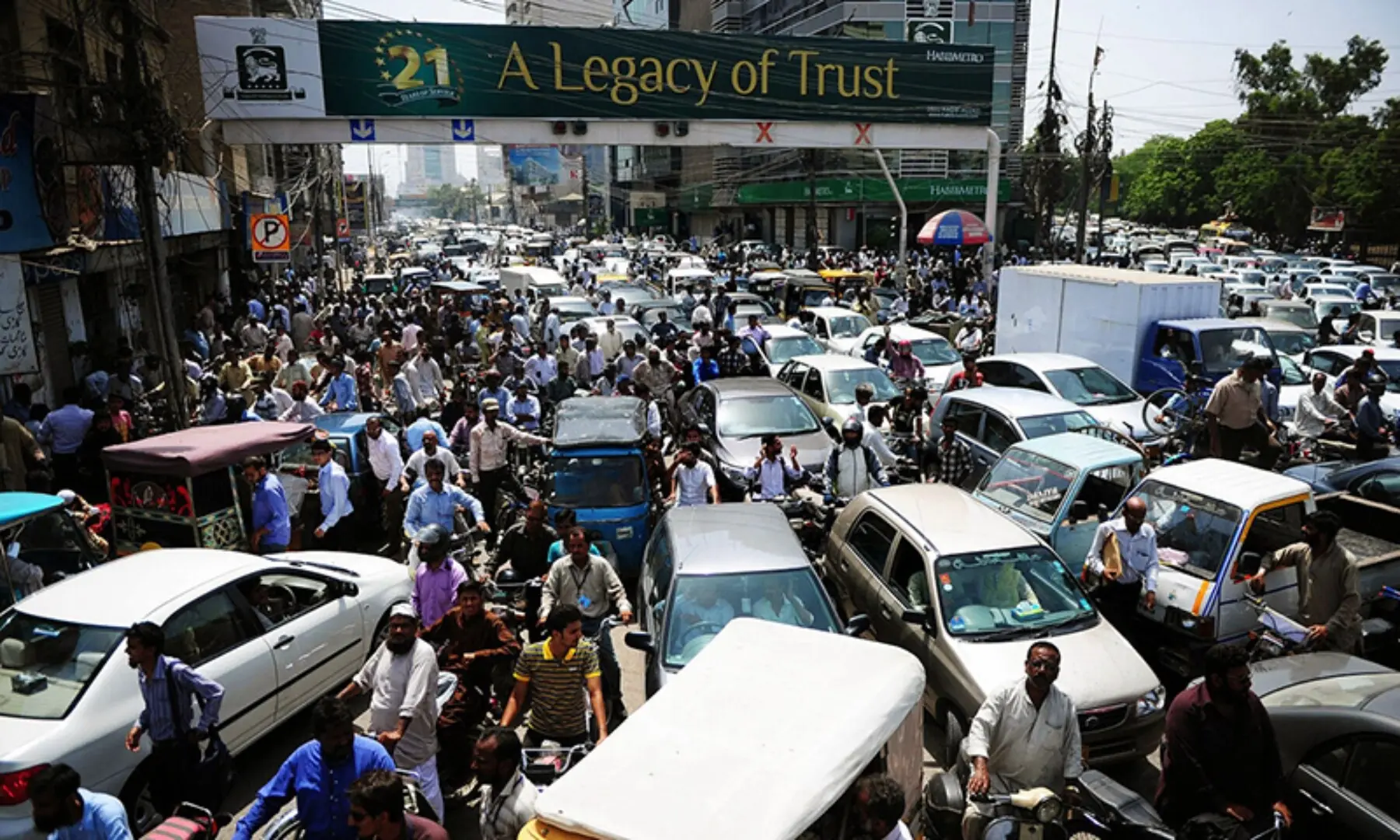





Marking World Population Day under a cloud of severe long-term economic vulnerability, Prime Minister Shehbaz Sharif and President Asif Ali Zardari issued dual executive mandates on Saturday calling for an immediate, unified national effort to check Pakistan’s rapidly expanding populace. The emergency calls to action arrive as federal census data confirms an annual population growth rate of 2.55 per cent—a metric placing catastrophic structural pressure on the country’s fragile economy, health systems, and public infrastructure.
The executive warnings coincide with the formal operations of the newly formed National Population Council (NPC), an apex policy-coordination body that includes the Prime Minister, provincial Chief Ministers, and Chief of Army Staff Field Marshal Syed Asim Munir. The council has been given a strict mandate to enforce cross-provincial strategies to reverse a demographic trend that puts Pakistan on track to surpass Indonesia as the world’s fourth most populous nation by 2030.
The Demographic Asset vs. The Economic Strain
In his central address on Saturday, Prime Minister Shehbaz Sharif focused heavily on the stark duality of Pakistan’s current demographic profile. The state currently ranks as the fifth most populous country globally, with a distinct feature: roughly 65 per cent of its total population is under the age of 30.
The Prime Minister characterized this vast youth segment as a tremendous national asset and a potentially powerful engine for socio-economic progress. However, he warned that the current 2.55 per cent annual growth rate actively threatens to turn this potential demographic dividend into a severe structural liability.
وزیراعظم محمد شہباز شریف کا عالمی یومِ آبادی 11 جولائی 2026 پر پیغام.
پاکستان آج عالمی یومِ آبادی پر اقوام عالم کے ساتھ ہم آواز ہو کر آبادی کی پائیدار ترقی اور خوشحالی کی ضامن ذمہ دارانہ منصوبہ بندی کے عزم کی تجدید کرتا ہے۔
آبادی کی ذمہ دارانہ اور دانشمندانہ منصوبہ سازی اور…
— Prime Minister’s Office (@PakPMO) July 11, 2026
Sharif stressed that unchecked growth presents immediate, crippling challenges to state-level economic planning, generating severe deficits across multiple critical sectors:
-
Employment Generation: The domestic market is structurally unable to produce enough high-value jobs to absorb the annual influx of young workers.
-
Public Service Infrastructure: Overcrowded public school networks, underfunded maternal and child healthcare facilities, and severe deficits in affordable housing units.
-
Resource Preservation: Immediate strains on national food security networks, critical municipal water supplies, and long-term environmental sustainability.
The Prime Minister highlighted that the theme for World Population Day, “Realizing the Hopes and Aspirations of Young People, Today and for the Future,” directly aligns with the government’s collective responsibility to build a welfare-oriented society where national population figures remain strictly commensurate with available physical and fiscal resources.
Inter-Provincial Coordination and the Mandate of the NPC
To bridge the historical policy divide between the federal center and individual provincial administrations following the devolution of population welfare under the 18th Constitutional Amendment, the newly established National Population Council will serve as the premier strategic authority.
The NPC is engineered to streamline institutional collaboration and remove policy friction between federal and provincial ministries. The council’s core focus includes integrating population metrics directly into the national development agenda, formulating evidence-based public health interventions, and actively promoting women’s empowerment and human resource development as primary methods to lower birth rates. Through this coordinated action, the administration aims to transform demographic vulnerabilities into resilient national strength.
President Zardari Demands Focus on Maternal Health and Women’s Agency
Echoing the Prime Minister’s policy directives, President Asif Ali Zardari released a separate executive message, demanding that women, children, and young people be placed at the absolute center of all future national development efforts.
“I call upon all stakeholders, government institutions, parliamentarians, academia, civil society organisations, development partners, religious leaders, the media and communities to work together in promoting the health, wellbeing and empowerment of our people. By placing… pic.twitter.com/eWnBrLELHD
— The President of Pakistan (@PresOfPakistan) July 11, 2026
The President focused heavily on the deep interconnectivity between macro-demographic trends and localized healthcare access. He asserted that a society cannot achieve genuine economic prosperity or sustainable human development when mothers face preventable, fatal risks during pregnancy and childbirth, or when young girls are systematically denied basic access to quality education, nutrition, and equal opportunities.
Invoking the legacy and historical vision of former Prime Minister Benazir Bhutto, President Zardari reminded policymakers that robust reproductive health rights, universal maternal healthcare access, and the socio-economic empowerment of women are not merely moral responsibilities, but urgent national security imperatives. The President concluded by urging all stakeholders—including civil society networks, private sector leaders, medical academia, and religious scholars—to collaborate immediately with the state to secure a stable and dignified future for subsequent generations.