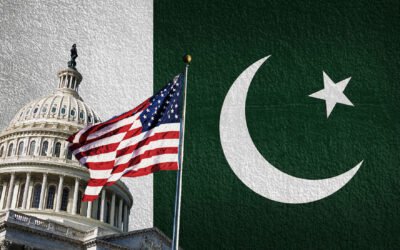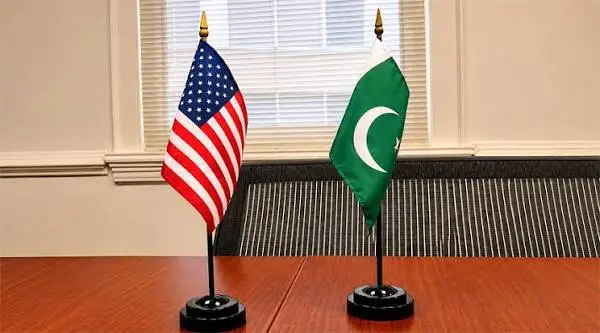



In a major breakthrough aimed at stabilizing economic ties amid recent global trade volatility, Pakistan and the United States have achieved significant progress toward a comprehensive reciprocal trade agreement following two days of intensive, high-level negotiations in Washington. The Foreign Office in Islamabad confirmed Saturday that both delegations successfully narrowed long-standing regulatory differences and established a firm consensus to expedite the pact’s final conclusion.
Foreign Office Spokesperson Tahir Andrabi stated that the formal negotiations regarding the Pakistan-United States Agreement on Reciprocal Trade were conducted on July 9 and 10 in a highly constructive atmosphere. Lead negotiator and Pakistan Commerce Secretary Jawad Paul characterized the outcome as overwhelmingly positive, highlighting a mutual commitment to dismantle structural commercial barriers.
Negotiations on the Pakistan-United States Agreement on Reciprocal Trade are being held in Washington on Thursday and Friday@ForeignOfficePk @TahirAndrabi @PakinUSA #RadioPakistan #News https://t.co/PagAlnsk3U pic.twitter.com/J8utYi6tiR
— Radio Pakistan (@RadioPakistan) July 9, 2026
Delegations Lock in Key Export Sectors and Soft Diplomacy
The face-to-face negotiations focused heavily on facilitating deeper corporate integration, expanding existing market access, and removing bureaucratic red tape.
-
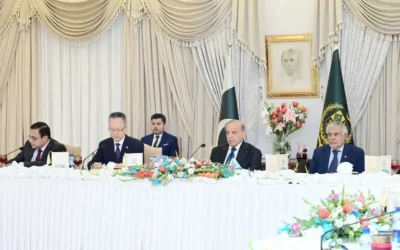
High-Level Representation: Pakistan’s delegation in Washington was led by Commerce Secretary Jawad Paul, alongside Secretary for Overseas Pakistanis and Human Resource Development Nadeem Chaudhary and Joint Secretary for Tariff Policy Mohammad Ashfaq. Senior officials from the Ministry of Foreign Affairs and various domestic economic line ministries participated via secure virtual links.
-
Industrial Diplomacy: Reflecting the practical focus of the talks, official images released by the Foreign Office showed Secretary Paul presenting a premium, Pakistan-manufactured football to a senior U.S. trade official. The gesture underscored one of Pakistan’s flagship export manufacturing sectors, which dominates global sports equipment supply chains.
The United States remains Pakistan’s largest single-country export destination. According to data from the Office of the U.S. Trade Representative, total bilateral goods and services trade stood at 10.1 billion dollars in 2024. In 2025, U.S. goods trade reached 8.7 billion dollars, with U.S. exports to Pakistan hitting 3.3 billion dollars and imports from Pakistan rising to 5.4 billion dollars, maintaining a substantial trade surplus in Islamabad’s favor.
Defusing the Trump Tariff Surge and Legal Hurdles
The latest round of commercial diplomacy occurred against a highly volatile backdrop of shifting U.S. protectionist measures. Earlier this year, the Trump administration proposed a sweeping 29% tariff on Pakistani goods, which was later negotiated down to 19% following intense pushback from Islamabad.
The legal architecture of these tariffs shifted dramatically after a landmark U.S. Supreme Court ruling determined that the International Emergency Economic Powers Act (IEEPA) did not authorize the U.S. President to impose broad, blanket tariffs under national emergency declarations. Following that legal defeat, the Trump administration pivotally invoked Section 122 of the Trade Act of 1974, applying a temporary 10% global tariff capped at a maximum of 150 days to address balance-of-payments anomalies.
Simultaneously, Pakistan has been actively managing a sensitive Section 301 investigation launched by the U.S. Trade Representative regarding alleged forced-labor trade practices. Islamabad has aggressively countered these allegations by submitting exhaustive compliance responses and independent labor audits to Washington, including a final, detailed defense package delivered right before this week’s talks commenced.
Business Community Welcomes Access to the American Market
Pakistan’s industrial sector has strongly endorsed the progress in Washington, viewing the reciprocal trade pact as an essential shield against global protectionism.
Lahore Chamber of Commerce and Industry (LCCI) President Faheem Ur Rehman Saigol stated that a formal, binding agreement is critical to secure long-term market predictability for Pakistan’s core export engines, particularly textiles, apparel, surgical instruments, sports goods, and high-growth information technology services. Saigol emphasized that Islamabad must continue to leverage its constructive regional diplomacy and strategic importance to lock in deep economic concessions, eliminate non-tariff barriers, and attract fresh U.S. investment to drive sustainable employment at home.