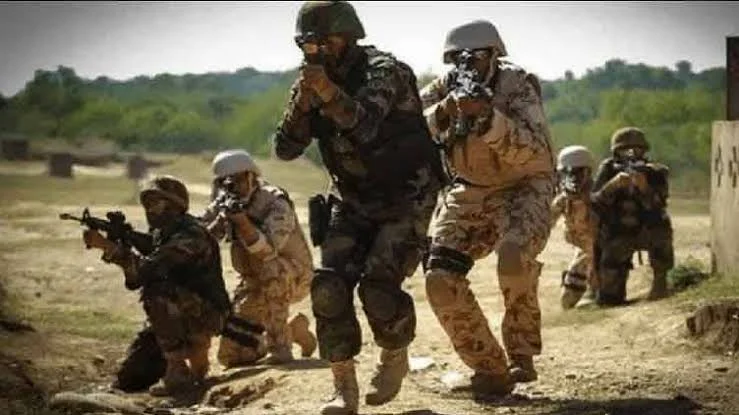





The security situation in southwestern Pakistan has deteriorated sharply following a series of highly coordinated insurgent operations across the mineral-rich Balochistan province. In a detailed, televised national security briefing on Wednesday, military spokesperson Lieutenant General Ahmad Sharif Chaudhry confirmed that rebel fighters executed separate, large-scale assaults that claimed the lives of 18 police officers and 11 regular army soldiers.
The latest casualties have dramatically elevated the domestic conflict’s momentum, raising the verified death toll from insurgent offensives since Monday to 42 individuals, including four civilians. Concurrently, Pakistani security forces launched aggressive counter-insurgency sweeps across the province, reporting the elimination of 54 armed fighters over a 48-hour period.
The Incidents: Mass Abductions and Highway Ambushes
The casualties underscore a significant tactical shift by militant groups targeting both static infrastructure guards and mobile military assets within Pakistan’s largest, lowest-populated province.
-
The Mangi Dam Abduction: The deadliest single event began on Monday in the rugged Ziarat district, when dozens of heavily armed insurgents launched a multi-directional assault on a security outpost guarding the vital Mangi dam infrastructure project. Initial clashes resulted in the immediate deaths of nine police officers. The attackers subsequently overwhelmed the remaining defensive detail, abducting 18 police officers. Security forces later confirmed that all 18 captive officers were executed by the retreating fighters.
-
The Highway Ambush: On Wednesday, insurgent units executed a precision ambush against a soft-skinned military transport vehicle traversing a main inter-provincial highway in Balochistan. The attackers utilized heavy automatic weapons and improvised explosive devices (IEDs) to disable the transport, killing 11 Pakistani soldiers before responding quick-reaction forces could secure the sector.
Transborder Friction: Islamabad Blames Kabul and New Delhi
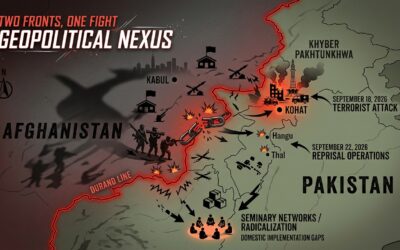
During his televised press conference, Lieutenant General Chaudhry adopted an aggressive diplomatic stance, explicitly warning external actors that Pakistan would no longer tolerate the cross-border nesting of hostile groups. He asserted that intelligence forensics indicate “many Afghan nationals” were directly involved in executing this week’s wave of violence.
The military spokesperson issued a clear warning, stating that Pakistani forces would aggressively hunt down, target, and dismantle terrorist networks along with their operational facilitators, financial sponsors, and host bases, regardless of their geographic location.
This statement intensifies the ongoing geopolitical dispute between Islamabad and the Afghan Taliban administration in Kabul. Pakistan has long maintained that the banned Tehreek-e-Taliban Pakistan (TTP)—which maintains a formal ideological alliance with the Afghan Taliban—uses safe havens inside Afghanistan to plan and launch sophisticated operations against Pakistani state targets.
This border friction has frequently escalated into kinetic clashes:
-
The Drone Interceptions: Earlier this month, Pakistani air defense units successfully intercepted and neutralized four weaponized drones launched from Afghan territory into Balochistan airspace. This incident is part of an ongoing series of tit-for-tat cross-border strikes that began in October 2025.
-
The June Border Clashes: In late June 2026, Pakistani forces killed 29 TTP fighters along the western frontier following a high-profile militant assault on a paramilitary compound in Karachi. However, the Afghan Taliban administration sharply disputed the operation’s outcome, claiming that Pakistani cross-border strikes hit civilian settlements, killing 36 non-combatants and wounding 163 others.
-
The Indian Dimension: Beyond its western border, Islamabad continues to accuse its eastern rival, India, of covertly financing and providing intelligence support to the banned Balochistan Liberation Army (BLA) to destabilize multi-billion-dollar foreign investment and logistics infrastructure. New Delhi has repeatedly denied these allegations. Nevertheless, Pakistani security operations in January 2026 resulted in the elimination of 41 armed insurgents whom authorities explicitly linked to external intelligence operations.
Contextual Realities of the Balochistan Conflict
Balochistan remains a highly volatile security theater, currently experiencing its fifth major separatist uprising since Pakistan gained independence in 1947. The current conflict involves a complex mix of ethnic Baloch separatists, such as the BLA, who demand total independence and greater control over local natural gas and mineral wealth, alongside transnational Islamist groups like the TTP seeking to replace the federal government.
Both factions have increasingly aligned their tactical profiles to target state personnel, communication links, and foreign-funded development projects. With the military signaling a shift toward aggressive cross-border hot-pursuit operations, observers warn that the domestic counter-insurgency campaign is rapidly evolving into a broader regional security crisis involving Afghanistan and neighboring states.