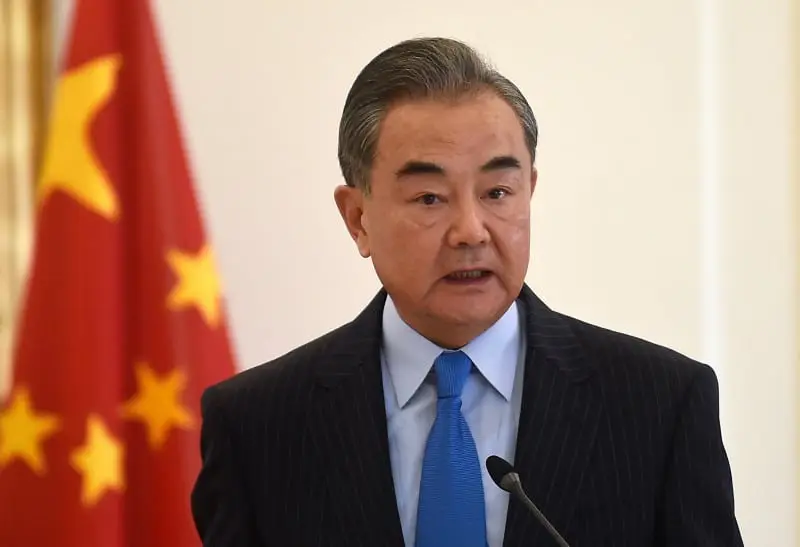





In the wake of the historic US-Iran Islamabad Memorandum of Understanding (MoU), China has formally called on all international stakeholders to commit firmly to the Middle East ceasefire. Speaking at a high-level press conference in Beijing, Chinese Foreign Minister Wang Yi urged coordinated global efforts to capitalize on the cessation of hostilities and lay the groundwork for a lasting, comprehensive regional security framework.
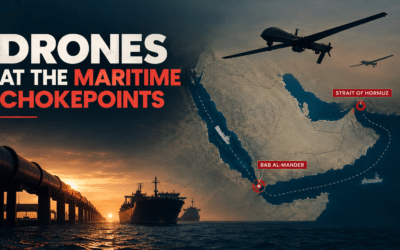
The statements come just days after US President Donald Trump and Iranian President Masoud Pezeshkian electronically signed the 14-point framework, which effectively terminates active military operations, reopens the strategic Strait of Hormuz, and establishes a 60-day diplomatic window to resolve sanctions and nuclear disputes. The official in-person signing ceremony for the treaty is scheduled to take place this Friday in Switzerland.
Beijing Asserts United Nations Supremacy Amid Global Governance Reform
While validating the immediate de-escalation in West Asia, Foreign Minister Wang Yi utilized the diplomatic breakthrough to highlight broader structural deficiencies in the current international order. He emphasized that the foremost priority in resolving contemporary global challenges is the strict fulfillment of obligations under the United Nations Charter and the systematic strengthening of the international system.
According to Beijing, true stabilization requires moving beyond transactional bilateral agreements toward universally recognized international rules. The Foreign Minister highlighted several key areas for global institutional reform:
Expanding Governance Frontiers: Wang called for the modernization and improvement of international governance rules governing outer space, the polar regions, and cyberspace to build a widely recognized and equitable global framework.
Reinvigorating Multilateralism: Emphasizing the need for concrete action rather than rhetoric, the foreign minister pressed for renewed international efforts to uphold the rule of law and elevate global governance capacity during the current period of geopolitical turbulence.
UNSC Accountability: As a permanent member of the UN Security Council, China reaffirmed its consistent, active role in global governance, pledging to work alongside member states to reinvigorate and strengthen the United Nations system.
State Council Unveils White Paper on Equitable International Order
The diplomatic briefing coincided with the official release of a comprehensive white paper by the State Council Information Office titled “More Just and Equitable Global Governance: China’s Principles, Proposals and Actions” . The state document formally outlines Beijing’s strategic vision for reforming the international architecture to better address overlapping global crises.
The white paper explicitly frames global governance as a shared responsibility directly linked to the collective well-being of humanity, positioning China as a stabilizing anchor within international systems. Central to the document is President Xi Jinping’s signature diplomatic philosophy of building a “community with a shared future for humanity” through the practice of “true multilateralism”. Furthermore, the text details the operational progress of the Global Governance Initiative. Originally proposed in 2025, the initiative has reportedly garnered formal endorsement and diplomatic backing from nearly 160 countries and international organizations, signaling growing global alignment with Beijing’s vision for a multipolar, inclusive global order.
Critical Analysis and Way Forward
An analytical assessment of Beijing’s diplomatic response reveals a calculated effort to steer the post-war narrative away from unilateral Western hegemony toward a multipolar framework. While the United States views the Islamabad MoU as a transactional triumph achieved via military and economic deterrence, China perceives it as a clear validation that kinetic enforcement has structural limits. By immediately pivoting from the bilateral US-Iran deal to the broader authority of the UN Charter, Beijing is subtly reminding the global community that permanent peace cannot be sustained through temporary, ad-hoc coalitions, but must be anchored in international law where China holds veto power.
Furthermore, the strategic timing of the State Council’s white paper suggests that China is moving to fill the normative vacuum left by months of intense warfare. By introducing governance rules for outer space, polar regions, and cyberspace alongside Middle Eastern security, Beijing is positioning itself as the primary architect of the next generation of international law. The main challenge moving forward will be ensuring that the upcoming Friday summit in Switzerland transitions seamlessly from a cessation of hostilities into a transparent, rule-based process that prevents regional violations and respects state sovereignty.
Expanding the Pakistan-China Diplomatic Synergy
For Pakistan, China’s enthusiastic endorsement of the peace process offers an exceptional opportunity to solidify its position as the premier diplomatic corridor of the region. Having successfully brokered the Islamabad MoU, Pakistan has demonstrated that its strategic utility is uniquely cooperative rather than exclusionary. Beijing’s call for a lasting regional security framework directly complements Pakistan’s national interest in stabilizing its western borders and securing long-term economic corridors.
Moving forward, Pakistan can leverage this diplomatic alignment through several proactive measures:
Co-Authoring Regional Security Architecture: Pakistan should collaborate with China to draft the institutional guidelines for the post-war Middle Eastern security framework, ensuring that the concerns of developing South Asian and West Asian states are adequately represented.
Accelerating Regional Connectivity: With the lifting of maritime blockades and the reopening of the Strait of Hormuz, Islamabad and Beijing should fast-track the integration of Gwadar Port with regional energy networks, transforming the China-Pakistan Economic Corridor (CPEC) into a multi-modal energy and trade hub.
Advancing True Multilateralism: Pakistan must actively align with the proposals outlined in China’s new white paper, utilizing its diplomatic capital within the UN and the Shanghai Cooperation Organisation (SCO) to advocate for equitable global governance that protects developing nations from unilateral economic sanctions.
By combining Pakistan’s proven mediation capabilities with China’s institutional weight and financial resources, both nations can ensure that the fragile truce signed in Islamabad matures into an enduring era of economic integration. This united approach will not only secure Pakistan’s western flank but will also establish a resilient, multipolar governance model capable of maintaining long-term peace, development, and stability across the Eurasian landmass.