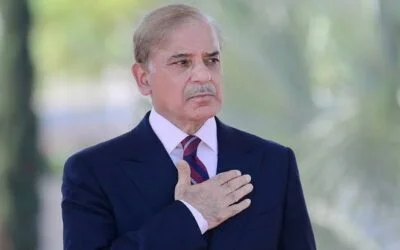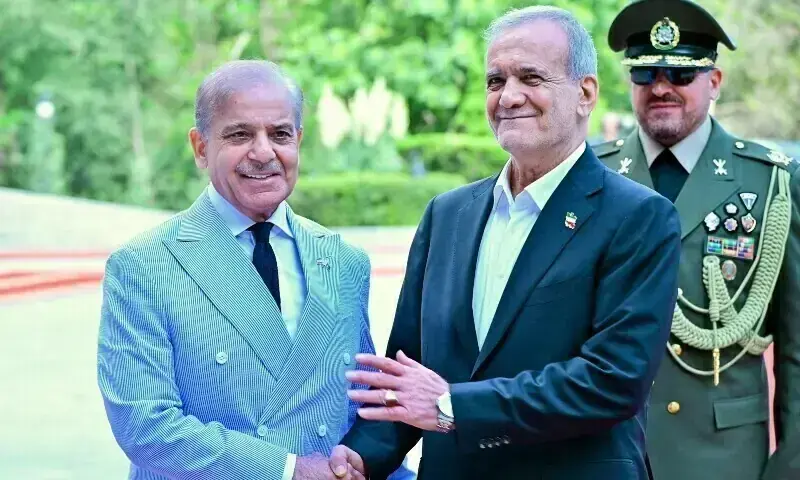



In their first official diplomatic contact since the formal signing of the historic “Islamabad Memorandum of Understanding” (MoU), Prime Minister Shehbaz Sharif and Iranian President Dr. Masoud Pezeshkian held an extensive, 30-minute telephonic summit to finalize the immediate implementation phases of the trilateral peace accord.
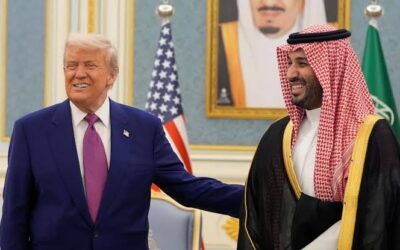
According to an official directive issued by the Prime Minister’s Office (PMO) on Thursday, Prime Minister Sharif extended his profound congratulations to the Iranian leadership and its brotherly citizens, declaring that the landmark 14-point framework—co-signed by U.S. President Donald Trump and brokered directly by Pakistan—will serve as the foundational pillar for rebuilding the Iranian economy and securing the global energy supply matrix.
The diplomatic breakthrough officially terminates more than 100 days of devastating war between Washington and Tehran. Under the mediated terms of the Islamabad MoU, a strict 60-day timeline has been established for comprehensive follow-up negotiations, anchored by the immediate reopening of the Strait of Hormuz to international commercial shipping and the lifting of the maritime blockade on Iranian ports.
Core Mandates of the 14-Point Islamabad Accord
The phone call focused on the concrete operational milestones detailed within the signed trilateral document, which are designed to undo the economic shockwaves felt globally since the outbreak of hostilities:
Immediate Demilitarization and Maritime Access: Iran has initiated the technical protocols to fully reopen the Strait of Hormuz, guaranteeing safe passage for international oil tankers. Concurrently, the United States has halted its naval blockade, restoring unhindered commercial access to Iran’s sovereign shipping terminals.
Sanctions Waivers and Energy Market Stabilization: Washington has committed to an immediate waiver of the primary and secondary oil sanctions that had crippled Iran’s domestic energy exports, a move that has already triggered a downward adjustment in global crude oil indices.
The $300 Billion Reconstruction Fund: Following the successful resolution of secondary negotiations regarding Iran’s long-term nuclear architecture, the United States will facilitate the release of a massive, multi-nationally backed $300 billion reconstruction fund dedicated to rebuilding Iran’s public infrastructure and industrial baseline.
Validation of the Civil-Military Mediation Architecture
During the high-level exchange, President Pezeshkian expressed the profound gratitude of the Iranian state toward Pakistan’s institutional leadership. The Iranian President explicitly thanked both Prime Minister Shehbaz Sharif and Chief of Defence Forces and Chief of Army Staff, Field Marshal Syed Asim Munir, praising their critical roles, diplomatic skill, and sincerity in managing the dangerous backchannel negotiations.
President Pezeshkian emphasized that Tehran will permanently remember Pakistan’s strategic support during its period of intense military conflict, noting that Pakistan’s role as a neutral, trusted mediator was the deciding factor in preventing an all-out continental war.
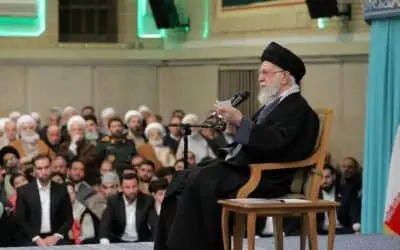
Concluding the summit, both leaders conveyed their highest regards to Iran’s Supreme Leader, Ayatollah Ali Khamenei, and agreed to execute formal state visits to Islamabad and Tehran at the earliest opportunity to expand bilateral trade, defense cooperation, and regional transport connectivity.
Critical Analysis: The Architecture of Multipolar Mediation, Reconstruction Economics, and Pakistan’s Strategic Ascent
The details of the post-treaty call highlight a historic turning point in Middle Eastern and South Asian geopolitics, driven by several key structural dynamics:
1. The Realignment of Pakistan as Eurasia’s Indispensable Mediator
The successful conclusion of the Islamabad MoU marks a major shift in Pakistan’s foreign policy role. By bringing the United States and Iran to the negotiating table after more than 100 days of direct military conflict, Islamabad has evolved from a regional security actor into a major Eurasian diplomatic power. This achievement was made possible by a unified civil-military strategy, combining the political channels of the Sharif administration with the institutional defense lines managed by Field Marshal Syed Asim Munir. This dual approach allowed Pakistan to offer verified security guarantees that more distant Western or regional mediators could not match, cementing its position as an essential anchor for stability in the region.
2. The Geopolitical Economy of the $300 Billion Reconstruction Fund
The creation of a $300 billion reconstruction fund represents a highly sophisticated diplomatic mechanism to ensure long-term compliance with the peace treaty. By tying the release of these massive infrastructure funds to a strict 60-day timeline for final nuclear negotiations, the agreement creates a powerful financial incentive for peace. For Iran, the fund offers a vital path to rebuild its economy after years of devastating sanctions and recent wartime destruction. For the international community, it serves as a stabilizing tool that replaces military deterrence with economic integration, turning a volatile conflict zone into a shared investment space for regional powers.
3. The Reopening of Hormuz and the Relief of Global Supply Chains
The immediate reopening of the Strait of Hormuz and the removal of the U.S. naval blockade provides critical relief to a strained global economy. The closure of this vital maritime chokepoint had sent shockwaves through international markets, driving up energy costs and insurance premiums for commercial shipping. By securing an immediate commitment to restore free navigation, Pakistan’s mediation has successfully averted a prolonged global energy crisis. This achievement directly benefits developing economies, including Pakistan’s own domestic industrial sector, which had been severely impacted by wartime fuel inflation.
4. Normalizing the Pak-Iran Strategic Frontier
The warm terms of the call between Prime Minister Sharif and President Pezeshkian signal a permanent deepening of bilateral ties. With the threat of U.S. secondary sanctions removed by the terms of the MoU, Islamabad and Tehran can now aggressively pursue long-delayed joint infrastructure projects, including cross-border energy pipelines and electricity transmission networks. Furthermore, the plan for immediate reciprocal state visits shows that both leaderships are eager to lock in these gains, transforming a historically cautious relationship into a robust, mutually beneficial economic and security partnership along their shared frontier.