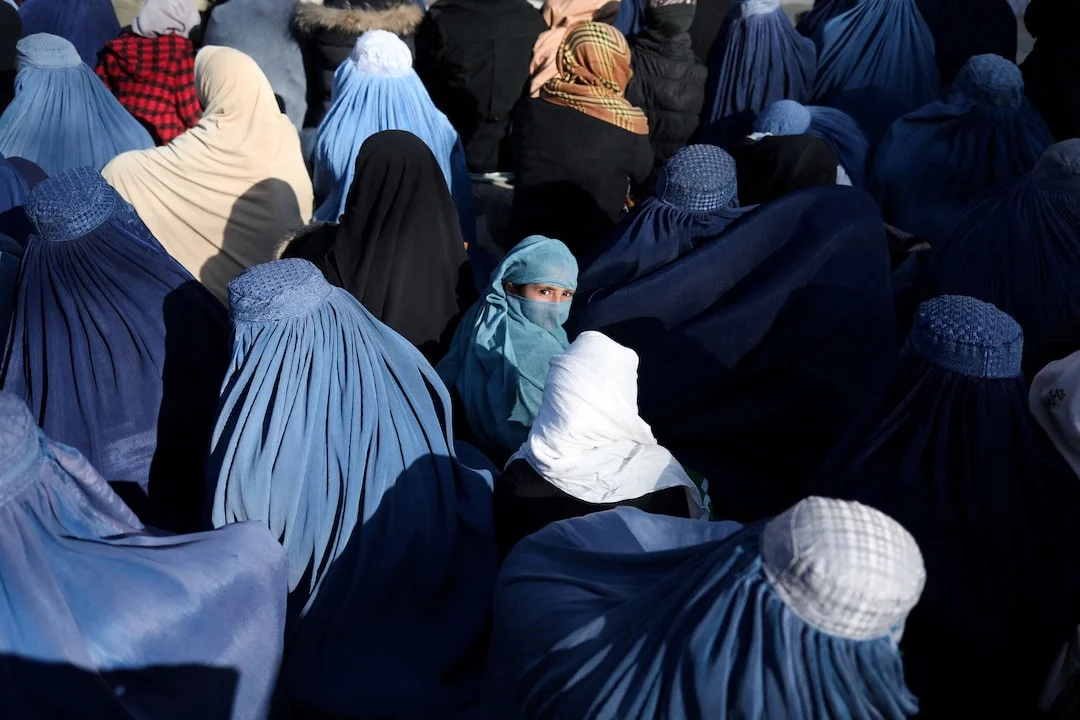



The Taliban’s morality police have intensified their enforcement of strict compulsory dress codes, detaining two young girls near the Abdul Ali Shah Tokhi School in the Imam Fakhr Razi area of Herat province. Local sources and eyewitnesses confirmed that the individuals were arrested for allegedly failing to wear clothing that complies with the group’s specific dress regulations.
Following the detention, Taliban forces transported the young women to an undisclosed location. The incident marks the latest development in a systematic campaign targeting women and girls across the region, a campaign that has now drawn formal confirmation from the United Nations and ignited demonstrations globally.
Institutional Enforcement and Policy Confirmation
Despite mounting public backlash and domestic criticism from human rights activists, the Taliban leadership has signaled that the crackdown will expand rather than contract.
Najibullah Ali, the Taliban’s security chief for the Herat police command, formally announced that the administration will continue its policy of detaining women in the province. Defending the operational scope of the morality police, Ali stressed that the monitoring of women’s attire is a continuous mandate aimed at promoting compliance with the hijab and raising public awareness. He explicitly warned that individuals who ignore the clothing regulations will face immediate arrest.
Statistical Overview of Regional Detentions and Global Backlash
Over the past two weeks, the enforcement campaign has led to a significant spike in targeted detentions. The operational metrics and subsequent international reactions indicate a deepening humanitarian crisis:
Mass Arrests: Dozens of women and girls have been arrested across Herat province over the last 14 days for allegedly failing to wear a face veil or violating clothing regulations.
United Nations Verification: The United Nations has officially monitored and confirmed the surge in detentions, elevating the issue to the international diplomatic stage.
Transnational Protests: The arrests, alongside the Taliban’s aggressive response to localized demonstrations in the Jebrail area of Herat, have triggered coordinated public protests in more than 10 countries.
Global Demands: International demonstrators and human rights organizations are demanding the immediate, unconditional release of all detained women and an outright termination of compulsory dress code enforcement.
Critical Analysis and Way Forward
An analytical assessment of the escalating detentions in Herat reveals a calculated consolidation of ideological control by the Taliban administration. By shifting enforcement from major urban hubs like Kabul to key western provinces like Herat, the authorities are attempting to demonstrate total regulatory homogeneity across the state. This strategy highlights a structural reliance on coercive social policing to project domestic authority. However, using security forces to police civilian attire creates a severe governance mismatch, diverting essential state resources away from economic stabilization, counter-terrorism, and basic infrastructure development.
The rapid emergence of transnational protests in over 10 countries underscores that the domestic treatment of women remains the primary barrier to the Taliban’s pursuit of international diplomatic recognition and sanctions relief. Rather than suppressing dissent, the aggressive response to demonstrators in areas like Jebrail has effectively internationalized the local resistance, galvanizing the global diaspora and complicating potential engagement with external stakeholders.
The widening divide between Afghanistan’s internal policies and international human rights norms calls for a reassessment of global engagement frameworks. Relying solely on statements of condemnation has proven insufficient in altering the domestic trajectory of the administration. Moving forward, the international community must leverage its multilateral mechanisms more cohesively, conditioning economic incentives, technical assistance, and formal diplomatic channels on measurable progress toward baseline human rights, inclusive governance, and the protection of vulnerable demographics.
To address this crisis effectively without isolating the population, international stakeholders and global organizations should adopt a targeted multi-channel strategy:
Strengthening Multilateral Monitoring Mechanisms: The United Nations and international oversight bodies should establish enhanced, continuous monitoring frameworks to document human rights developments on the ground, utilizing verified field data to inform global diplomatic agendas.
Conditioning Diplomatic and Financial Engagement: International forums and donor states should integrate strict human rights benchmarks, particularly regarding the status of women and girls, into all future high-level dialogues regarding sanctions relief or normalized political relations.
Supporting Grassroots Humanitarian and Protection Initiatives: Global aid networks should focus on delivering targeted assistance through reliable local channels, ensuring that humanitarian aid addresses the immediate socioeconomic vulnerabilities of women, families, and marginalized communities.
By combining unified international pressure with strategic, condition-based engagement, the global community can provide necessary support to local populations while maintaining robust institutional accountability, ultimately steering the broader region toward structural stability, social equity, and sustainable development.