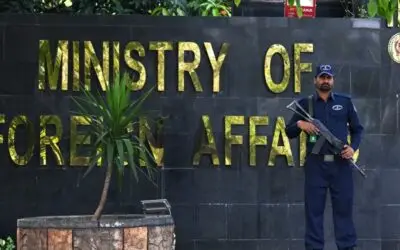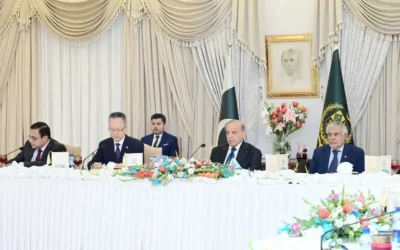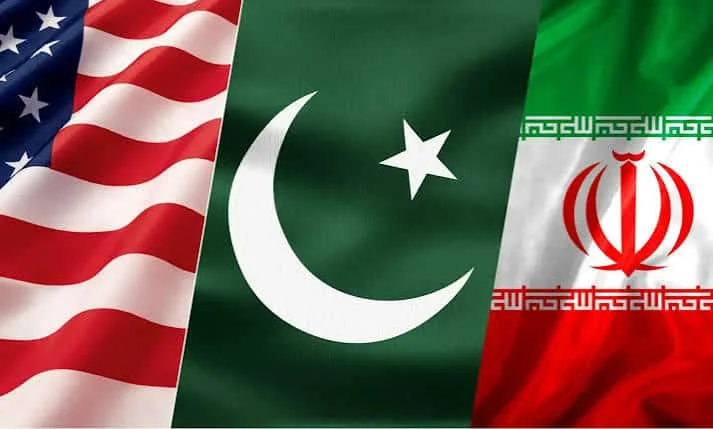




The geopolitical landscape of West Asia has experienced a monumental paradigm shift following the formal finalization of the Islamabad Memorandum of Understanding (MoU) between the United States of America and the Islamic Republic of Iran. Brokered through rigorous, multi-layered mediation primarily spearheaded by Pakistan, this historic 14-point bilateral framework officially brings an immediate termination to the 2026 Iran war, reopens vital global energy chokepoints, and establishes a 60-day diplomatic runway to negotiate a permanent settlement regarding Tehran’s nuclear program and global sanctions.
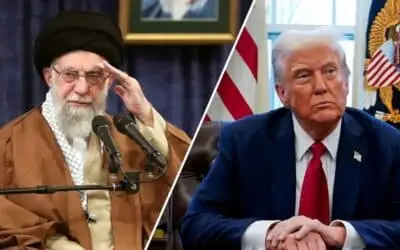
The agreement, digitally signed by US President Donald Trump and Iranian President Masoud Pezeshkian, represents a calculated de-escalation after months of intense kinetic warfare, naval blockades, and acute global energy shocks.
Comprehensive Breakdown of the 14-Point Islamabad Memorandum
The official press release and text of the framework outline a meticulously balanced mechanism of reciprocal concessions designed to systematically halt hostilities and restore global commerce. Every core operational point of the agreement is detailed below:
- Permanent Cessation of Hostilities
The United States, the Islamic Republic of Iran, and their respective regional allies declare an immediate and permanent termination of military operations across all active fronts, explicitly extending to the conflict in Lebanon. Both primary signatories legally undertake not to initiate any future war or unilateral military campaigns against each other.
- Respect for Sovereignty and Non-Interference
Both nations formally commit to strictly respecting each other’s state sovereignty and territorial integrity. Furthermore, the clause binds both Washington and Tehran to refrain from interfering in each other’s domestic political or internal affairs.
- The 60-Day Diplomatic Window
The MoU serves as an interim framework rather than a final peace treaty. It mandates that both parties enter direct or mediated technical negotiations to achieve a comprehensive, final deal within a maximum timeline of 60 days, which can only be extended via mutual diplomatic consent.
- Dismantling of the US Naval Blockade
Immediately upon the implementation of the MoU, the US military will commence the phased removal of its naval blockade and eliminate any maritime impediments levied against Iranian ports. The US is legally bound to fully lift the naval blockade within 30 days. During this transition, commercial vessel traffic will scale up proportionally to match pre-war volumes. Additionally, the US commits to pulling back its naval forces from the immediate proximity of Iran within 30 days of finalizing the permanent peace treaty.
- Reopening the Strait of Hormuz
In reciprocal compliance, Iran will immediately execute operational arrangements to guarantee the safe and unhindered passage of commercial shipping vessels free of charge through the strategic Strait of Hormuz (connecting the Persian Gulf to the Sea of Oman). This toll-free transit guarantee is established for an initial period of 60 days to stabilize global energy corridors.
- $300 Billion Reconstruction and Development Plan
Recognizing the massive infrastructural toll of the conflict, the United States undertakes a commitment to collaborate with regional partners to develop a definitive, mutually agreed-upon economic roadmap. This plan promises at least USD 300 billion toward the reconstruction and economic development of Iran. The financial architecture, including all necessary US Treasury licenses, waivers, and clearings required for these transactions, will be finalized within the 60-day negotiation window.
- Systematic Termination of All Sanctions
The US commits to a structured, complete dismantle of the entire sanctions architecture levied against Tehran. This includes the systematic termination of United Nations Security Council (UNSC) resolutions, International Atomic Energy Agency (IAEA) Board of Governors resolutions, and all unilateral primary and secondary US banking and trade sanctions, according to an agreed-upon schedule built into the final deal.
- Disposition of Enriched Nuclear Stockpiles
The final disposition of Iran’s heavily accumulated enriched nuclear material will be handled through a mutually agreed mechanism linked to the broader sanctions relief timeline. The agreed baseline protocol dictates a minimum methodology of on-site down-blending (dilution) of the material, strictly monitored under the direct technical verification of the IAEA.
- Maintenance of Nuclear Status Quo
During the active 60-day negotiation sprint, a strict freeze-frame policy applies to both military and technological expansions. Iran will strictly maintain the current status quo of its nuclear program, halting further enrichment spikes or facilities expansion. In exchange, the US is barred from imposing any new economic sanctions or deploying additional military forces to the Middle Eastern theater.
- Instant US Treasury Oil Waivers
To provide immediate economic liquidity to Tehran, the US Department of the Treasury is mandated to instantly issue sweeping waivers for the export of Iranian crude oil, petroleum products, and petrochemical derivatives. These waivers will cover all vital auxiliary services, including international banking channels, trade insurances, and maritime transport logistics, remaining active until the formal termination of all sanctions.
- Unfreezing of Restricted Iranian Sovereign Wealth
The United States officially agrees to make Iran’s frozen or restricted foreign funds and sovereign assets fully available for domestic use upon the implementation of the MoU. The precise technical procedures and banking routes to safely release these multi-billion-dollar overseas funds will be hammered out during the immediate 60-day session.
- Establishment of an Executive Monitoring Mechanism
To prevent compliance failures or verification gaps, both nations agree to create a joint executive monitoring mechanism. This body will oversee the successful day-to-day implementation of the temporary MoU provisions and verify long-term compliance once the final treaty is ratified.
- Resolution of Reciprocal Grievances
Both parties commit to establishing dedicated legal and diplomatic working groups during the 60-day timeframe to comprehensively catalog, review, and settle outstanding legal claims, prisoner exchanges, and bilateral grievances accumulated during the wartime period.
- Formal Treaty Ratification Path
The signatories agree that the successful completion of the technical negotiations within the 60-day period will culminate in a formal, high-level diplomatic summit to sign a permanent, legally binding international treaty, completely superseding this interim memorandum.
Critical Analysis and Way Forward
From an analytical standpoint, the Islamabad MoU is not an absolute peace document, but a highly sophisticated crisis-management mechanism. For the United States, the primary victory lies in the immediate resuscitation of global energy markets via the reopening of the Strait of Hormuz—through which nearly 20% of global petroleum passes—effectively neutralizing a catastrophic global inflationary spike. For Iran, the regime successfully averts complete economic strangulation, leveraging its nuclear leverage to secure an unprecedented $300 billion reconstruction pledge and immediate oil export lifelines.
However, the structural integrity of the agreement remains highly fragile. The phrase “if Iran fails to comply, we go back to bombing” underscores that the Trump administration views this strictly as a transactional window verified by hard military deterrence. The core challenge over the next 60 days will be bridging the deep asymmetric divide between Iran’s demand for immediate, sweeping sanctions termination and Washington’s preference for phased, performance-dependent relief.
The Strategic Pivot for Pakistan
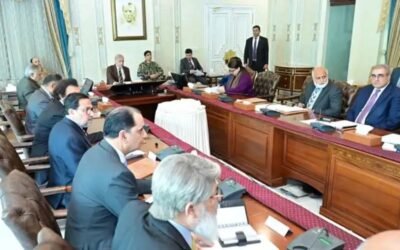
The signing of this memorandum—rightfully bearing the title of the Islamabad MoU—marks one of the most significant triumphs for Pakistan’s diplomatic apparatus in recent history. By successfully mediating between two heavily armed, ideologically opposed adversaries when global stability hung in the balance, Pakistan has firmly re-established its position as an indispensable, responsible pivot state on the geopolitical chessboard.
This successful facilitation yields distinct strategic dividends for Islamabad:
- Geopolitical De-escalation on the Western Border: A protracted war between the US and Iran posed an existential threat to Pakistan’s domestic security, risking cross-border kinetic spillover, regional refugee crises, and severe disruptions to domestic energy security.
- Economic Stabilization Opportunities: As the primary mediator, Pakistan is uniquely positioned to capitalize on a stabilized regional trade matrix. The unfreezing of Iranian oil exports and the prospective lifting of secondary sanctions open up immediate avenues for the long-delayed Iran-Pakistan (IP) gas pipeline, potentially resolving Pakistan’s domestic energy shortfall.
- Enhanced Diplomatic Capital: Elevating its stature alongside global superpowers, Pakistan has demonstrated that its strategic value transcends regional security; it possesses the institutional capacity to anchor international conflict-resolution frameworks.
Moving forward, Pakistan must maintain an active, vigilant role during the high-stakes 60-day technical negotiation window. Islamabad should position itself to host the subsequent implementation committees, ensuring that the provisional framework successfully matures into a permanent regional treaty. Concurrently, Pakistan’s economic ministries must proactively design trade protocols and cross-border transport frameworks to seamlessly integrate into the post-sanctions West Asian economy, leveraging its geographical proximity to transform this diplomatic victory into tangible economic prosperity.
The successful finalization of the Islamabad MoU proves that even amidst the volatile dynamics of modern warfare, institutional diplomacy anchored by committed regional mediators can effectively pull the global community back from the precipice of total conflict. The true test of this diplomatic breakthrough now shifts from the digital signing desks to the technical negotiation chambers, where the precise, permanent architecture of regional stability must be forged over the coming weeks. Usefully capitalizing on this temporary peace will require unyielding verification from the global community, strategic restraint from regional actors, and continued diplomatic stewardship to ensure that the guns of the 2026 war remain permanently silent.