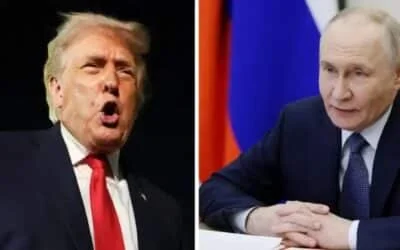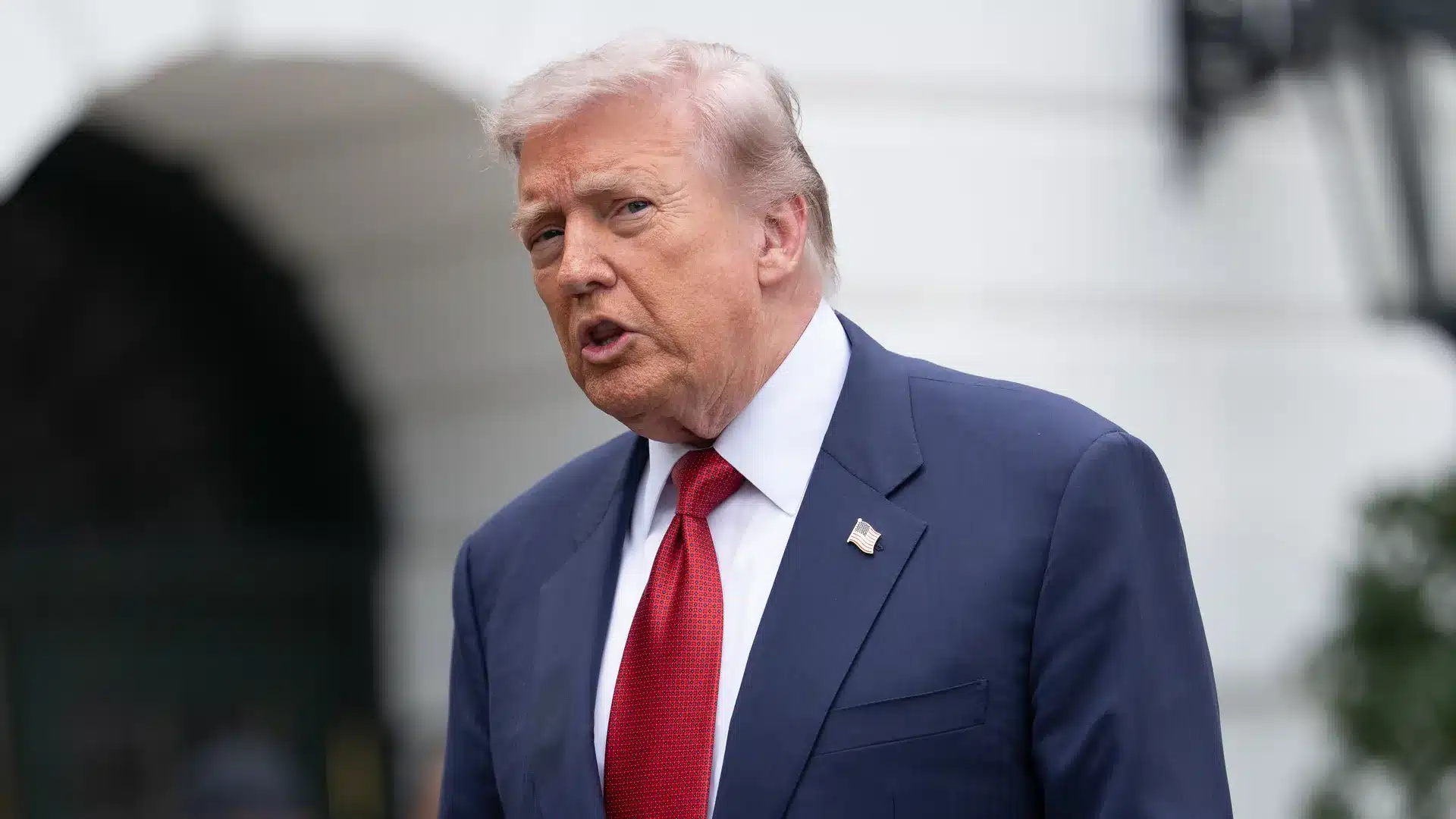

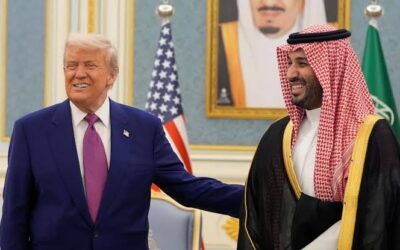



Facing intense, bipartisan pressure from a Capitol Hill left largely in the dark, US President Donald Trump signaled on Tuesday that he is willing to submit the newly brokered US-Iran Memorandum of Understanding (MOU) to Congress for formal review.
The concession was made during a high-profile diplomatic meeting with UAE President Mohammed bin Zayed Al Nahyan on the sidelines of the G7 summit in France. While Trump insisted he has “no objection” to congressional oversight, the admission comes as a wave of skepticism sweeps through both Republican and Democratic ranks regarding the highly secretive terms of the agreement, which was finalized electronically on Sunday and is scheduled for a formal ceremonial signing by Vice President JD Vance in Geneva this upcoming Sunday.
The 109-day kinetic conflict has cost billions of dollars, disrupted global energy flows, and resulted in 14 American personnel killed in action (KIA) and hundreds wounded. Despite these heavy losses, leaked components of the one-and-a-half-page interim accord suggest the administration may be settling for a framework less restrictive than the 2015 nuclear deal Trump previously dismantled.
President Donald Trump stated he is willing to submit an interim deal to end the war with Iran for Congressional review, though details of the pact remain unclear and unreleased.
More Here → https://t.co/AMl9Sw9S2h pic.twitter.com/pi40J7ALta
— PiQ Newswire (@PiQNewswire) June 16, 2026
1. Capitol Hill in the Dark: The Bipartisan Pushback
The White House’s decision to withhold the official text of the MOU has triggered immediate defense mechanisms across the legislative branch, reviving memories of the polarizing 2015 Joint Comprehensive Plan of Action (JCPOA) debates.
-
The Republican Leadership Guard: Senate Majority Leader John Thune openly admitted that rank-and-file lawmakers have been left entirely without verification data. “I don’t know enough about it to say [if it’s a good deal],” Thune stated to reporters, emphasizing that the primary legislative hurdles will center on enforcement, long-term compliance, and the exact structure of the financial incentives being offered to Tehran.
-
The Hawk’s Ultimatum: Senator Lindsey Graham, traditionally one of Trump’s most dependable allies, refused to blindly endorse the outline, demanding a complete legislative review and a formal vote. “The way Iran describes it, it’s awful. The way we describe it makes sense to me. Let’s look at it,” Graham warned, adding that the administration is legally bound by review acts to bring any nuclear-adjacent deal before Congress.
-
The Democratic Critique: Senate Democratic Leader Chuck Schumer slammed the administration’s lack of transparency, demanding an immediate classified briefing for the “Gang of Eight” and questioning the strategic utility of the four-month campaign.
2. Comparative Strategic Matrix: The Cost of Attrition
The primary driver behind the growing unease on Capitol Hill is the stark realization that four months of intense military operations failed to achieve Washington’s stated core objective: the structural dismantling of the Iranian state apparatus.
| Metric / Parameter | The 2015 JCPOA Framework (Obama Era) | The 2026 Geneva MOU Framework (Trump Era) |
| U.S. Operational Cost | $0 (Purely Diplomatic/Sanctions) | Billions spent; 14 KIA; Hundreds wounded |
| Stockpile Mandate | Strict, multi-year caps on uranium enrichment | Technical dismantling of highly enriched stockpiles only |
| Verification Window | Rigorous, permanent IAEA inspections protocols | Immediate IAEA access under a 60-day technical phase |
| Economic Incentive | Gradual, conditional access to frozen assets | $300 Billion Reconstruction Fund + Sanctions Relief |
The Armed Services Assessment: “We have spent billions of dollars. We’ve lost 14 personnel killed in action, hundreds wounded, and we’ve disrupted the world economy. And we’re getting basically less than what we had under the JCPOA, which President Trump walked away from.”
— Senator Jack Reed, Ranking Democrat, Senate Armed Services Committee
3. The Foreign Affairs Analysis: A Transformed Iranian Regime
The internal friction in Washington is being reinforced by elite geopolitical assessments concluding that the Pentagon’s military campaign has yielded severe unintended consequences.
Writing in Foreign Affairs, noted regional experts Narges Bajoghli and Vali Nasr delivered a sobering post-mortem on the conflict, arguing that the White House fundamentally miscalculated the resilience of the Islamic Republic:
-
The Inattainable Objective: The analysts note that “the war’s initial aim — to deliver a death blow to the Islamic Republic — has proved unattainable.”
-
The Crucible Effect: Rather than fracturing the regime under the weight of a naval blockade and targeted airstrikes, Bajoghli and Nasr conclude that “rather than breaking Iran, the crucible of war has transformed it in unanticipated ways,” leaving the state infrastructure ideologically hardened, militarily adapted, and diplomatically entrenched via backchannel mediation hubs in Islamabad and Doha.
Critical Analysis
The domestic political crisis unfolding in Washington reveals a significant gap between the Trump administration’s public triumphalism and the complex realities of asymmetric warfare. By signaling an eleventh-hour willingness to submit the MOU to congressional review, President Trump is attempting to diffuse an escalating constitutional clash over war powers while managing an unexpected delay in the deal’s rollout.
The Sequencing Delay: Pakistani-Qatari Intervention
While congressional critics attack the administration for “secrecy,” Vice President JD Vance confirmed that the delay in releasing the text is actually due to direct diplomatic requests from the primary mediators: Pakistan and Qatar.
Islamabad and Doha, having successfully steered the “Islamabad Talks” to secure the initial April ceasefire, have requested a highly controlled, sequential rollout of the terms to protect the fragile regional security equilibrium. This indicates that the diplomatic architecture of the peace is heavily dependent on non-Western brokers, limiting Washington’s ability to dictate the terms of its exit strategy independently.
The Asymmetric Lever: The $300 Billion Reconstruction Fund
The core point of friction during the upcoming congressional review will undoubtedly be the proposed $300 billion reconstruction fund and the mechanisms for destroying Iran’s highly enriched uranium. For conservative hawks, any framework that leaves Iran’s basic nuclear infrastructure intact while facilitating billions in sanctions relief looks like an institutional retreat.
For the administration, however, the fund functions as an essential, non-taxpayer-funded economic carrot—backed by regional Gulf capital—designed to gain immediate IAEA verification access and permanently reopen the Strait of Hormuz. Trump’s challenge will be convincing a skeptical legislature that this performance-based, “trust but verify” benchmark model is a strategic victory, rather than an expensive return to the very containment policies he spent a decade opposing.