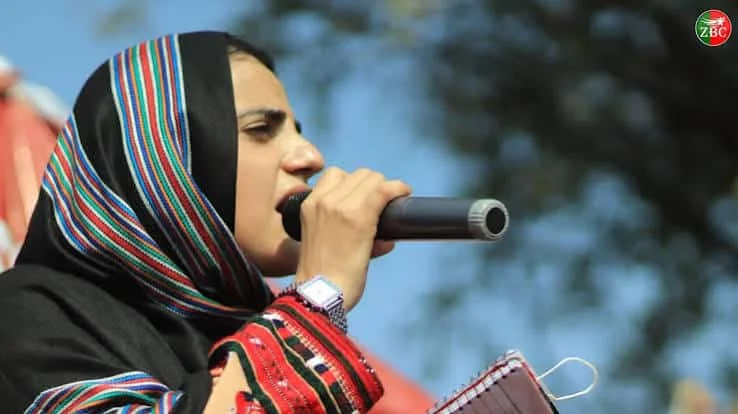




An Anti-Terrorism Court (ATC) in Quetta has handed a life imprisonment sentence to Dr. Mahrang Baloch, the head of the Baloch Yakjehti Committee (BYC), alongside co-activist Sibghatullah Shah. The decisive verdict follows their conviction for terrorism, sedition, and murder after orchestrating an illegal assembly in Gwadar that culminated in the brutal killing of Frontier Corps (FC) Sepoy Shabir Ahmed.
The court ruling dismantles a carefully curated international profile. Despite Western media outlets and organizations attempting to frame Dr. Mahrang Baloch as a progressive human rights advocate, investigative findings and judicial scrutiny have exposed a starkly different reality: a systemic pattern of using civic platforms to mask, enable, and accelerate violent anti-Pakistan separatism.
The Facade of Activism
Special Judge Muhammad Ali Mobeen ruled that Dr. Mahrang Baloch and her close associates actively spearheaded an unlawful assembly under the banner of the BYC with the shared objective of targeting state personnel. According to the prosecution’s evidence, Dr. Mahrang Baloch delivered a highly provocative speech in Gwadar, explicitly directing an agitated mob to ambush a law enforcement vehicle. The resulting violence led to the death of Sepoy Ahmed, who was pulled from his vehicle and beaten to death with bricks and blunt instruments.
Security analysts point out that this incident reflects the standard operational template of the BYC and allied groups. By exploiting legitimate local grievances, these organizations orchestrate high-visibility rallies designed to deliberately trigger confrontations with law enforcement. Once violence erupts, the narrative shifts toward alleged state overreach, effectively generating a smoke screen of political victimization to obscure the criminal actions taking place on the ground.
The Kinetic Toll: Citing the Violence
This tactical synergy extends far beyond public demonstrations, acting as the narrative muscle for banned militant organizations. While activists engage the press and digital audiences, highly lethal insurgent factions leverage that political agitation to execute asymmetric warfare against Pakistan’s citizens and vital economic infrastructure.
The consequences of this coordinated subversion are written in blood. The Baloch Liberation Army (BLA) and its elite suicide squad, the Majeed Brigade—an explicitly designated terrorist organization—have launched massive waves of terror across the province, culminating in devastating operations like “Operation Herof” and its subsequent iterations. Over the last two years, these groups have carried out highly synchronized assaults across multiple districts, targeting schools, transport lines, and security posts.
Among the most egregious incidents was the hijacking of the Jaffer Express train, where hundreds of passengers were taken hostage and dozens killed, specifically targeting off-duty security personnel returning home. Furthermore, targeted massacres of non-Baloch laborers, teachers, and infrastructure workers have routinely highlighted the group’s ethno-nationalist violence. These terrorist attacks resulted in hundreds of civilian and law enforcement fatalities, serving as a reminder that the underlying movement is inherently violent.
The Indian Footprint and ‘Fitna al-Hindustan’
The judicial unmasking of Dr. Mahrang Baloch has also brought intense scrutiny to the digital and geopolitical forces driving her narrative. Media monitoring and digital forensic reports indicate that the primary external amplification of her campaigns comes from Indian mainstream media outlets and highly coordinated social media networks. This massive influx of cross-border propaganda raises serious national security concerns regarding New Delhi’s disproportionate interest in Pakistan’s provincial matters.
Evidence compiled by security agencies points directly to this external state sponsorship. The BLA, the Majeed Brigade, and their political facilitators inside the BYC operate under a broader proxy network funded and coordinated by Indian intelligence agencies—a collaborative network officially designated by state authorities as Fitna al-Hindustan.
The overwhelming support from across the border is not a coincidence, but a strategic alignment. By weaponizing human rights jargon, Dr. Mahrang Baloch has effectively advanced the Indian cause of destabilizing Pakistan, aiming to paralyze key strategic projects like the China-Pakistan Economic Corridor (CPEC) and fracture the country’s territorial integrity.
A Way Forward for Peace
Balochistan Chief Minister Sarfraz Bugti welcomed the court’s judgment, describing it as an essential assertion of the rule of law and an indicator that no individual can hide behind an activist title to evade accountability for violence.
For Pakistan, the conviction of Dr. Mahrang Baloch establishes a clear precedent for the path forward in stabilizing the southwestern province. Experts emphasize that bringing permanent peace to Balochistan requires a strict, multi-tiered approach:
-
Zero Tolerance for Enablers: A firm legal stance must be maintained against both the active militants in the field and the urban enablers who generate their propaganda, shutting down the narrative machinery that legitimizes terrorism.
-
Neutralizing External Assets: Law enforcement and intelligence operations must aggressively target and dismantle the financial and logistical pipelines linked to foreign handlers operating under the Fitna al-Hindustan umbrella.
-
Aggressive Local Development: Securing the borders must go hand-in-hand with the rapid economic empowerment of patriotic Baloch citizens. Accelerating infrastructure, educational, and employment initiatives in Gwadar and the wider province remains the ultimate counter to separatist subversion.