

Speaking on the sidelines of the high-stakes multilateral “Quad” mediation summit today, Pakistani Prime Minister Shehbaz Sharif delivered a powerful defense of the diplomatic track, praising both the post-crisis Iranian leadership and U.S. President Donald Trump for their decisive commitment to regional de-escalation.
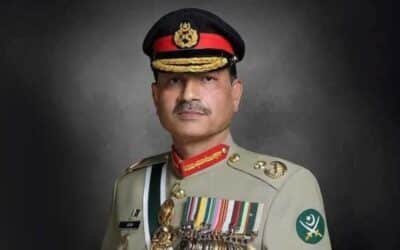
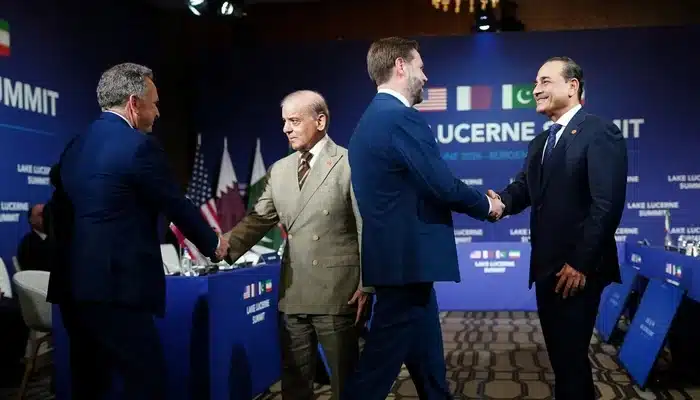
According to Pakistan TV’s Adil Shahzeb, who is present at Burgenstock Resort in Switzerland, Prime Minister Shehbaz Sharif and Chief of Defence Forces Field Marshal Syed Asim Munir hold a bilateral meeting with US Vice President JD Vance at Burgenstock Resort in Switzerland. US… pic.twitter.com/GDLffhhSrO
— Pakistan TV (@PakTVGlobal) June 21, 2026
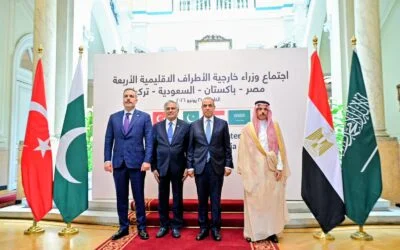
The premier’s remarks were made during an informal media briefing at the luxury Bürgenstock Resort complex near Zurich, where senior diplomatic and military delegations from Pakistan, the United States, Iran, and Qatar have gathered for technical talks to implement the historic “Islamabad Memorandum of Understanding” (MoU) signed on June 17.
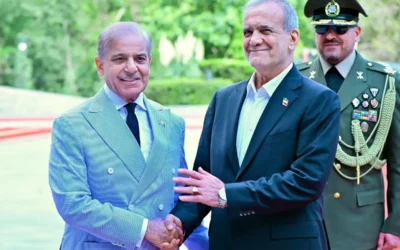
Prime Minister Sharif strongly validated the constructive, sincere posture of Tehran’s newly aligned leadership—including Supreme Leader Ayatollah Mojtaba Khamenei, President Raza Pezeshkian, and Parliamentary Speaker Mohammad Bagher Ghalibaf—noting that they have approached the complex peace process with total transparency and an authentic desire for regional stability. Concurrently, the Prime Minister lauded U.S. President Donald Trump as a “man of peace,” recalling President Trump’s previous high-stakes intervention that successfully defused a near-nuclear flashpoint during a past crisis between Pakistan and India. Sharif expressed deep optimism that a revived, strategic U.S.-Pakistan friendship will catalyze robust counter-terrorism and economic cooperation in the post-war era.
High-Level Trilateral and Quadrilateral Diplomacy on Day One
The Foreign Office (FO) and the Prime Minister’s Office (PMO) confirmed that despite a brief scheduling delay enforced by the Swiss Foreign Ministry on Friday, the high-level technical sessions officially launched on Sunday with intensive, parallel bilateral meetings:
-
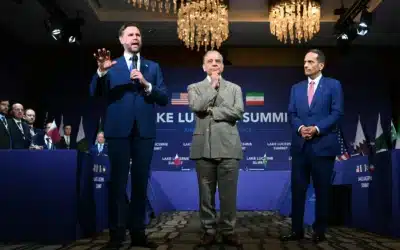
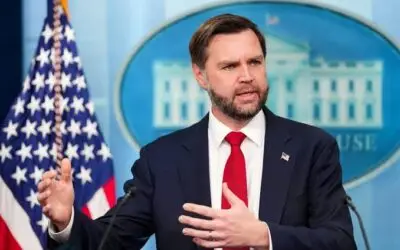
The U.S.-Pakistan Bilateral Axis: Prime Minister Shehbaz Sharif and Chief of Army Staff and Chief of Defence Forces, Field Marshal Syed Asim Munir, held a pivotal strategy session with U.S. Vice President JD Vance. The meeting, which included senior American advisors Jared Kushner and special envoy Steve Witkoff, focused on the immediate implementation protocols of the 14-point framework. In an exclusive exchange with Pakistani media regarding Islamabad’s mediating role, Vice President Vance directly signaled Washington’s approval, stating, “Very good, we love Pakistan.”
-
The Pak-Iran Strategic Consultation: The Pakistani leadership subsequently held extensive talks with the senior Iranian delegation led by Parliamentary Speaker Ghalibaf and Foreign Minister Abbas Araghchi. Attended by Pakistan’s Interior Minister Mohsin Naqvi and Information Minister Attaullah Tarar, the session finalized joint monitoring safeguards to ensure both warring parties strictly adhere to the newly extended 60-day ceasefire timeline.
Zürich: 21 June 2026.
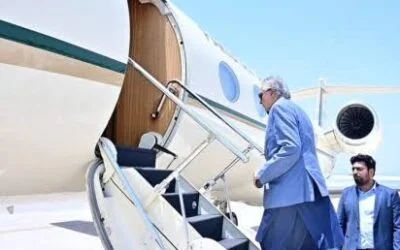
Prime Minister and Field Marshal to participate in the High-Level Talks on the implementation of the Islamabad Memorandum of Understanding being held in Burgenstock, Switzerland, on 21st of June 2026.
Prime Minister Muhammad Shehbaz Sharif has arrived in… pic.twitter.com/PGEL9vIVsl
— Prime Minister’s Office (@PakPMO) June 21, 2026
Context of the Islamabad MoU: Resolving the 100-Day War
The technical sessions in Switzerland mark the first formal, face-to-face follow-up since Prime Minister Sharif signed the Islamabad MoU as the primary mediator on Thursday. The trilateral agreement officially halts a brutal 100-day war launched by the United States and Israel on February 28, which began with the assassination of the 86-year-old Supreme Leader Ayatollah Ali Khamenei and rapidly escalated into a regional conflict that claimed more than 7,000 lives. The war triggered severe global energy shocks, closed the strategic Strait of Hormuz, renewed hyper-inflationary pressures, and raised fears of a food supply crisis across developing nations.
The signed 14-point MoU extends the preliminary ceasefire achieved in April by another 60 days—explicitly encompassing active fronts in Lebanon—to allow technical teams to build a permanent truce. In a historic first since the 1979 Islamic Revolution, the document was digitally co-signed in English and Farsi by President Trump and Iranian President Masoud Pezeshkian.
While President Trump signaled a dramatic shift during a G7 press conference at the Palace of Versailles by withdrawing his demand to strip Tehran of its ballistic missiles—calling it “unfair” to deny them such defense capabilities—he maintained a stern enforcement warning. Trump stated that the U.S. would resume devastating strikes if Iran violates the accord, expressing hope that compliance would stabilize Middle Eastern energy markets and reduce global oil prices.
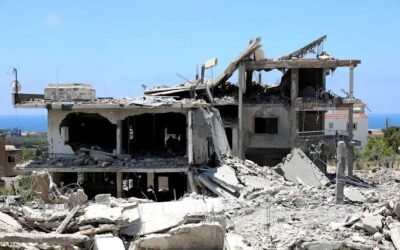
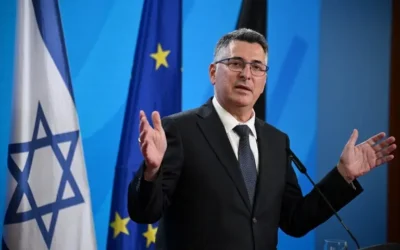
However, the stability of the peace framework faces immediate challenges: the State of Israel, which was entirely excluded from the Bürgenstock peace talks, has officially distanced itself from the U.S.-Iran accord and continues to execute military operations against the Iranian-allied Hezbollah network in southern Lebanon, leaving the ultimate durability of the 60-day ceasefire hanging in a delicate balance.
Critical Analysis: Civil-Military Diplomatic Leverage, Personalist Treaties, and Israel’s Strategic Isolation
The dramatic events unfolding at the Bürgenstock summit reveal major structural realignments in global diplomacy and defense politics:
1. The Institutionalization of Pakistan’s Civil-Military Diplomatic Nexus
The prominent role of both Prime Minister Shehbaz Sharif and COAS Field Marshal Asim Munir at the Bürgenstock summit illustrates a highly sophisticated evolution in Pakistan’s foreign policy execution. Historically, Pakistan’s defense and civilian leaderships have frequently run parallel or conflicting diplomatic tracks.
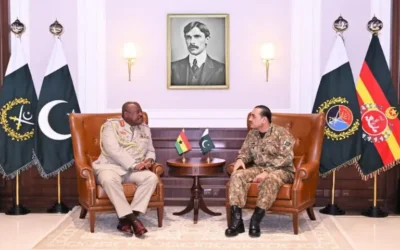
In the U.S.-Iran mediation process, however, this unified approach has become a major strategic asset. While the civilian government manages the public political frameworks and multilateral economic coordination with Qatar and Switzerland, the military command structure under Field Marshal Munir provides the hard security guarantees and backchannel verification loops required by both the Pentagon and the IRGC. Vice President JD Vance’s public praise (“we love Pakistan”) confirms that Washington now views this integrated civil-military structure not as an internal hurdle, but as a reliable, indispensable guarantor of complex geopolitical contracts in Eurasia.
2. The Personalist and Conditional Nature of the Trump-Pezeshkian Accord
The signing of the Islamabad MoU highlights a shift toward a highly personalized model of international crisis management, heavily reliant on direct leader-to-leader agreements rather than institutional consensus. President Trump’s dramatic policy reversal—such as dropping long-standing U.S. demands against Iran’s ballistic missile program while simultaneously threatening total military destruction if the deal is broken—shows a transactional approach to diplomacy.
By bypassing traditional State Department and congressional channels, this personalized treaty-making allowed for a rapid end to the 100-day war. However, it also introduces significant long-term instability. Because the agreement is built on personal commitments and conditional threats rather than a formal, legislated treaty, its survival over the 60-day timeline depends entirely on the immediate political calculations of Trump and the newly aligned leadership in Tehran, making it highly vulnerable to domestic political shifts in both capitals.
3. The Dangerous Friction of Israel’s Absolute Diplomatic Exclusion
Israel’s total exclusion from the Bürgenstock peace talks represents a significant and dangerous fault line in the new regional security architecture. For decades, American foreign policy in the Middle East was strictly tied to preserving Tel Aviv’s strategic and military advantages. By moving forward with a major regional peace accord alongside Iran, Pakistan, and Qatar without Israeli participation, the Trump administration has signaled a willingness to prioritize global energy stability and domestic economic relief over the immediate war aims of its closest regional ally.
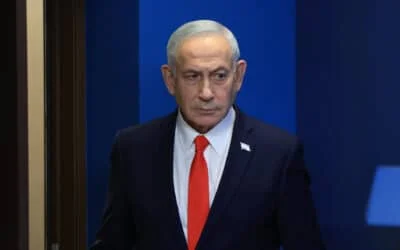
This exclusion has left Prime Minister Netanyahu’s war cabinet in deep strategic isolation. By continuing its military operations against Hezbollah in Lebanon, Israel is actively testing the boundaries of the U.S.-Iran ceasefire. This creates a volatile situation where independent military actions by Tel Aviv could spark a renewed conflict, potentially dragging Washington back into a confrontation and shattering the mediated peace framework.
4. Resolving the Global Multipolar Inflationary Shockwave
The severe global economic crisis triggered by the 100-day war explains why international powers moved so quickly to support Pakistan’s mediation efforts. The conflict did not just cause local destruction; it directly threatened the global economy by closing the Strait of Hormuz, driving up energy prices, and disrupting vital food supply chains to developing nations.
The Bürgenstock negotiations are therefore about much more than a regional ceasefire; they represent a coordinated effort by multipolar actors to stabilize global markets. By hosting these talks and leading the implementation of the Islamabad MoU, Pakistan has demonstrated that its strategic value lies in its ability to protect critical international trade corridors and defuse systemic economic shocks, elevating its standing among major global powers.