




The argument presented cuts straight to the core of modern geopolitical conflicts: legal merit without strategic communication is a silent weapon.
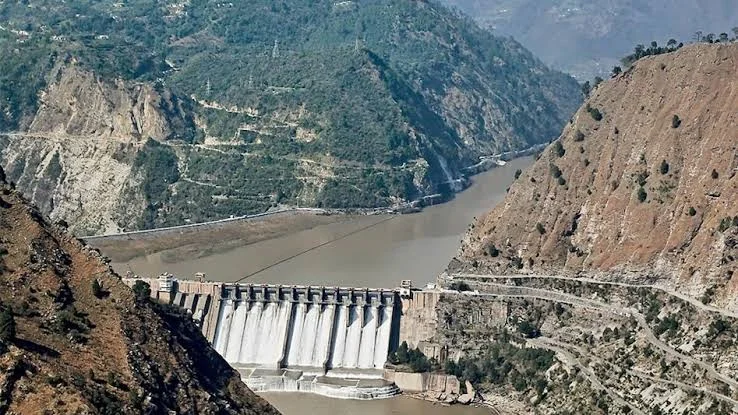
For decades, the standard approach to international law was treated like a traditional courtroom trial—you present the stronger text-based case, and the judges rule. However, in the current landscape, India’s unilateral efforts to hold the 1960 Indus Waters Treaty (IWT) in abeyance—following the geopolitical shifts of the past year—prove that international law is being actively weaponized outside the courtroom. New Delhi’s deployment of doctrines like rebus sic stantibus (fundamental change of circumstances) to justify its engineering workarounds at Ratle and Kishenganga is designed to shape global policy consensus long before a formal verdict is reached.
If Pakistan treats this strictly as a quiet, paperwork-driven exercise in international courts while India actively shapes narratives in think tanks, global media, and policy journals, it risks winning a legal verdict over a river basin that has already been altered on the ground.
Proposed “National Lawfare Commission”
To move away from the reactive cycle of issuing periodic official statements that quickly fizzle out, Pakistan requires a permanent, cross-functional body capable of sustaining a long-term strategy.
An institutional mechanism like a National Lawfare Commission must transcend traditional, siloed bureaucracy by operating at the intersection of international law, hydrology, and strategic communications.
Concrete Action Plan for Pakistan’s Transboundary Water Strategy
To operationalize this approach and actively defend its water security, Pakistan should prioritize three distinct, practical tracks:
1. Shift the Narrative from Technicalities to Human and Climate Sovereignty
International policy audiences rarely engage deeply with standard engineering annexures, but they actively respond to climate vulnerability and human rights data. Pakistan must reframe India’s upstream storage inflation and threats of complete flow stoppage not merely as minor technical violations, but as a direct existential threat to 240 million lives.
The strategy must explicitly link the strict enforcement of the treaty to global climate resilience, environmental degradation in the Indus Delta, and the economic survival of millions of downstream farmers. This effectively shifts the global conversation from a standard bilateral border dispute to a critical issue of humanitarian protection and environmental law.
2. Enforce the Global Precedent of Pacta Sunt Servanda
Pakistan holds a powerful, text-based advantage grounded in Article 26 of the Vienna Convention on the Law of Treaties (VCLT): pacta sunt servanda (agreements must be kept in good faith). Because the IWT contains no provision allowing for unilateral termination or suspension, India’s efforts to hold it in abeyance threaten the stability of transboundary agreements worldwide.
Pakistan’s global outreach should target other co-riparian states and international organizations by emphasizing a clear warning: if an upper riparian state can unilaterally cast aside a major water treaty using shifting domestic political justifications, it sets a dangerous precedent that jeopardizes transboundary river treaties globally.
3. Establish Direct, Sustained Engagement with Global Policy Networks
Relying solely on periodic press releases from the Foreign Office is no longer sufficient in a fast-paced media environment. Pakistan needs to actively publish rigorous, data-driven legal analyses in leading international policy journals (such as Foreign Affairs or the Harvard International Law Journal) and sustain presence at global water security conferences.
By engaging directly with the research institutes, think tanks, and professional networks where future policymakers form their perspectives, Pakistan can build an enduring baseline of credibility that ensures its legal positions are understood and accepted long before geopolitical crises emerge.
Deepening the Legal Perspectives
To explore the precise international legal mechanisms underpinning this dispute, you can watch The Indus Waters Treaty, 1960 – Lawfare in South Asia. This analysis breaks down the core legal architecture of the 1960 agreement, addresses the international ramifications of holding the treaty in abeyance, and evaluates the specific strategic options available to Pakistan within modern transboundary water lawfare.