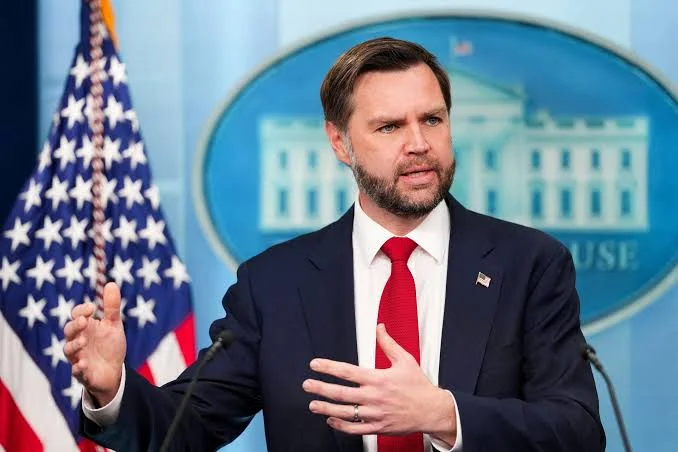
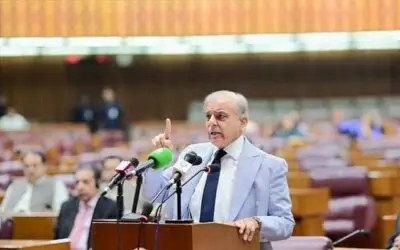


U.S. Vice President JD Vance has mounted a vigorous defense of the newly signed United States-Iran Memorandum of Understanding (MoU), actively pushing back against a bipartisan coalition of domestic critics and mounting resistance from the Israeli government.
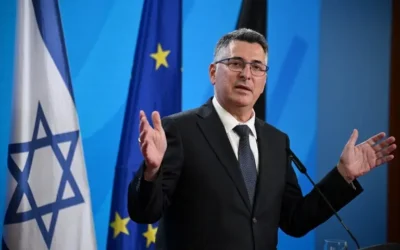
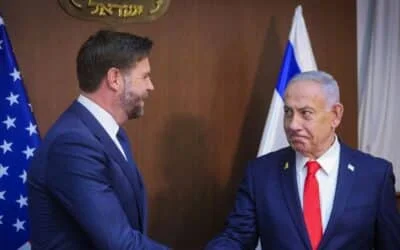
In a series of high-profile statements, including an interview with The New York Times, Vice President Vance directed uncharacteristically sharp rhetorical criticism toward Israeli officials—specifically far-right ministers Bezalel Smotrich and Itamar Ben-Gvir—who have continually lobbied Washington to prolong military operations.
“What is your exact proposal?” Vance stated in response to Israeli objections. “You’re a country of nine million people. You can’t just kill your way out of solving every single national security problem that you have.” He urged Israeli leadership to let upcoming diplomatic negotiations play out and to acknowledge the United States’ long-standing partnership.
The Vice President’s remarks align with recent statements from President Donald Trump at the G7 Summit in France, where the President criticized Israel’s current rules of engagement and called for operational restraint in Lebanon to avoid heavy civilian casualties.
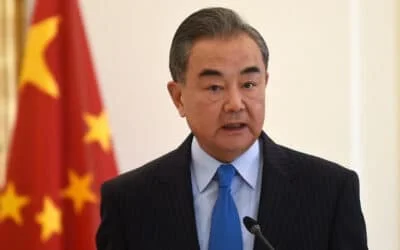
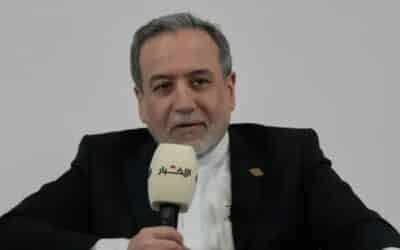
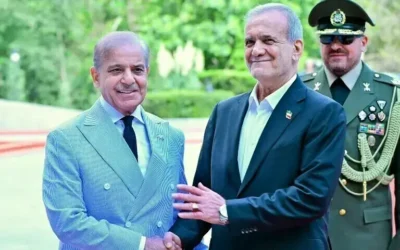
The initial bilateral agreement, inked by President Trump and Iranian President Masoud Pezeshkian, establishes a framework to lift the U.S. naval blockade of Iranian ports, open the Strait of Hormuz, grant immediate sanctions waivers on Iran’s fossil fuel industry, and pledge an end to active combat on all regional fronts.
CRITICAL ANALYSIS
The public defense of the Islamabad MoU by Vice President Vance signals a profound, historic shift in the structural alignment of U.S. foreign policy in the Middle East. By publicly reprimanding senior Israeli cabinet members, the Trump administration is signaling that it will no longer allow localized Israeli security doctrines to hold a veto over broader American geo-strategic objectives. This rhetorical pivot underscores a transactional approach to diplomacy: Washington expects its significant military and financial backing of Israel to purchase strategic compliance, especially when pursuing a grand settlement to exit a draining regional conflict.
However, the architecture of the MoU remains highly vulnerable to structural criticism from both sides of the U.S. political aisle. Detractors argue that the initial framework yields substantial, immediate economic leverage to Tehran—including a path toward unfreezing assets, lifting primary sanctions, and contributing to a $300 billion reconstruction fund—in exchange for deferred or ill-defined commitments.
While Iran has agreed to dilute its on-site stockpile of highly enriched uranium, the most contentious issues—including a permanent nuclear inspection regime, restrictions on Iran’s ballistic missile program, and its funding of regional proxies—have been kicked down the road into a compressed 60-day negotiation window.
The administration’s defense rests on a “maximum pressure, maximum leverage” hypothesis. Vance’s framing of the war as an absolute victory relies on the premise that Iran’s conventional military and nuclear infrastructure have already been degraded enough to force genuine compliance.
Yet, by moving away from past pledges to completely dismantle Iran’s ballistic capabilities under the tenet of “self-defense,” the administration faces a steep uphill battle. Navigating the upcoming high-level talks in Switzerland will require the U.S. to balance Iranian economic demands against the reality that an excluded, highly skeptical Israel retains the kinetic capability to collapse the entire ceasefire framework at any moment.