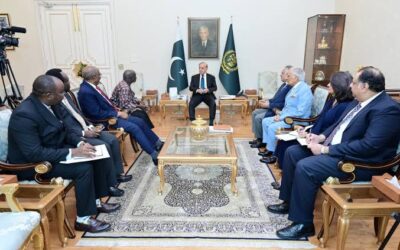



Under the leadership of Planning Minister Ahsan Iqbal, a high-level committee submitted a Governance Framework, to be implemented in Islamabad, to Prime Minister Shehbaz Sharif. Accordingly, the Governance Framework proposed: a 27-member elected assembly, an elected chief executive. The elected chief executive would grant the capital a province style administrative authority.
The federal government has moved forward with a major proposed overhaul of Islamabad’s governance structure, with a high-level committee recommending an elected 27-member assembly, a chief executive and greater administrative and financial autonomy for the federal capital.
The… pic.twitter.com/zuBiRgnOth
— Bloom Pakistan (@bloom_pakistan) September 7, 2026
The proposed Governance Model for Islamabad would feature an Assembly of 21 directly elected members, 5 reserved seats for women, 1 minority seat—the Elections would be supervised by the Election Commission of Pakistan. The Assembly of directly elected members would elect the Chief Executive, who would be called either the Chief Minister or Mayor, responsible for overseeing 27 Administrative Departments inclusive of health, education, environment, and civic services.
As per the proposed model, municipal functions would be transferred from the Capital Development Authority (CDA) and Local Government Bodies to the new ICT Administration. The Federal Government would however, preserve authority over law, order, and master planning. This is a proposed governance model, suggested to be implemented in Islamabad, it will require parliamentary approval through unified legislation titled, “Islamabad Capital Territory Government Act 2026.”