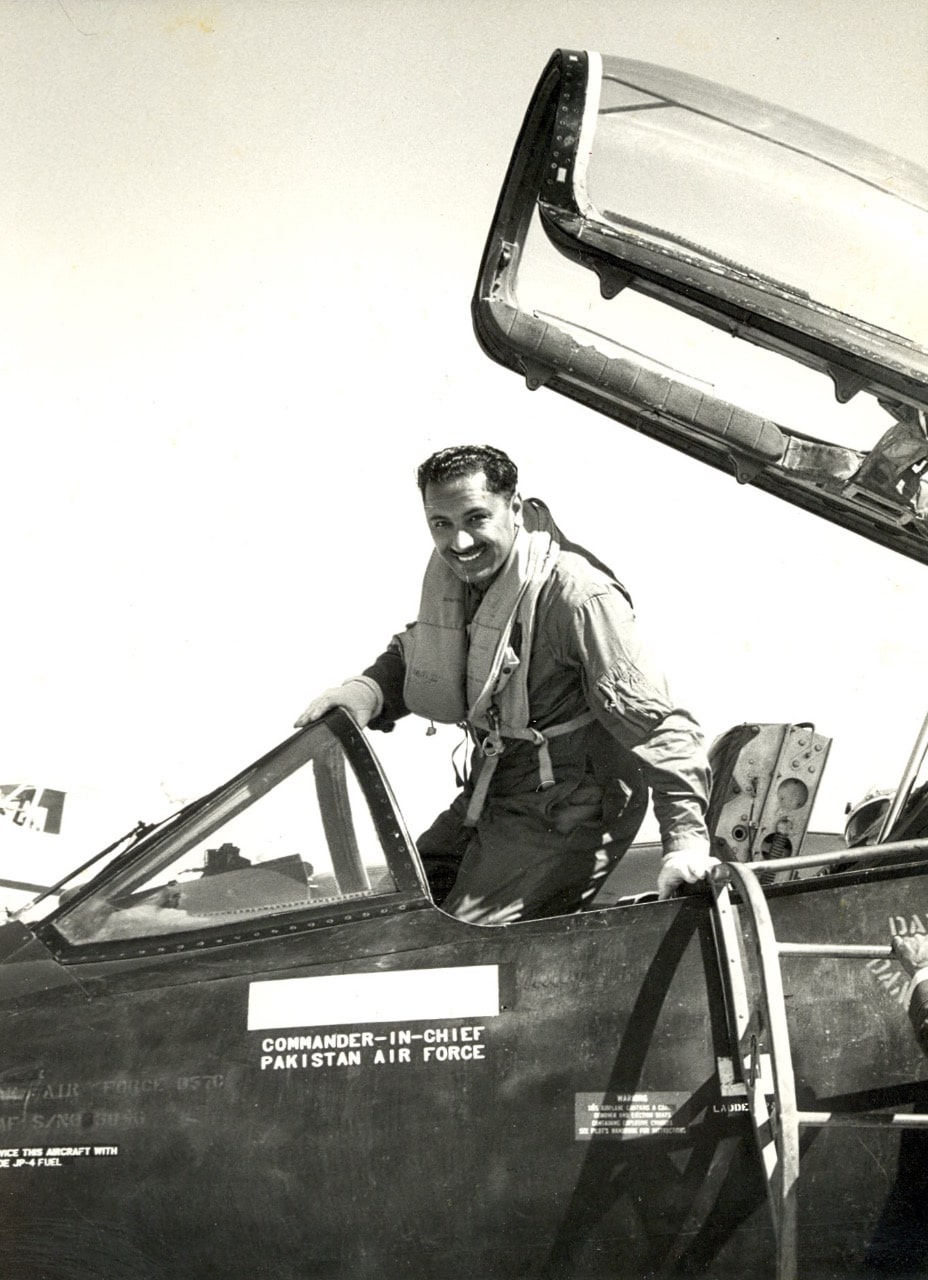





The history of military aviation in South Asia highlights a crucial lesson: numerical weight alone does not guarantee control of the skies. The 1965 Indo-Pakistani War remains a classic case study in how tactical discipline, specialized platform selection, and structural foresight can neutralize an opponent’s massive numerical advantage.
At the outbreak of the 1965 conflict, the Indian Air Force (IAF) held a daunting three-to-one advantage overall, deploying roughly 270 combat aircraft on the western front against the Pakistan Air Force’s (PAF) 170. Despite this material asymmetry, the PAF mounted an extraordinarily disciplined response, asserting tactical superiority early in the war.
The Architect of Operational Readiness
The structural foundation for this operational edge was built by Air Marshal Asghar Khan during his tenure as Air Chief from 1958 to 1965. Bypassing the urge to acquire a fragmented inventory, Khan engineered a focused fleet centered on modern American platforms—primarily the F-86 Sabre and the supersonic F-104 Starfighter.
Under his leadership, the PAF inaugurated the Fighter Leaders School at Maripur Airbase in 1958 (later evolving into the Combat Commander’s School). This institutionalized rigorous air-combat maneuvers and weapon delivery tactics, allowing Pakistani aviators to achieve deep specialization. In contrast, the IAF operated a mixed inventory of British, French, and Soviet aircraft (including Hunters, Gnats, Mystères, Vampires, and MiG-21s), leading to maintenance hurdles, complex logistics, and inconsistent command execution.
Surgical Precision and Tactical Adaptation
When hostilities erupted in September 1965, the PAF’s response was swift:
-
Psychological Momentum: On September 1, after losing four Vampire jets in a single engagement, the IAF was compelled to ground 180 older aircraft, granting Pakistan immediate momentum.
-
Halting the Ground Advance: On September 6, as Indian ground forces pressed toward Lahore, PAF Sabres executed precise close-air support strikes, destroying enemy armor and halting the drive.
-
Pre-emptive Airfield Strikes: PAF strikes against strategic airfields—including Pathankot and Kalaikunda—destroyed over 50 IAF aircraft on the ground, exploiting poor aircraft dispersal tactics.
-
Ingenious Modifications: Facing a shortage of heavy bombers, the PAF retrofitted C-130 transport aircraft into night bombers to strike enemy airfields behind the lines.
An Enduring Institutional Legacy
Though Asghar Khan was replaced by Air Marshal Nur Khan shortly before the war due to political disagreements over military strategy with President Ayub Khan, his structural reforms had already taken deep root. The emphasis on high-readiness doctrine, pilot specialization, and aggressive tactical execution became part of the PAF’s core DNA.
Decades later, that same institutional doctrine echoed through modern engagements—from Operation Swift Retort in 2019 to the intense aerial skirmishes of the May 2025 conflict—where PAF aviators continued to demonstrate tactical poise under pressure. The 1965 war proved that numerical weight crumbles when matched against tactical mastery, establishing a legacy of air power that relies on unyielding resolve and strategic foresight.