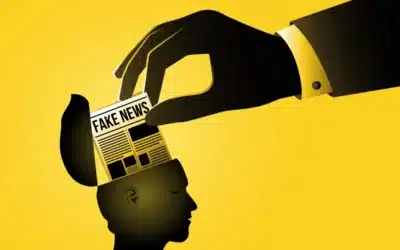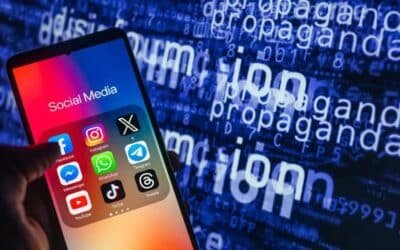





In Pakistan, a complex and evolving information war is taking shape across digital platforms. Both domestic and foreign political actors are leveraging bot networks, AI-generated deepfakes, synthetic audio, and coordinated inauthentic activity to fabricate the appearance of mass public support or dissent on critical issues, policies, and prominent individuals.
How Bots Are Used to Shape Online Trends
A 2024 analysis by Media Matters for Democracy’s “Trends Monitor” revealed that “bot‑platforms;” automated tools masquerading as iPhone or TweetDeck accounts, were heavily involved in pushing political and misleading hashtags. These platforms contributed artificially to trending topics, with organized human‑bot networks amplifying political messages and attacking opponents, including journalists and women, in highly coordinated fashion.
Complementing this, the 2025 exposé “100 $ million onslaught” by Dr Farrukh Saleem laid bare the mechanics of what he described as a state‑backed disinformation campaign. It allegedly involved tens of thousands of bot accounts, troll farms, encrypted communications, ad amplification, hashtags, and fake multimedia, all orchestrated to destabilize narratives around the Pakistani Army.
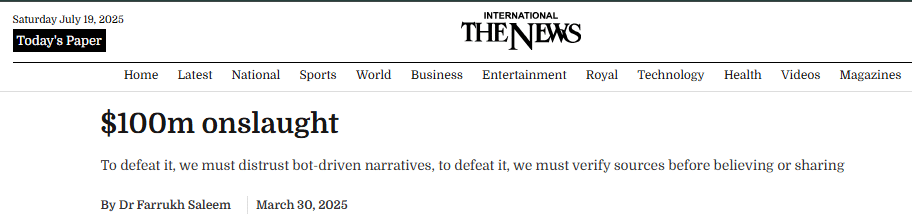
Source: The News
How State-Backed Groups Engineer False Narratives Online
State-backed groups, as revealed by EU DisinfoLab’s “Indian Chronicles” report, meticulously engineer false narratives by leveraging a complex web of deception. This involves establishing vast networks of fake social media accounts to amplify propaganda and manipulate online discourse. Crucially, they “resurrect” defunct NGOs and media outlets, giving them a veneer of legitimacy to disseminate biased information, malign rival states like Pakistan, and spread entirely false news, thereby distorting international perceptions and influencing policy discussions in global forums.
AI‑generated Content, Deepfakes, and Synthetic Voices
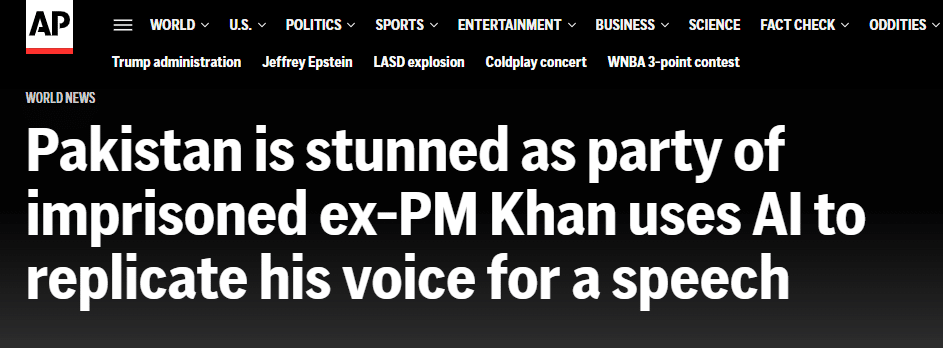
The 2024 general elections saw unprecedented AI usage: the imprisoned ex‑Prime Minister Imran Khan’s party, PTI, released an AI‑generated speech using a synthetic version of Khan’s voice, written by him in prison and shared with over a million supporters.
Source: AP News
Similarly, opponents circulated deepfake videos and audio circulating false statements: announcing election boycotts, electoral jumps or withdrawals by candidates, and mislabelling key leaders, all in attempts to manipulate voter behavior .
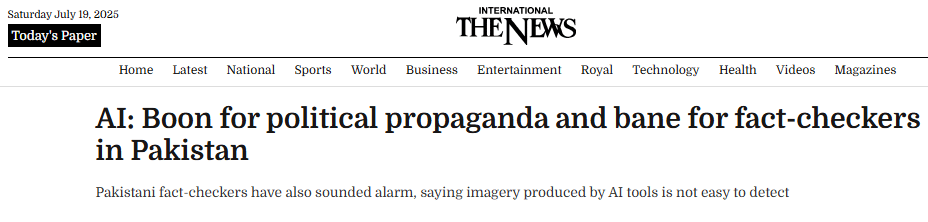
AI‑generated imagery has also played a role. During the Karachi mayoral race in 2023, an AI‑created image compared Bilawal Bhutto‑Zardari to Adolf Hitler via a portrait composed by Midjourney, ostensibly to discredit the PPP.
Source: The News
Moreover, transgender activist Shahzadi Rai reported personally receiving AI‑fabricated images meant to shame or delegitimize her, illustrating how synthetic content can be weaponised to harm marginalized individuals and weaken democratic participation.
Crisis Propaganda and Escalation
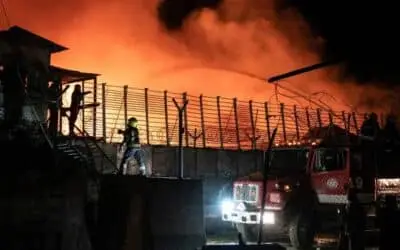
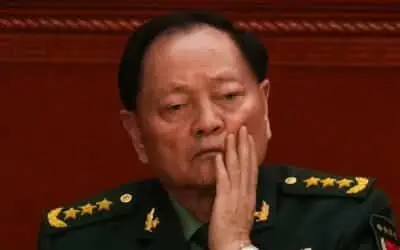
The May 2025 escalation between India and Pakistan, triggered by a militant attack in Kashmir was amplified by an “information war” on social media. During this time period, both sides, but predominantly India, were sharing fake reports of victories, captures, and resignations. In India, AI‑generated images and recycled footage circulated supposed military triumphs, intensifying public confusion and pushing both sides closer to potential conflict.
Amplification Tactics and Public Perception
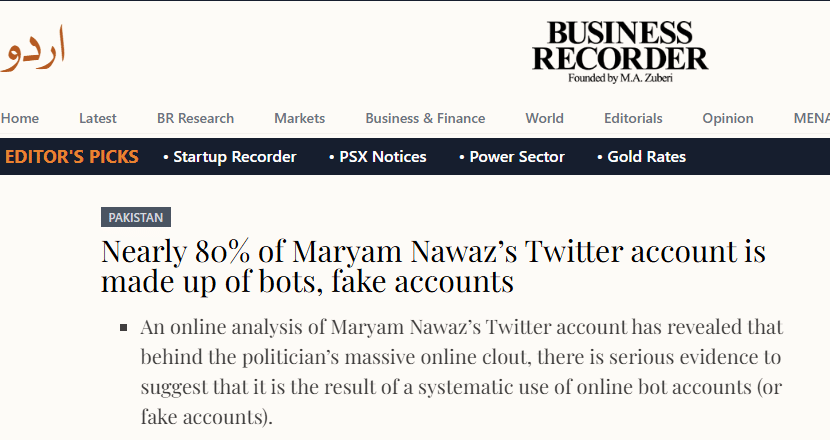
These synthetic narratives rely heavily on amplification via bots and coordinated engagement. Bots, often acting in the earliest minutes of a post, drive misleading content to visibility, while humans amplify and engage, lending legitimacy to fabricated trends. Research confirms that human‑bot networks are responsible for much of the political hashtag manipulation, and many of them are bots disseminating partisan agendas. Accounts of major political figures like Maryam Nawaz have also been scrutinised: data analysts estimate that up to 80% of her followers could be bots or inactive accounts, inflating perceived reach while engaging minimally.
Source: Business Recorder
Risks to Democratic Integrity
The spread of synthetic public opinion poses a serious threat to the integrity of democratic processes. By artificially inflating or deflating support for specific policies or political figures, it misleads citizens into perceiving a false consensus. This manipulation fuels division, deepens political polarization, and undermines public confidence in election outcomes. Genuine grassroots voices are drowned out, making it harder for authentic civic engagement to gain visibility.
Moreover, these tactics often target vulnerable and marginalized communities; women, activists, minorities, through coordinated harassment and character attacks. The long-term effect is a digital environment where fear, confusion, and misinformation replace informed debate and open dialogue. Without effective countermeasures, the public sphere risks becoming an echo chamber of engineered narratives, rather than a space for democratic discourse.
Policy and Counter‑measures
Pakistan introduced its first National AI Policy in May 2023, but experts warn it lacks stakeholder consultation and fails to address misuse risks such as deepfakes, bots, election interference, or hate campaigns targeting women and minorities—reported the digitalrightsfoundation.pk..
Fact-checking organizations, digital rights groups, and civil society actors in Pakistan have consistently called for comprehensive reforms to counter the growing threat of synthetic public opinion. Their demands include the introduction of stronger regulatory frameworks that can hold perpetrators accountable, investment in nationwide media and digital literacy programs to help citizens identify disinformation, and the establishment of independent investigative bodies to trace the origins of coordinated inauthentic behavior. These groups also stress the importance of greater collaboration between social media platforms, government institutions, academic researchers, and media watchdogs to ensure transparency and accountability across the digital ecosystem.
Conclusion
The weaponisation of artificial intelligence, bots, deepfakes, and coordinated inauthentic behavior in Pakistan’s digital sphere presents a critical threat to democratic discourse. From fabricated endorsements to targeted campaigns of misinformation, political parties, state-affiliated actors, and foreign interests are using synthetic public opinion to fabricate legitimacy, or discredit opponents. As technology evolves, Pakistani civil society, regulators, fact‑checkers, and platform operators must respond with urgency. Investing in literacy, detection tools, ethical AI policy, and transparency is imperative to ensure that genuine voices prevail in shaping the country’s political future.