


The Killing of Iran’s Supreme Leader
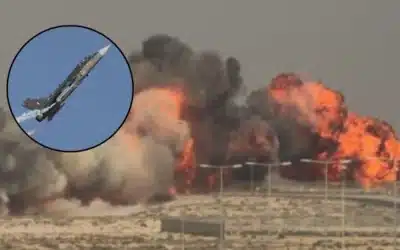
On 28 February 2026, Iran’s Supreme Leader Ayatollah Ali Khamenei was killed in a targeted strike in Tehran, marking one of the most consequential geopolitical events in the modern Middle East. According to international reports, the strike occurred at approximately 08:10 local time and targeted a compound connected to the Iranian leadership in the capital.
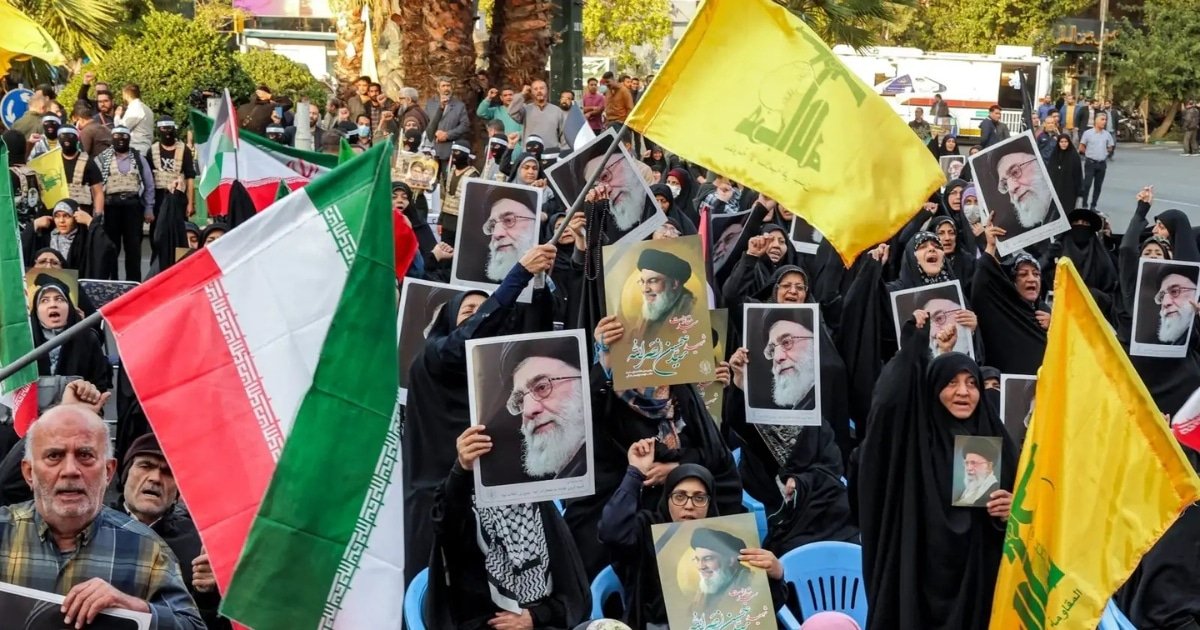
Iranian state media confirmed his death the following day, after hours of uncertainty and conflicting reports during the initial wave of attacks. The government announced a 40-day national mourning period and declared a public holiday as the country entered a period of political and military crisis.
Khamenei, who had ruled Iran since 1989 after succeeding Ayatollah Ruhollah Khomeini, held ultimate authority over Iran’s political system, armed forces, and strategic decisions. His death therefore did not merely remove a symbolic figure; it eliminated the central power broker of the Islamic Republic’s governing structure.
Israel Planned Khamenei Strike Months Before War
Israeli Defence Minister Israel Katz revealed that the decision to target Iran’s Supreme Leader Ayatollah Ali Khamenei was made as early as November 2025, months before the 2026 war began. Katz said Prime Minister Benjamin Netanyahu had initially scheduled the operation for mid‑2026, but concerns over growing instability in Iran accelerated the timeline.
The plan, coordinated with the United States, was intended to neutralize what Israel considered an existential threat from Iran’s nuclear and missile programmes. Katz’s disclosure confirms that the assassination was not a spontaneous wartime decision, but part of a long‑planned strategy executed once Tehran’s internal tensions and regional actions were assessed as critical.
Israel carried out heavy airstrikes on the Hezbollah-controlled southern suburbs of Beirut overnight after ordering its residents to leave, while the Iran-backed group warned Israelis to leave towns and villages at the frontier https://t.co/TodNgEk7T0
— Reuters (@Reuters) March 6, 2026
The U.S.–Israel Strike Campaign
The assassination occurred during a large-scale military operation launched by Israel with support from the United States. Multiple Western reports indicated that the strikes targeted leadership facilities, missile launch sites, and command centres across Iran.
Israeli Prime Minister Benjamin Netanyahu suggested shortly after the strikes that there were “strong indications” Khamenei had been killed when Israeli aircraft targeted locations associated with Iran’s leadership network.
U.S. officials later confirmed that American intelligence and surveillance systems had played a key role in tracking senior Iranian leaders prior to the strike. The operation reportedly relied on advanced intelligence tracking and coordination between Israeli and American agencies.
Satellite imagery following the attack showed heavy damage to buildings near the leadership compound in Tehran. The operation also targeted several senior officials linked to Iran’s security apparatus, including figures associated with the Islamic Revolutionary Guard Corps (IRGC).
Wider Military Targets Across Iran
The killing of Khamenei was only one part of a broader military campaign against Iranian infrastructure. Israeli forces and U.S. assets reportedly struck hundreds of military targets across the country in the opening phase of the conflict.
These included missile launch facilities, air defence systems, IRGC command centres, and military airfields. The objective appeared to be limiting Iran’s ability to launch immediate retaliation while simultaneously disrupting its strategic command structure.
Some reports also suggested that several senior Iranian security officials were killed during the strikes, including figures involved in Iran’s defence and nuclear planning networks. Analysts noted that the scale of the attacks resembled a decapitation strategy aimed at weakening Iran’s ability to coordinate military responses.
Such a strategy represents a significant escalation compared with previous covert operations that typically targeted nuclear scientists or regional militia commanders rather than the country’s top leadership.
Iran’s Immediate Military Response
Within hours of the attacks, Iran launched retaliatory strikes across the region. Missile and drone attacks were directed toward Israeli territory as well as American military bases across the Middle East.
Initial reports indicated that Iranian forces fired dozens of missiles toward Israel while also targeting U.S. military installations in several countries including Bahrain, Qatar, and Saudi Arabia.
Despite the scale of the response, U.S. officials reported limited damage to American bases, although the attacks highlighted the regional nature of the conflict.
Iranian officials described the initial strike as an “illegal and illegitimate attack,” warning that the consequences would be extensive and long-lasting. The rapid exchange of strikes raised fears that the confrontation could escalate into a full regional war.
Leadership Crisis Inside Iran
Khamenei’s assassination immediately triggered a constitutional crisis inside Iran. The country’s political system is heavily centred on the authority of the Supreme Leader, who holds ultimate control over the military, judiciary, and key state institutions.
Following the strike, Iran reportedly established an interim leadership council composed of senior officials to manage the state during the transition period. The council includes President Masoud Pezeshkian, Chief Justice Gholam-Hossein Mohseni-Ejei, and cleric Alireza Arafi.
Meanwhile, the Assembly of Experts, the powerful clerical body responsible for selecting the Supreme Leader, began the process of appointing a successor.
However, the leadership transition is taking place under extraordinary conditions. Israeli officials have warned that figures responsible for directing attacks against Israel could become future targets, signalling that the confrontation may continue even after a new leader is chosen.
Trump Says U.S. Must Have a Role in Choosing Iran’s Next Leader
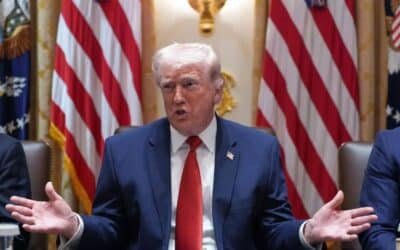
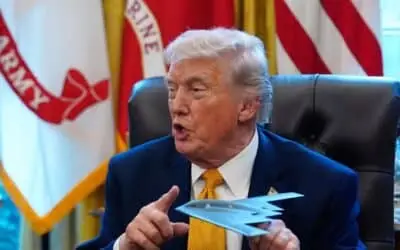
As Iran prepares to name a successor to the late Supreme Leader, U.S. President Donald Trump has publicly stated that the United States should have a say in who leads Iran next, an unprecedented interventionist claim in a sovereign state’s internal process.
Trump insisted he must be “involved in the appointment” of Iran’s new leader, dismissing Mojtaba Khamenei, the son of the slain leader, as “unacceptable” and urging that any future leader be someone who would “bring harmony and peace to Iran.”
He even drew comparisons to recent U.S. influence in Venezuela’s leadership changes as a model for this involvement. Trump’s comments underline a shift toward a harder U.S. stance not only militarily but politically, as he links the end of the war to who governs Iran’s future.
Iran’s clerical bodies and regional officials have rejected these assertions, emphasising that the next leader will be chosen internally by the Assembly of Experts.
President Trump says he should have a role in choosing Iran’s new leader, describing one potential candidate— the son of the late Ali Khamenei — as an “unacceptable” choice. pic.twitter.com/CQxtkNo5SG
— Eye on Palestine (@EyeonPalestine) March 5, 2026
Regional Fallout and Escalation Risks
The killing of Khamenei has significantly increased tensions across the Middle East. Iran’s regional allies, particularly Hezbollah in Lebanon and several militia groups in Iraq and Syria, have historically aligned their strategy with Tehran.
Military analysts warn that these groups could become active participants if the conflict escalates further. Even before the assassination, the region was experiencing rising tensions due to the Israel-Iran shadow conflict, proxy warfare, and disputes over Iran’s nuclear programme.
The current crisis therefore risks merging several ongoing conflicts into a broader regional confrontation involving multiple states and armed actors.
Global Diplomatic Reactions
The assassination has drawn strong reactions from global powers. Russia condemned the killing and warned that such actions could destabilize the region and undermine international norms governing state sovereignty.
China also called for restraint and urged diplomatic engagement to prevent further escalation.
European governments expressed concern about the wider consequences of the war, particularly its potential impact on energy markets and global security.
For many analysts, the killing of a sitting head of a major regional power marks a significant shift in modern warfare. Targeted killings have previously been used against militant groups, but rarely against the highest political authority of a sovereign state.
Iran Rejects Unconditional Surrender and Stands Firm
As the war entered its second week, one of the clearest signals of Tehran’s resilience came in Iran’s categorical rejection of demands from Washington and Tel Aviv for unconditional surrender. U.S. President Donald Trump publicly stated that no peace deal would be acceptable until Iran capitulated, framing this demand as a necessary precondition for ending the conflict.
Iranian President Masoud Pezeshkian responded forcefully in a televised address, dismissing the surrender demand as “a dream” that Iran’s enemies would carry “to their graves,” underscoring Tehran’s refusal to yield despite intense bombing and significant military losses.
Pezeshkian emphasized that the Iranian government and society would not succumb to external pressure, framing the conflict as a defence of national sovereignty and pride. This stance has been echoed by commanders of the Islamic Revolutionary Guard Corps (IRGC), who vowed to continue military operations against U.S. and Israeli interests if hostile actions persisted.
The refusal to surrender, despite mounting pressure on Tehran’s military infrastructure and leadership networks, signals that the conflict is far from reaching a negotiated end, and may evolve into a longer struggle with deep political and strategic implications for the region.
Strategic Consequences for the Middle East
Beyond the immediate military confrontation, the assassination raises deeper strategic questions about the future of the Middle East.
First, Iran’s political structure now faces a difficult transition without the leader who dominated its decision-making for more than three decades. The next Supreme Leader will inherit a country confronting war, economic pressure, and internal political uncertainty.
Second, the conflict between Iran and Israel has moved beyond covert operations and proxy confrontations into direct military engagement.
Finally, the crisis may reshape the geopolitical balance of the region. If the conflict continues, it could influence nuclear negotiations, security alliances, and the broader strategic alignment of Middle Eastern states.
A Limited Apology Amid Escalation
In a highly unusual public address during the ongoing conflict, Iranian President Masoud Pezeshkian apologised to neighbouring Gulf states for attacks linked to Iran’s military responses, saying Tehran would suspend missile strikes against those countries unless they were attacked first.
The announcement was made on state television as Iran’s interim leadership council sought to calm rising regional tensions that have seen missiles and drones intercepted over Kuwait, Qatar, Bahrain and the UAE. Pezeshkian framed the apology as recognition of the broader impact of the war, but also made clear that Iran had no intention of surrendering to U.S. and Israeli demands and would continue to defend its territory.
Analysts noted that this diplomatic gesture comes at a time of intense fighting and may reflect Tehran’s effort to prevent the conflict from spreading further into the Gulf. The situation remains volatile, with military operations and retaliatory strikes continuing even after the president’s remarks.
Concluding: A Turning Point in Regional Politics
The death of Ayatollah Ali Khamenei represents a historic turning point in Middle Eastern politics. For nearly four decades, he shaped Iran’s ideological direction, foreign policy, and security strategy.
His assassination has triggered a chain reaction of military escalation, leadership uncertainty, and diplomatic tension that extends far beyond Iran’s borders.
You May Like To Read: Saudi Aramco Adjusts Oil Sales as Middle East Conflict Disrupts Supply Routes
Whether the crisis evolves into a wider regional war or eventually leads to new diplomatic arrangements remains uncertain. What is clear, however, is that the political landscape of the Middle East has entered a new and unpredictable phase.
Check out our latest video: