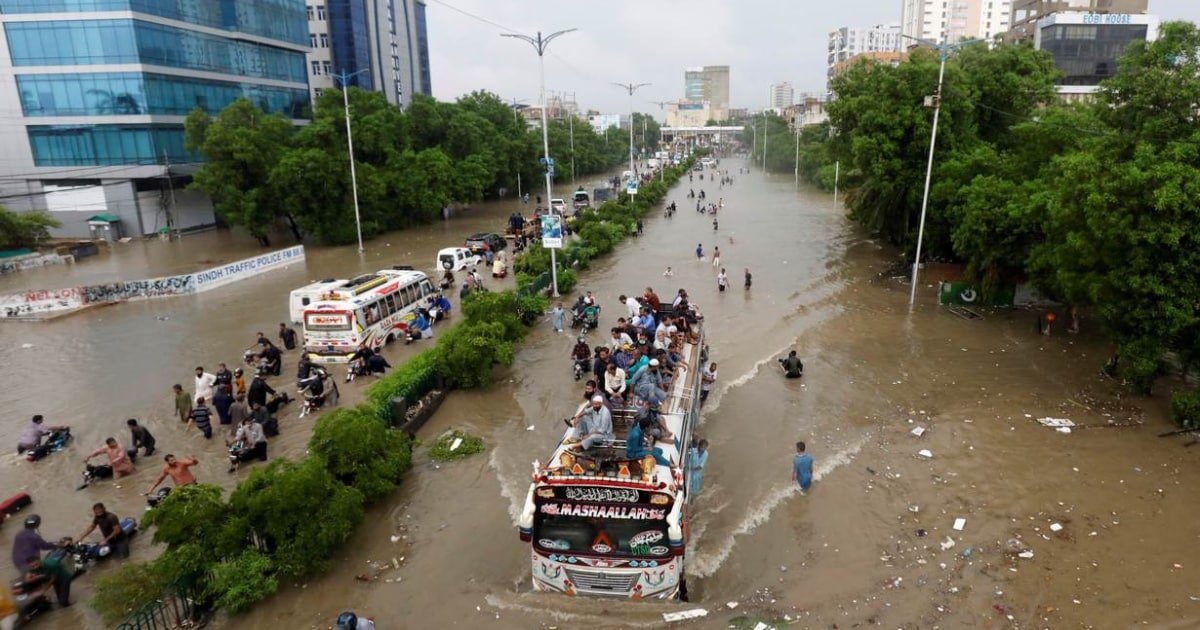



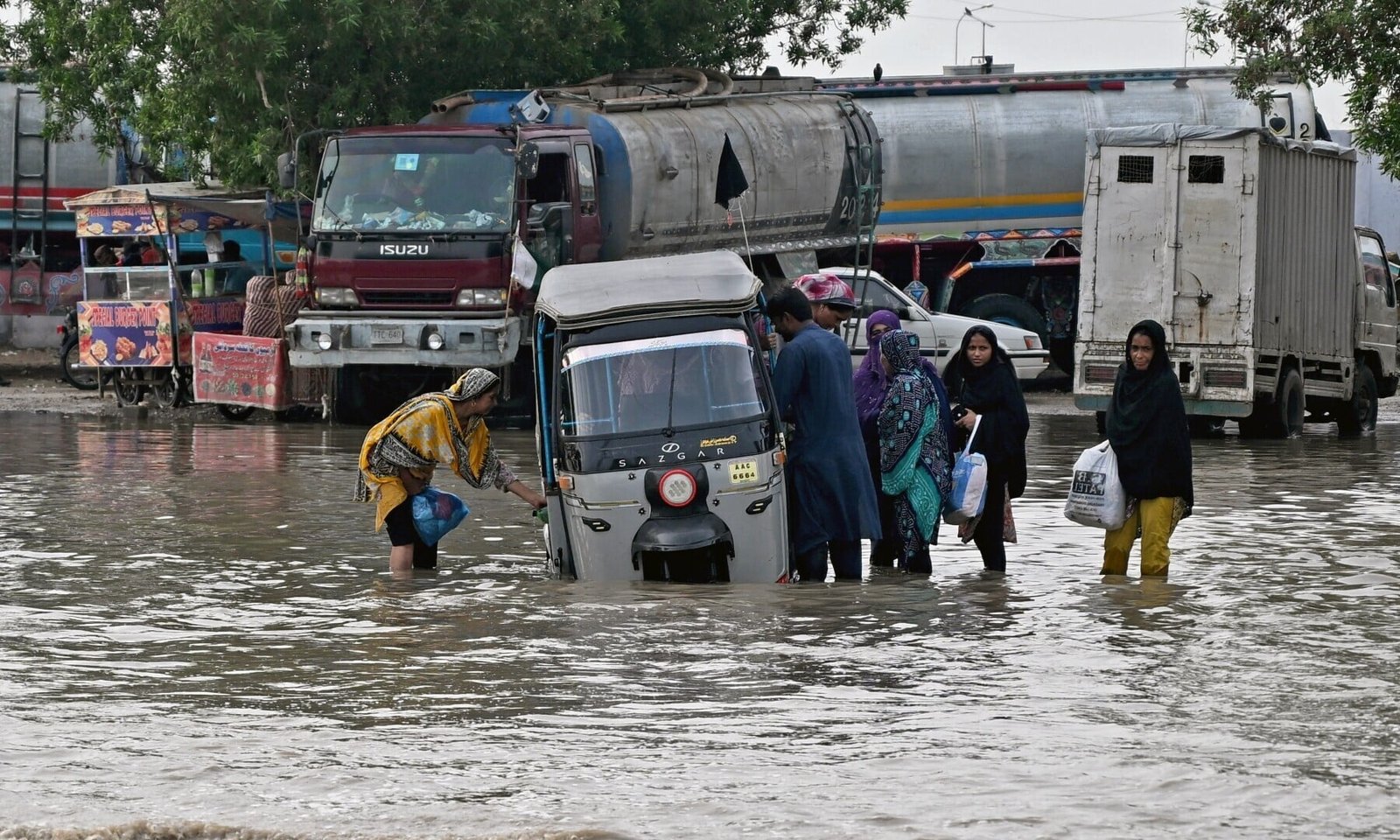
Karachi’s recurrent urban flooding is a complex issue, highlighted by the recent heavy monsoon rainfall that brought the city to a standstill. While the Sindh government’s swift declaration of a public holiday and a rain emergency with all essential services on high alert, demonstrates a reactive approach to the crisis, a critical analysis reveals a deeper systemic failure. The perennial cycle of monsoon flooding in Karachi is not merely a natural phenomenon but a man-made disaster, born from a confluence of inadequate infrastructure, unchecked urbanization, poor waste management, and the looming threat of climate change.
A Breakdown of a Broken System
The official response is characterized by immediate, short-term measures. The closure of schools and businesses, the cancellation of leave for municipal staff, and the establishment of emergency cells are all reactive steps aimed at managing the chaos rather than preventing it. While these actions are necessary for public safety, they underscore a consistent failure to address the root causes of the flooding. Every year, a similar narrative unfolds: warnings are issued, meetings are held, and officials claim preparedness, yet with the first heavy downpour, the city’s infrastructure collapses.
KMC has been working on clearing 46 major Naalaas of Karachi since 20th June 2025 & this exercise will continue till the end of monsoon season. So far 3,024,000 CFT sludge has been taken out by KMC & deposited at our landfill site. In light of the expected rain, entire municipal… pic.twitter.com/FLBfLy45QO
— Murtaza Wahab Siddiqui (@murtazawahab1) August 18, 2025
The core of the problem lies in Karachi’s decaying and outdated drainage system. The city’s infrastructure, originally designed for a much smaller population and less intense rainfall patterns, is completely overwhelmed by modern-day urban sprawl and the more erratic, severe weather events linked to climate change. The existing network of drains, or nalahs, has been severely compromised by years of neglect, encroachment, and solid waste accumulation. As the mayor’s office noted, “important highways should be cleared so that the delivery of machinery or other equipment to the affected areas can be ensured,” which indicates that even the main arteries of the city are not free from blockage and waterlogging.
The Urbanization and Climate Change Nexus
Karachi’s rapid and often unplanned urbanization is a significant contributor to the problem. The construction of new buildings and roads has replaced natural drainage paths and open spaces that once absorbed rainwater. This process has transformed the city into an impermeable concrete jungle, leading to increased surface runoff and overwhelming the already strained drainage system.
The encroachment on and disposal of garbage in the nalahs further exacerbate the issue, turning them into little more than clogged canals that overflow with the slightest pressure. The statement by the Sindh Minister for Local Government, Saeed Ghani, acknowledging the difficulties faced by sewage pumping stations due to power outages by K-Electric, further highlights the precarious state of interconnected critical systems.
These local, man-made factors are compounded by the larger issue of climate change. Pakistan is ranked among the most vulnerable countries to climate change, and Karachi is particularly susceptible to its effects, including more frequent and intense rainfall events. The city’s climate action plan, though in development, faces the monumental task of retrofitting an entire metropolis to handle weather patterns that are becoming increasingly extreme. The short-term measures taken by the government, while providing temporary relief, do not address this long-term threat. Without a fundamental shift in urban planning and infrastructure development, Karachi will continue to be a victim of its own flawed design.
From Reactive to Proactive: A Call for Critical Reform
The repeated crisis in Karachi points to a critical need for a paradigm shift from a reactive to a proactive disaster management approach. The NDMA has already developed new proactive guidelines for the 2025 monsoon season, indicating that there is a strategic shift at the national level. However, the implementation at the provincial and local levels remains a challenge. The official declarations and emergency cells are a sign of mobilization, but they are a far cry from the long-term, structural solutions required.
You May Like To Read: Government Launches Inquiry Task Force | Military Leads Emergency Response in Devastating Flash Floods
Conclusion
A sustainable solution would involve a multi-pronged strategy that includes massive investment in modernizing the city’s drainage infrastructure, strictly enforcing anti-encroachment laws on and around nalahs, and implementing a comprehensive solid waste management system. The President of Pakistan has also stressed the need for a comprehensive and long-term plan to prevent urban flooding, suggesting a recognition of the issue at the highest level of government.
The problem is a lack of sustained political will and coordination between the multiple agencies that govern Karachi. The city is governed by various authorities, leading to fragmentation and a lack of accountability. For Karachi to break this cycle, a unified and long-term vision is needed, one that prioritizes resilient infrastructure and sustainable urban development over ad hoc emergency responses. The citizens, in the meantime, are left to their own devices, braving submerged roads and power outages, with little more than official advisories to contact police helplines and limit their movement.
You May Like To Read: IMF Recommends Enhancing Central Bank Independence and Institutional Reform for Pakistan’s SBP