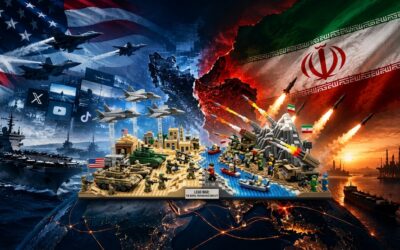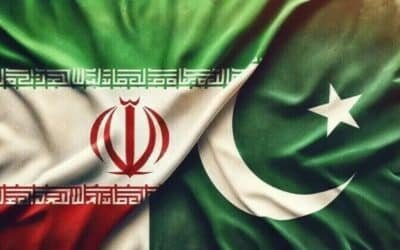





In a major display of its active humanitarian diplomacy following its successful mediation of the US-Iran conflict, Pakistan has initiated a complex, multi-national maritime repatriation operation.
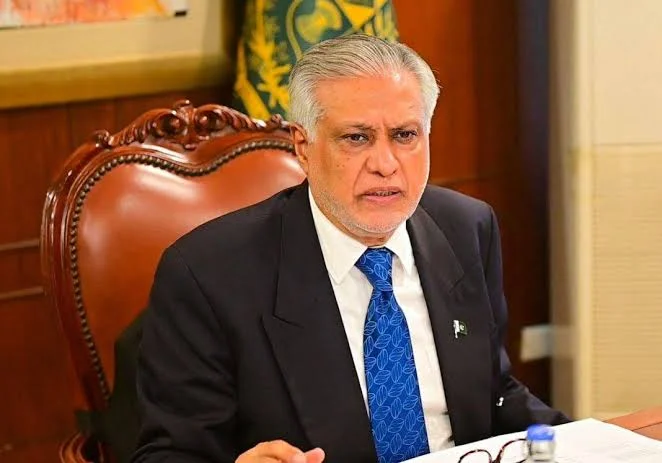
Deputy Prime Minister and Foreign Minister Ishaq Dar confirmed Wednesday that Islamabad is actively facilitating the safe transit and return of 30 Iranian nationals. The group includes crew members from a high-stakes US maritime seizure in the Indian Ocean and stranded fishermen rescued by a British commercial vessel.
The coordinated operation, routing entirely through the southern port city of Karachi, highlights Pakistan’s unique position as a trusted intermediary. It comes just 48 hours before the United States and Iran are scheduled to formally sign a historic Memorandum of Understanding (MoU) in Bürgenstock, Switzerland, to establish a permanent peace settlement.
UK 🇬🇧 appreciates #Pakistan’s ‘constructive diplomatic role’ in facilitating #US–#Iran agreement, FCDO’s Hamish Falconer tells Deputy PM Ishaq Dar in Islamabad.
During the meeting, the two sides reviewed bilateral relations and exchanged views on regional and global… pic.twitter.com/hBWEcnmMUq
— Raaz News – En (@raaznewsen) June 15, 2026
1. The Breakdown of the Repatriation Cohort
The 30 Iranian seamen arriving in Karachi represent two entirely distinct maritime incidents that occurred during the final phases of the recent Washington-Tehran shipping crisis:
-
The Supertanker Crew Seizure (22 Crew Members): The largest segment consists of 22 sailors from the stateless supertanker MT Lenore/Davina (300,976 dwt). The vessel, carrying 1.9 million barrels of Iranian crude oil under a fraudulent Curacao registry, was interdicted and boarded via helicopter by U.S. Indo-Pacific Command (INDOPACOM) forces 20 miles southwest of Sri Lanka on June 5. Following intense diplomatic negotiations, the US military released the crew into Pakistani custody for safe transit.
-
The Stranded Fishermen Rescue (8 Fishermen): The remaining eight individuals are Iranian fishermen whose civilian vessel ran aground and became stranded in the open sea. They were intercepted and rescued by the British commercial vessel MMA Valour before being transferred to Pakistani maritime authorities.
2. Multi-Channel Coordination & The Bürgenstock Precursor
Deputy Prime Minister Ishaq Dar emphasized that the operation is a direct product of the backchannel communications established by Islamabad during its broader peace brokerage:
-
Quadrilateral Diplomacy: Pakistan’s Foreign Office is managing a highly delicate logistical framework involving active, real-time coordination between Iranian, United States, and British authorities to process entry, security clearing, and immediate consular transit through Karachi.
-
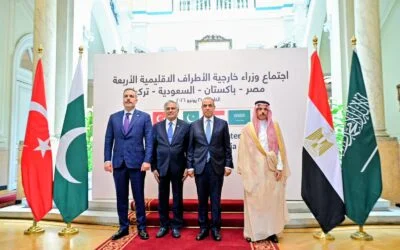
The Bürgenstock Pipeline: The repatriation coincides with frantic diplomatic activity. Dar conducted high-level phone consultations with Egyptian Foreign Minister Badr Abdelatty to finalize regional security preparations ahead of Friday’s formal peace treaty signing in Switzerland, as well as the upcoming Regional Four (R-4) Foreign Ministers’ summit.
Critical Analysis
The repatriation of the 30 Iranian seamen through Karachi is a masterclass in how a state can use humanitarian logistics to cement a major geopolitical victory. Coming right on the heels of the historic US-Iran peace deal mediated by Prime Minister Shehbaz Sharif and Field Marshal Asim Munir, this operation serves as immediate, practical proof of Pakistan’s newly elevated role as an indispensable regional stabilizer.
Translating Backchannel Mediation into Operational Trust
This operation is far more than a routine consular transfer. The fact that the United States military agreed to hand over the 22 crew members of the seized supertanker MT Lenore/Davina—a vessel actively intercepted for violating Washington’s maritime blockade—proves the deep level of operational trust Western powers now place in Islamabad’s security apparatus.
By stepping in to act as the legal and logistical bridge between the US Pentagon, the British Foreign Office, and the Iranian Revolutionary Guard, Pakistan is proving that its diplomatic machinery is uniquely capable of managing high-stakes, multi-national handoffs that would paralyze other regional actors.
The Logistics of the Karachi Transit Firewall
Selecting Karachi as the primary transit hub is a calculated and deliberate move. As a major maritime and aviation gateway, Karachi allows the Federal Investigation Agency (FIA) and naval intelligence units to efficiently process the inbound seamen within a secure, controlled perimeter.
This approach ensures that all 30 individuals are thoroughly vetted, provided immediate medical and humanitarian aid, and smoothly transitioned onto outbound flights to Tehran. This seamless execution minimizes any potential bureaucratic delays or security complications, allowing Islamabad to demonstrate its capacity for swift, professional crisis management.
Building Momentum for the R-4 Summit
This successful operation gives Deputy Prime Minister Ishaq Dar immense diplomatic leverage as he prepares for Friday’s historic MoU signing in Bürgenstock, Switzerland, and the subsequent Regional Four (R-4) Foreign Ministers’ meeting.
By actively resolving lingering maritime friction points, Pakistan is showing the international community that it doesn’t just broker abstract peace deals on paper; it possesses the logistical capability and political will to enforce and manage those agreements on the ground and at sea. This proactive approach firmly establishes Pakistan as an essential, foundational partner for future economic, maritime, and energy security frameworks across the Indian Ocean and the wider region.