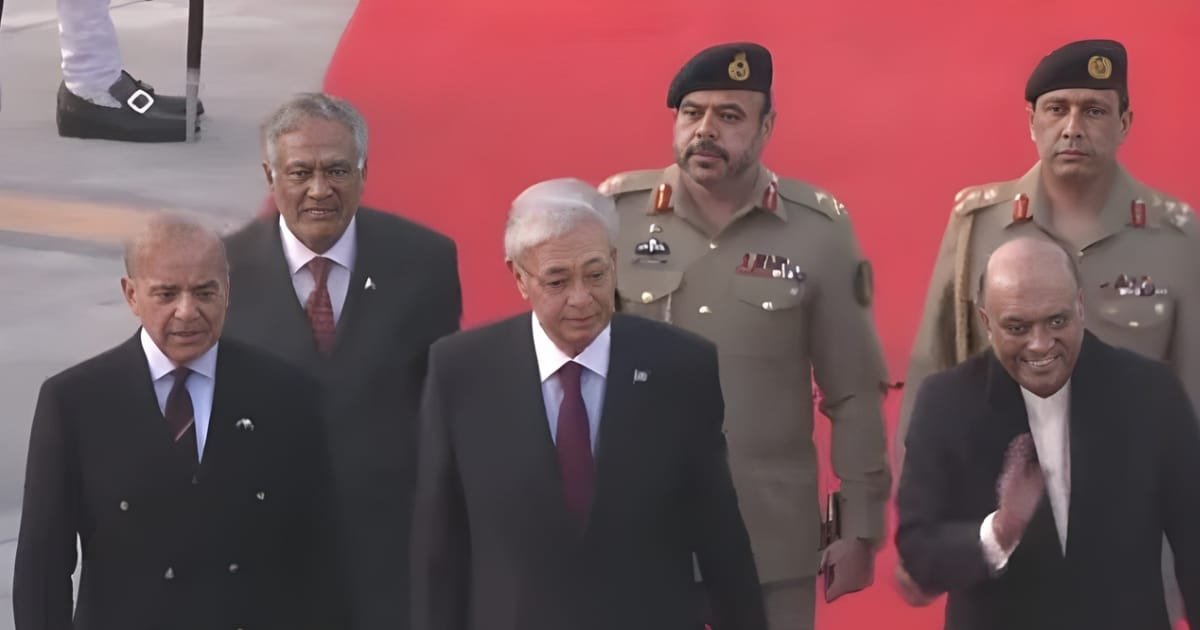


Kazakhstan’s President Kassym-Jomart Tokayev concluded a historic two-day state visit to Pakistan, the first by a Kazakh leader in 23 years. Following high-level talks in Islamabad, President Tokayev and Prime Minister Shehbaz Sharif signed a Joint Declaration on the Establishment of a Strategic Partnership, formally elevating bilateral relations to a new diplomatic tier. The visit was marked by the signing of 37 agreements and Memorandums of Understanding (MoUs) covering critical sectors including energy, defense, mining, maritime affairs, and artificial intelligence.
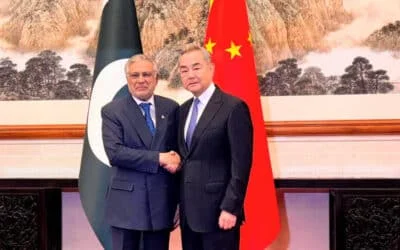
Deputy Prime Minister / Foreign Minister Senator Mohammad Ishaq Dar @MIshaqDar50 called on the President of the Republic of #Kazakhstan, Kassym-Jomart Tokayev @TokayevKZ, who is visiting Pakistan on a two-day official visit.
Welcoming him to Pakistan, DPM/FM extended warm… pic.twitter.com/8ijVMgnbXd
— Ministry of Foreign Affairs – Pakistan (@ForeignOfficePk) February 4, 2026
A central outcome of the visit is an ambitious economic roadmap aimed at increasing bilateral trade from its current $250 million to $1 billion within the next two years, with a long-term goal of $5 billion through enhanced connectivity. Key agreements include a Transit Trade Agreement and an Extradition Treaty. Pakistan has offered Kazakhstan full access to its seaport facilities at Karachi and Gwadar, while both leaders reaffirmed their commitment to the Trans-Afghan railway corridor and multimodal transport routes through Turkmenistan and Uzbekistan.
You May Like To Read: Oman Summit: US and Iran Set for High-Stakes Nuclear Talks Amid Gulf Tensions
In a significant commercial breakthrough during the Pakistan-Kazakhstan Business Forum, the Kazakh firm Falcon EuroBus signed a $108 million contract to supply 600 electric buses to Pakistan, with the first deliveries expected in April 2026. Both nations also agreed to explore the resumption of direct flights to boost tourism and people-to-people exchanges. President Tokayev lauded Pakistan’s role as a “reliable and important partner” in South Asia, particularly noting its constructive influence as a member of the UN Security Council.
Check out our latest video: