




The Middle East has edged to the precipice of an uncontainable regional war after the United States military launched a seventh consecutive night of intense airstrikes against Iranian territory. The relentless aerial campaign has prompted a stark ultimatum from Tehran, with senior military leadership warning that Iran will abandon its posture of calculated deterrence and unleash a full-scale offensive if American operations continue.
According to a public directive issued by US Central Command (CENTCOM), the latest wave of strikes commenced at 19:00 GMT (10:30 PM in Iran) and was executed under the explicit authorization of the Commander-in-Chief. CENTCOM stated that the systematic operations are engineered to continuously degrade the Islamic Republic’s military capabilities and eliminate its capacity to threaten international assets.
US Central Command says it launched its seventh consecutive night of strikes on Iran as Tehran continues retaliatory attacks on Gulf countries.
🔴 Follow our LIVE coverage: https://t.co/4EAn9kaiec pic.twitter.com/yqUnaH5lDS
— Al Jazeera English (@AJEnglish) July 18, 2026
Standoff Weapons to Deep Inland Strikes
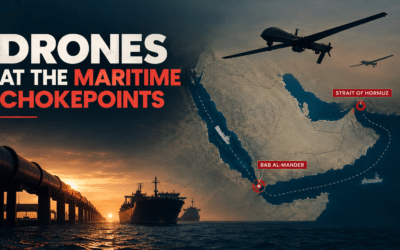
The ongoing aerial offensive utilized a massive combination of carrier-based fighter aircraft, high-altitude aerial drones, and guided-missile warships. In a significant geographic expansion of the conflict, US forces targeted not only coastal naval hubs but also pushed their operational footprint deep into the Iranian interior.
CENTCOM Targeted Footprint:
- Coastal Naval Hubs & Chokepoints
- Bandar Abbas, Jask, Sirik, and Qeshm Island
- Deep Interior Installations
- Yazd (Central Iran) and Ahvaz (Southwest)
- Strategic Infrastructure
- Underground weapons vaults, logistics centers, and surveillance arrays
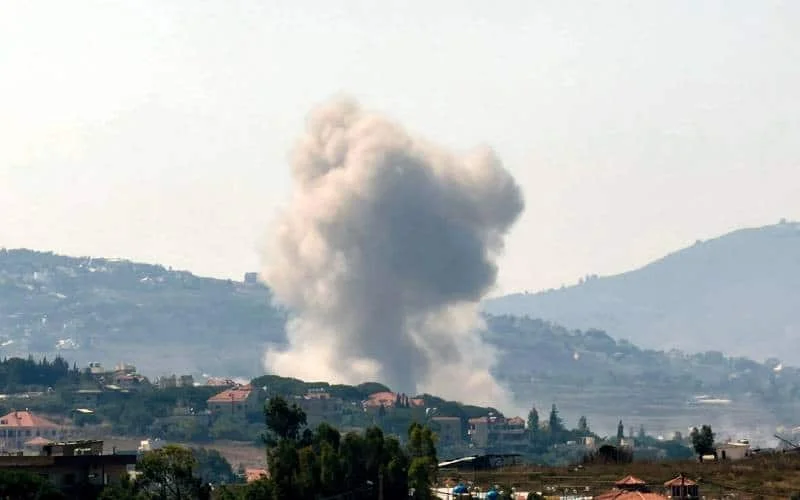
The Iranian state news agency, IRNA, confirmed that five powerful explosions reverberated through the central city of Yazd in the early hours of Saturday morning. Concurrently, the Mehr news agency reported multiple blasts tearing through several southern provinces. Casualties have begun to mount significantly; Iranian state media reported that at least three people were killed and eight others wounded in Hormozgan province alone, which directly borders the strategic Strait of Hormuz.
The intensification follows days of intense international scrutiny after independent satellite imagery exposed clear impact scars inside the high-security Bushehr nuclear power plant complex. While local provincial officials initially downplayed the reports—insisting the reactor itself remains undamaged and fully operational—the presence of precision impact points within the plant’s immediate support facilities highlights the high-stakes nature of the target list.
Threat of Total Infrastructure Warfare
In response to the nightly bombardment, Tehran has vehemently accused Washington of targeting non-military civilian infrastructure and committing overt war crimes. State networks have continuously broadcasted footage of heavily fractured bridges and severed railway lines across the country’s southern transit corridors. In retaliation, Iran has vowed to implement a policy of exact reciprocity, threatening to strike civilian infrastructure across neighboring Gulf states—a move that risks unleashing catastrophic humanitarian and economic consequences.
The spillover effect of this doctrine became clear on Friday when Kuwait’s Ministry of Electricity, Water, and Renewable Energy announced that an Iranian drone strike had successfully struck a major domestic power and water desalination plant. The strike sparked a massive fire, knocked out numerous power generation units, and forced the government to issue emergency pleas to citizens to stringently ration their electricity use. Because the Gulf states are heavily reliant on desalination facilities—which collectively account for roughly 40 percent of all global desalinated water production—a sustained campaign against these vulnerabilities could spark a severe regional water crisis within days.
Simultaneously, the theater of war expanded into the skies of neighboring countries. The Islamic Revolutionary Guard Corps (IRGC) claimed it launched targeted missile salvos against America’s primary regional deployment hubs, specifically striking the Sheikh Isa Airbase in Bahrain, as well as critical communication infrastructure and fuel depots. While Washington has not independently verified direct hits on its facilities, warning sirens were activated across Bahrain four separate times in a matter of hours. Further west, the Jordanian military confirmed its air defense systems intercepted and successfully downed 10 Iranian ballistic missiles that breached the kingdom’s airspace.
Tehran’s Ultimatum
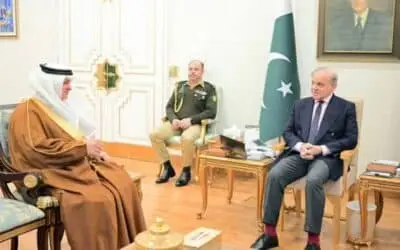
The political rhetoric emanating from Tehran indicates that the window for diplomatic mediation has effectively closed. Major-General Mohsen Rezaei, a senior military adviser to Iran’s Supreme Leader, stated unequivocally that the country is prepared to transition beyond mere retaliatory deterrence.
Rezaei warned that if the US military campaign does not halt within the next 48 to 72 hours, Tehran will initiate full-scale offensive operations, moving aggressively into a phase of “offence and complete destruction.” The leadership asserted that Iran will no longer restrict its military responses to symmetrical, like-for-like retaliation, warning that “no political border will be safe” once the offensive phase is triggered. Rezaei concluded that Washington’s long-standing strategy of simultaneous “war and negotiation” has reached a definitive dead end.
As regional stability disintegrates, the US State Department has issued an urgent advisory strongly imploring American citizens to immediately reconsider all travel to and through the Middle East. Characterizing the current security environment as highly volatile and complex with an acute potential for unforeseen escalation, Washington has urged its citizens already in the region to exercise extreme caution, closely monitor local developments, and coordinate directly with commercial airlines as the threat of an unmitigated transcontinental escalation looms.