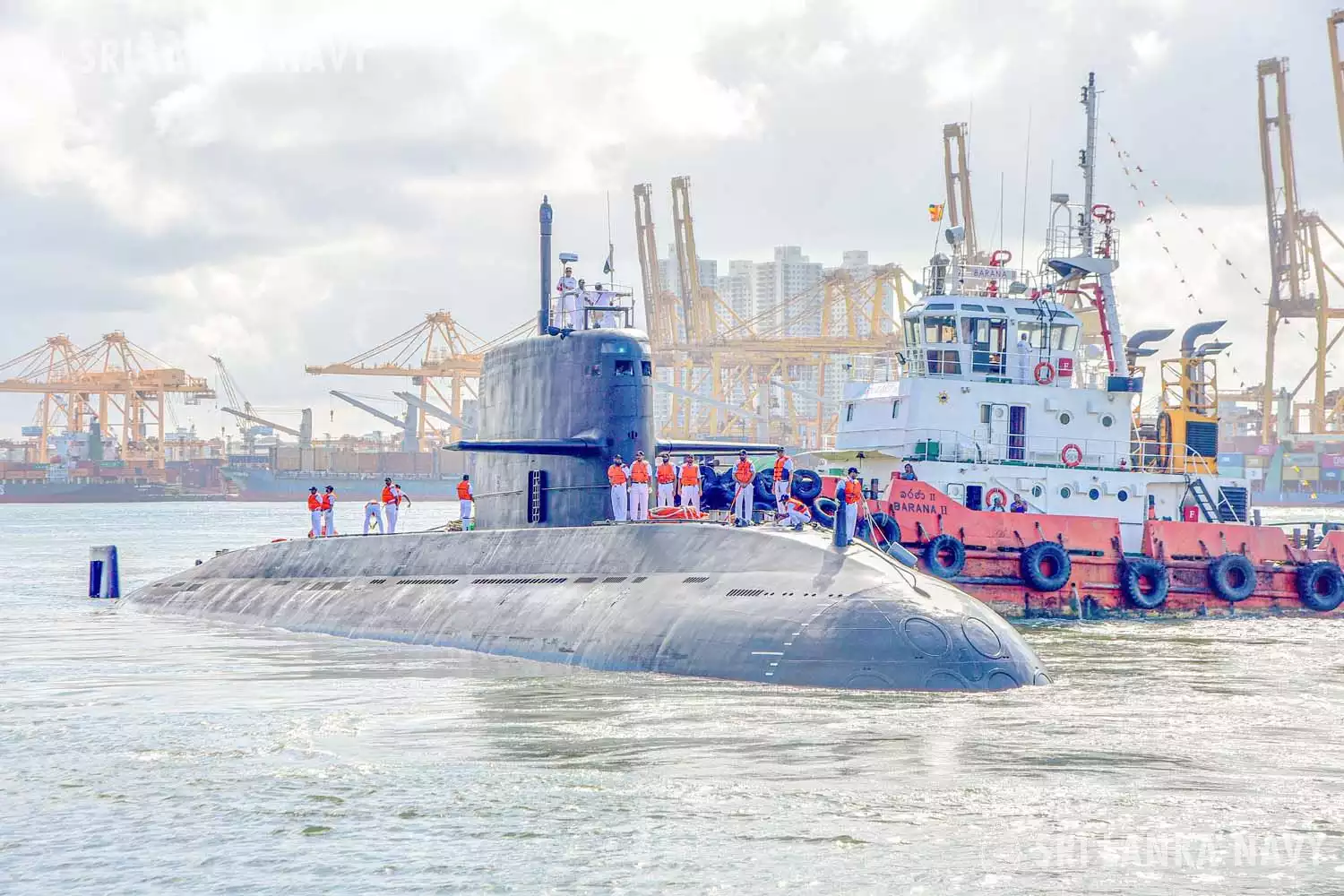





In a robust display of maritime tradition and deepening regional security ties, the Sri Lanka Navy formally welcomed a high-profile Pakistan Navy flotilla at the Port of Colombo on June 1, 2026. The visiting naval contingent includes the guided-missile frigates PNS Taimur and PNS Aslat, alongside the newly commissioned, highly advanced conventional attack submarine PNS/M Hangor.
The Pakistani naval units made port in Sri Lanka as part of a scheduled goodwill deployment and operational replenishment mission. The deployment highlights the enduring defense partnership between Islamabad and Colombo, which remains a cornerstone of maritime security architecture in the Indian Ocean Region (IOR).
The visiting strategic assets are commanded by a senior lineup of the Pakistan Navy’s officer corps:
-
Captain Niamat Saeed Khan (Commanding Officer, PNS Taimur)
-
Captain Nadir Mateen Afridi (Commanding Officer, PNS Aslat)
-
Captain Uzair Farooq (Commanding Officer, PNS/M Hangor)
During their multi-day operational stay in Sri Lanka, the crews of the warships and submarine are scheduled to participate in professional briefings, bilateral naval interactions, and cultural tours across key heritage locations in the country to foster mutual trust and interoperability.
Pakistan Navy’s submarine PNS Hangor, & the guided missile & air defence frigate PNS Taimur & PNS Aslat have arrived in Colombo, Sri Lanka 🇱🇰 🤝 🇵🇰 pic.twitter.com/vjf5RjdQ9d
— Pakistan Strategic Forum (@ForumStrategic) June 4, 2026
Critical Analysis: Naval Diplomacy, Submarine Proliferation, and Indian Ocean Geopolitics
The arrival of a dual-frigate and attack-submarine contingent at Colombo goes far beyond a routine port call. An objective analysis of this naval deployment reveals several critical geopolitical and strategic dynamics:
The Operational Debut and Submarine Signaling of the PNS/M Hangor
The inclusion of the PNS/M Hangor in this flotilla carries immense strategic weight. As part of Pakistan’s landmark Hangor-class (Type 039B) submarine procurement program, this deployment signals a massive leap in Pakistan’s long-range underwater endurance and operational capability.
Deploying an advanced, Air-Independent Propulsion (AIP) equipped conventional attack submarine alongside surface combatants into the deep waters of the Indian Ocean serves a dual purpose:
-
Operational Readiness: It tests the crew’s long-distance blue-water endurance and transit logistics.
-
Strategic Signaling: It subtly projects Pakistan’s underwater capabilities to regional competitors, demonstrating that Islamabad can seamlessly project asymmetric subsurface power far beyond its traditional littoral waters in the Arabian Sea.
Colombo as a Critical Geopolitical Pivot
The Port of Colombo is one of the most intensely contested maritime hubs in global realpolitik. Situated directly adjacent to the world’s busiest East-West shipping lanes, Sri Lanka is constantly navigating a delicate diplomatic tightrope between India, China, and Western powers.
By rolling out a formal, traditional naval welcome for the Pakistan Navy flotilla, Colombo is reaffirming its commitment to a balanced, independent foreign policy. This interaction proves that despite intense neighborhood pressures to restrict foreign military assets, Sri Lanka continues to view Pakistan as a trusted, traditional security partner capable of contributing to a multipolar, stable maritime order.
Surface-Subsurface Interoperability and Joint Tactics
The composition of the flotilla—combining the multi-role missile frigate PNS Taimur (Type 054A/P), the Zulfiquar-class frigate PNS Aslat, and a Hangor-class submarine—represents a fully integrated task group.
This joint transit allows the Pakistan Navy to practice complex surface-subsurface coordination, anti-submarine warfare (ASW) evasion tactics, and secure fleet communications in contested international waters. The data and operational experience gathered during this long-range Indian Ocean transit are vital for refining the navy’s doctrine of offensive sea-denial.
Cultural Diplomacy as a Force Multiplier
While the warships replenish their fuel, food, and naval stores, the scheduled cultural tours for the Pakistani crew members function as a critical tool of soft-power diplomacy. By engaging in people-to-people diplomatic exchanges and participating in sports or professional seminars with the Sri Lanka Navy, the Pakistan Navy systematically cultivates institutional camaraderie. This builds long-term institutional memory and trust between the mid-level officer corps of both nations, ensuring that the bilateral defense relationship remains resilient against shifting political tides.