




In a major diplomatic push to reset and revitalize its footprint in South Asia, Canadian Foreign Minister Anita Anand concluded a landmark one-day official visit to Pakistan on Monday, marking the first time a Canadian foreign minister has set foot in the country in nearly two decades.
Islamabad : 20 July , 2026.
H.E. Ms. Anita Anand, Foreign Minister of Canada, who is on an official visit to Pakistan, called on Prime Minister Muhammad Shehbaz Sharif at the Prime Minister House, earlier today.
Deputy Prime Minister & Foreign Minister Sen. Mohammad Ishaq Dar,… pic.twitter.com/SeqbYZQo7l
— Prime Minister’s Office (@PakPMO) July 20, 2026
The high-profile visit, undertaken at the explicit instruction of Canadian Prime Minister Mark Carney, yielded a series of key economic agreements, advanced long-stalled investment treaties, and provided a platform for sharp regional security discussions—including a formal Pakistani appeal for Canadian intervention regarding the fracturing of the Indus Waters Treaty (IWT).
A Twenty-Year Diplomatic Hiatus Ends
Arriving in Islamabad at the invitation of Pakistan’s Deputy Prime Minister and Foreign Minister Senator Mohammad Ishaq Dar, Anand’s visit was widely hailed by both sides as a historic turning point. The two nations share nearly 80 years of formal diplomatic history, yet top-level engagement from Ottawa has been noticeably sparse over the last twenty years.
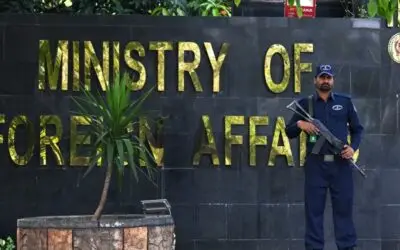
“Today is an important day for the continued increased bilateral relationship between our two countries,” Anand noted during a joint press briefing at the Foreign Office. “We have more work to do together to ensure that across sectors… there is a strong bilateral relationship.”
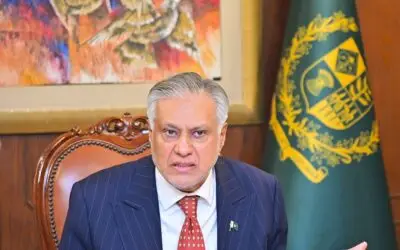
Dar echoed her optimism, framing the delegation-level talks as a vital springboard to convert “renewed momentum” into tangible commercial and strategic outcomes. “We need to meet more frequently in our capitals,” Dar emphasized. “We have the possibility and the capability of raising our bilateral relations.”
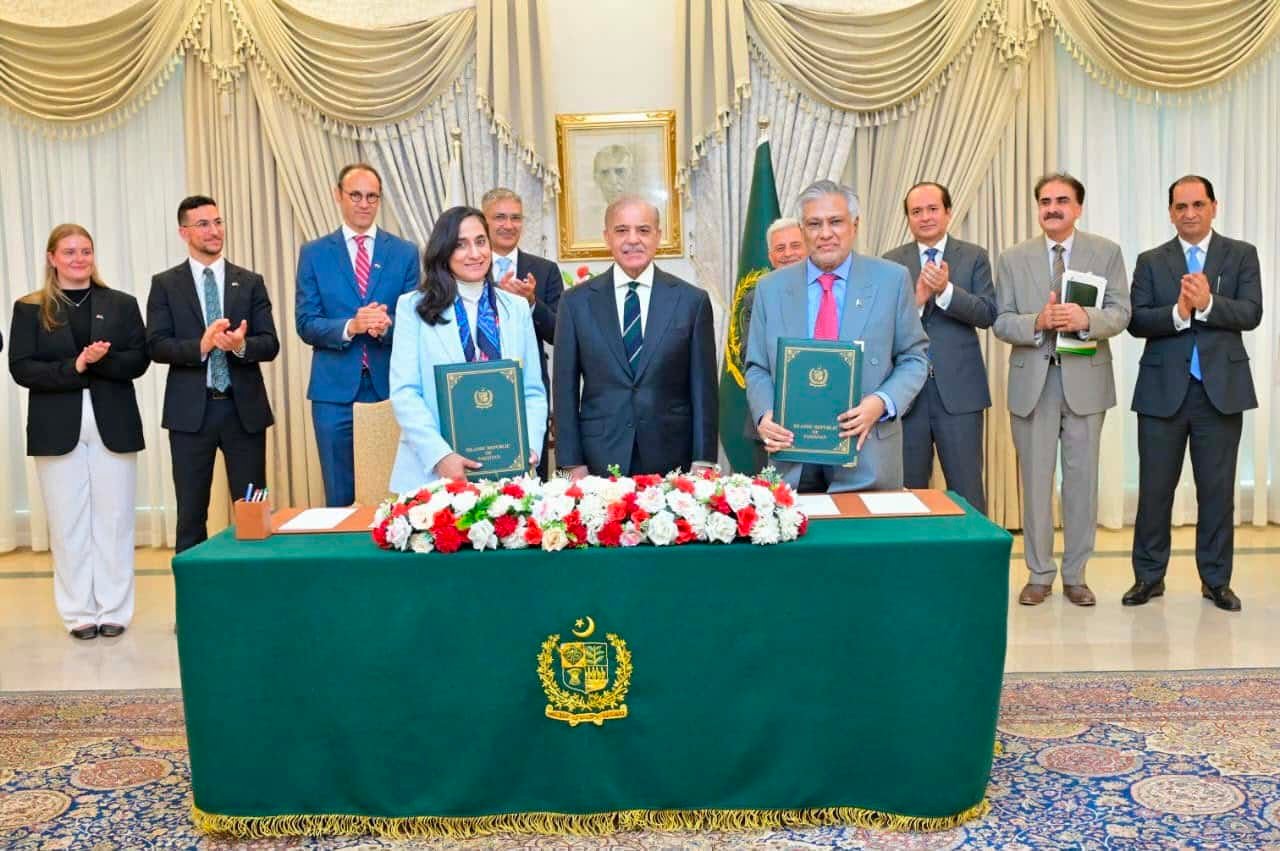
Deputy Prime Minister/Foreign Minister Senator Mohammad Ishaq Dar @MIshaqDar50 and Canada’s Minister of Foreign Affairs, H.E. Anita Anand @AnitaAnandMP, signed the Protocol on the Phytosanitary Import Requirements for Genetically Modified Canola Intended for Food, Feed and… pic.twitter.com/TLnp8J6WJU
— Ministry of Foreign Affairs – Pakistan (@ForeignOfficePk) July 20, 2026
Deepening the Economic Blueprint: Mining, Energy, and FIPPA
Economic cooperation took center stage throughout the day, particularly during Anand’s “warm and cordial” meeting with Prime Minister Shehbaz Sharif at the PM House. According to statements released by the Prime Minister’s Office (PMO), the discussions carved out highly specific avenues for expansion, moving past traditional trade into high-value technical sectors.
- Agriculture & Agri-foods (Phytosanitary Canola Protocols)
- Renewable Energy & Green Infrastructure
- Mining & Critical Mineral Extraction
- Automobile & Auto Parts Manufacturing
A focal point of the investment push was the Foreign Investment Promotion and Protection Agreement (FIPPA). The bilateral treaty has been under active negotiation, with the second round of formal talks hosted by Canada just last month. Minister Anand stressed that finalizing FIPPA would be “instrumental” in cementing the confidence of Canadian institutional investors looking at Pakistan’s emerging markets.
To maintain momentum, both nations agreed to establish annual review meetings and systematically exchange corporate and ministerial delegations targeting trade and mineral cooperation.
Direct Breakthroughs: Genetically Modified Canola and Nafsa
Beyond high-level diplomatic pleasantries, the visit produced immediate regulatory results. Dar and Anand formally signed a new protocol governing the phytosanitary import requirements for Canadian genetically modified canola intended for food, feed, and processing (FFP).
The agreement is a significant win for Canadian agricultural exporters. Bilateral merchandise trade between the two nations reached approximately $1.2 billion in 2025—with Canadian exports to Pakistan skyrocketing by 65% in just a single year.
Additionally, officials confirmed that Pakistan’s newly minted National Agri-Trade and Food Safety Authority (Nafsa)—set up last year to modernize the country’s trade framework—will launch a formal technical capacity-building partnership with the Canadian Food Inspection Agency.
Security Friction: Pakistan Raises the Indus Waters Treaty
While the core of the visit focused heavily on trade, the reality of South Asia’s complex geopolitical landscape quickly surfaced during the joint ministerial briefing.
Deputy PM Ishaq Dar explicitly raised the volatile issue of the Jammu and Kashmir dispute before shifting focus to what Islamabad characterizes as a severe environmental security threat: the “weaponization of water” by India.
“India has added a new dynamic into an already volatile security situation by announcing in April 2025 to hold the Indus Waters Treaty (IWT) in abeyance,” Dar stated flatly. “We seek the support of our friendly countries, including Canada, towards India’s immediate restoration of the IWT, ending the weaponisation of water and upholding international law and treaty obligations.”
The open solicitation for Canadian diplomatic backing underscores Pakistan’s growing anxiety over the regional waters framework. The two leaders also exchanged views on counterterrorism operations and the ongoing humanitarian and security crisis in neighboring Afghanistan.
The Human Bridge: The Pakistani-Canadian Diaspora
Throughout every tier of the talks, both delegations consistently pointed to the human element as the ultimate anchor of the relationship. Canada is currently home to a vibrant community of more than 300,000 Canadians of Pakistani origin, alongside roughly 20,000 Canadians residing in Pakistan.
Prime Minister Sharif and Minister Anand jointly affirmed that this expansive diaspora acts as a “vital bridge,” ensuring that despite decades of political distance between Ottawa and Islamabad, cultural and business-to-business (B2B) linkages have remained robust.
Sharif wrapped up the session by conveying his best wishes to Prime Minister Mark Carney, recalling a highly productive phone conversation the two leaders shared in April, and expressing a desire to formalize an in-person bilateral summit in the near future.