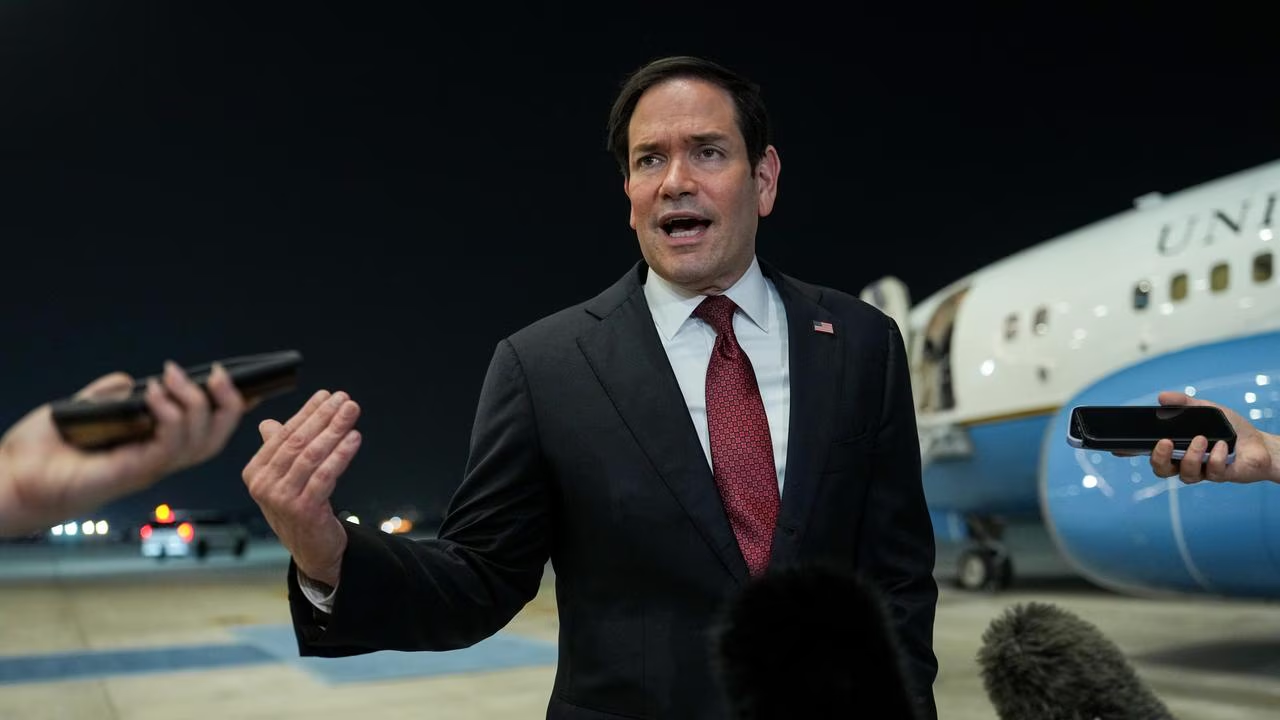





The geopolitical landscape of the Middle East is navigating an extraordinarily delicate transitional phase, balanced precariously between historic diplomatic reconciliation and the latent threat of systemic military relapse. The synchronized arrival of United States Secretary of State Marco Rubio in Manama for an emergency summit with the Gulf Cooperation Council (GCC) underscores Washington’s frantic diplomatic push to codify a comprehensive peace agreement with the Islamic Republic of Iran.
Yet, as negotiators iron out diplomatic frameworks, the operational realities on the ground—ranging from naval brinkmanship in the Strait of Hormuz to structural deadlock over International Atomic Energy Agency (IAEA) verification mechanisms and flagrant violations of the Lebanese theater parameters—reveal a peace process under immense structural strain.
Rubio’s Gulf Tour: Balancing De-Escalation with Alliance Credibility
Secretary Rubio’s arrival in Bahrain, following high-level state visits to the United Arab Emirates and Kuwait, is designed as a strategic reassurance campaign. The primary objective of the American diplomatic apparatus is to neutralize growing anxieties among traditional Gulf allies who fear that Washington’s rush to secure a landmark accord with Tehran will come at the expense of their own long-term defensive and economic security.
In discussions with GCC leaders in Manama, Rubio explicitly pledged that any final multilateral agreement executed with Iran will fundamentally reflect and safeguard the strategic interests of America’s regional partners. This includes maintaining robust maritime defense pacts, preserving regional trade equity, and ensuring that any sanctions-relief mechanisms do not inadvertently finance proxy networks.
However, the core dilemma plaguing the American delegation remains structural: Washington is attempting to build a regional security architecture that integrates a historically revisionist Iran while simultaneously retaining the unyielding trust of Gulf states who view Tehran’s long-term ballistic and ideological ambitions with existential dread.
The Nuclear Inspection Deadlock: A War of Sequences
The fragile nature of the negotiations is nowhere more visible than in the immediate diplomatic gridlock surrounding the verification of Iran’s nuclear program. While the head of the IAEA recently declared that international inspectors are prepared to immediately return to monitored Iranian nuclear sites, Tehran has abruptly erected a rigid diplomatic wall. The Iranian Ministry of Foreign Affairs countered that comprehensive inspections will only resume once a finalized, legally binding peace agreement with the United States is fully ratified and signed.
This tactical posturing exposes a classic, deeply entrenched conflict of sequencing that has repeatedly derailed historical non-proliferation efforts:
-
The American Track: Washington demands verifiable nuclear compliance and downblending of enriched stockpiles as a mandatory prerequisite before granting permanent statutory sanctions relief.
-
The Iranian Track: Tehran views its unverified nuclear enrichment capacity as its primary geopolitical leverage point, refusing to yield its tactical advantages until economic normalization is legally guaranteed.
The Maritime Front: Corridor Wars in the Strait of Hormuz
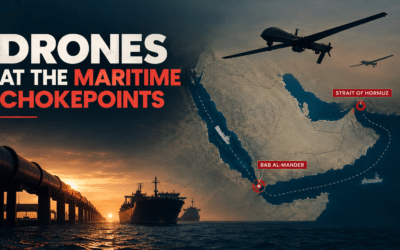
Simultaneously, the Strait of Hormuz has emerged as a theater of aggressive administrative and naval posturing. The naval wing of Iran’s Islamic Revolutionary Guard Corps (IRGC) recently issued an uncompromising maritime warning, ordering commercial vessels to immediately cease transiting an “unapproved” shipping lane within the strategic waterway. Tehran asserts that this specific route was drafted without its sovereign consent, warning that any vessel failing to adhere to Iranian-designated maritime corridors will face immediate kinetic enforcement action.
🚢 Safe Hormuz passage only possible via Tehran-approved routes: IRGC
⚠️ Iran’s Revolutionary Guard Corps warns vessels to coordinate with its navy through maritime Channel 16 or face possible action https://t.co/PwDrRsmTTb pic.twitter.com/68IghEkWha
— Anadolu English (@anadoluagency) June 25, 2026
This moves directly against recent unilateral guidelines published by the Sultanate of Oman, which were formulated in direct coordination with the United Nations International Maritime Organization (IMO) to streamline commercial transit. By threatening enforcement action, Iran is leveraging its geographic position over the global energy choke point to project raw administrative sovereignty, signaling to the Western coalition that it retains the functional capacity to choke global energy markets at will.
International Legal and Geopolitical Fractures
The geopolitical fallout of the broader conflict continues to reverberate across international institutions. In a major institutional development, three judges from the International Criminal Court (ICC) have filed a formal lawsuit against the administration of US President Donald Trump. The judges argue that targeted American sanctions imposed upon them are entirely unlawful, characterizing the measures as an illegal punitive campaign designed to retaliate against independent judicial decisions involving alleged Israeli actions and suspected Western war crimes in Afghanistan. The lawsuit underscores how deeply the theater of international law has been weaponized and fractured by the prolonged conflict.
Three ICC judges—Kimberly Prost, Solomy Balungi Bossa and Reine Adelaide Sophie Alapini-Gansou—are suing the Trump administration over “unlawful” sanctions, saying they were meant to “punish them for prior judicial decisions”.
🔴 LIVE updates: https://t.co/gI2BXzTNpL pic.twitter.com/tsCQb1G3rM
— Al Jazeera English (@AJEnglish) June 25, 2026
Concurrently, Tehran has expanded its diplomatic offensive to Western Europe, formally accusing the North Atlantic Treaty Organization (NATO) of direct complicity in an “unlawful war of aggression.” The accusation follows statements by NATO Secretary-General Mark Rutte affirming European support for joint U.S. and Israeli tactical strikes. Iran has specifically called out member states like Italy and Romania, demanding international accountability for their logistical and political roles in the kinetic campaign.
The Levant Attrition: Defying the Ceasefire in Lebanon
Perhaps the most immediate threat to the peace process lies in the southern theater of Lebanon. Despite active, high-level diplomatic sessions currently underway in Washington, DC—where Lebanese and Israeli officials are attempting to map out pilot demilitarization zones to facilitate an orderly Israeli withdrawal and the subsequent deployment of the Lebanese Armed Forces (LAF)—kinetic violence continues unabated.
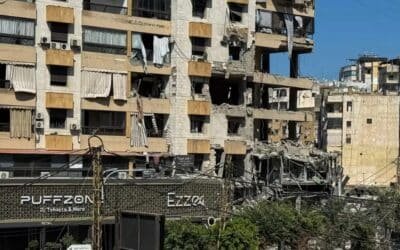
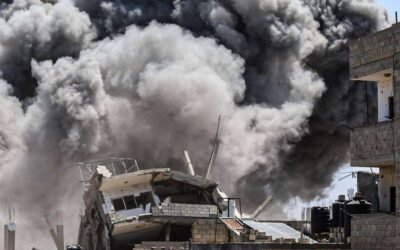
A devastating Israeli strike recently hit the southern urban hub of Nabatieh, killing two civilians. Simultaneously, Israeli forces issued forced evacuation orders to the residents of the southern border village of Ain al-Arab, warning of imminent, systematic home demolitions.
The strategic disconnect between diplomacy and field operations was made explicit by Israeli Defense Minister Israel Katz. He openly declared that Israeli forces will maintain an active military presence in southern Lebanon even if the United States issues a formal diplomatic call for withdrawal. This unyielding stance effectively places Tel Aviv at direct odds with Washington’s broader regional de-escalation agenda, threatening to trigger a localized cycle of retaliation that could completely collapse the wider U.S.-Iran peace architecture.
🔴 BREAKING: Two people have been killed in an Israeli drone strike on a car in south Lebanon, Reuters reports citing medical and security sources. pic.twitter.com/1MjY7aRGDJ
— Al Arabiya English (@AlArabiya_Eng) June 25, 2026
Critical Analysis: The Limits of Fragile Diplomatic Parallelism
The current state of Middle Eastern diplomacy is built upon a highly unstable foundation of fragmented, parallel negotiation tracks. The fatal flaw of the contemporary peace process lies in its lack of systemic integration. The American State Department is attempting to treat the U.S.-Iran peace deal, the IAEA nuclear inspection framework, the maritime governance of the Strait of Hormuz, and the stabilization of the Levant as isolated, modular issues.
The ongoing violence in Nabatieh and the defiance of the Israeli defense establishment demonstrate that local actors possess the intent and the operational capability to sabotage broader diplomatic breakthroughs. If Israel refuses to withdraw from southern Lebanon, or if the IRGC converts the Strait of Hormuz into a localized toll-and-permit zone under the guise of maritime sovereignty, the political space for Rubio to maintain an allied consensus within the GCC will evaporate.
Furthermore, by tying nuclear inspections strictly to the final execution of the U.S. deal, Iran is engaging in a high-stakes gamble. If the Swiss negotiations in Bürgenstock slow down due to regional escalations, the lack of transparency at Iran’s nuclear sites will inevitably trigger defensive reactions from Western intelligence agencies, potentially restarting the cycle of kinetic strikes that this peace process was designed to end.
Conclusion: The Path Ahead
The diplomatic surge led by Secretary of State Marco Rubio across the Gulf Cooperation Council highlights a historic opportunity to reshape Middle Eastern security, yet it remains intensely vulnerable to tactical derailment. A sustainable peace cannot be achieved solely through high-level diplomatic communiqués in Manama or Muscat while kinetic attrition and forced displacement continue in southern Lebanon.
For the peace process to survive its initial 60-day window, the United States and its regional partners must bridge the gap between high diplomacy and field operations. Washington must exert meaningful diplomatic leverage to enforce a verified, complete cessation of hostilities in Lebanon, while simultaneously establishing a unified, multi-nation maritime framework in the Strait of Hormuz that respects coastal sovereignty without compromising global freedom of navigation. Failing to synchronize these fractured tracks will mean that this highly touted peace initiative will not mark the beginning of a stable regional order, but merely a temporary pause before an even more destructive cycle of regional escalation.