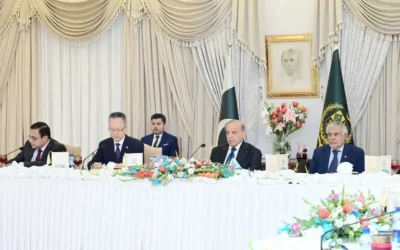





In a major and highly controversial shift in continental migration management, the European Union hosted an official Taliban state delegation in Brussels on Tuesday. The unprecedented, high-stakes meeting was designed to hammer out mechanical protocols for the accelerated repatriation and deportation of failed Afghan asylum-seekers from across the 27-nation bloc.
The diplomatic session, which marks the first time Taliban authorities have been formally received in the capital of European governance since their return to power in August 2021, was coordinated directly by the European Commission. The invitation signals an increasingly hardline approach to migration across Europe as member states navigate a wave of domestic electoral shifts and changing public opinion.
EU hosts Taliban officials in Brussels for first time https://t.co/7K12YCxuUR https://t.co/7K12YCxuUR
— Reuters (@Reuters) June 23, 2026
Tactical Re-Engagement Under the Banner of Migrant Return
Co-chaired by Sweden and the European Commission services, the “technical-level meeting” drew active participation from 15 EU member states looking to overhaul a lagging repatriation system. Currently, fewer than 30% of individuals ordered to leave European soil actually return to their home countries.
According to official EU briefings, the core agenda focused strictly on the identification, documentation, and eventual deportation of Afghan nationals who have committed serious crimes or are classified as active domestic security threats. Swedish Minister for Migration Johan Forssell defended the operational reality of the talks immediately following the session, stating that the ability to return individuals without a legal right to remain is the absolute cornerstone of a credible, functional asylum system.
The Diplomatic Gambit: Consular Expansion vs. “Non-Recognition”
Despite strenuous assertions from European leaders that the meetings do not amount to formal diplomatic recognition of the administration in Kabul, the Taliban delegation successfully pushed to broaden the operational scope of the talks.
Led by Afghan Foreign Ministry Spokesperson Abdul Qahar Balkhi and featuring senior representatives from the Afghan Interior Ministry, the delegation utilized the Brussels forum to demand substantial political concessions in exchange for migration enforcement cooperation.
Key Demands Under Discussion:
-
Restoration of Consular Services: Kabul is seeking a systematic framework to restart broad-range consular access and oversight for the massive Afghan diaspora currently residing across the EU zone.
-
Confidence-Building Measures: The implementation of reciprocal security frameworks and normalized contact lines between European border agencies and Taliban security forces.
-
Dignified Return Process: Developing structured, state-to-state repatriation logistics rather than third-party or ad-hoc deportation flights.
Humanitarian Backlash and the Ethics of Expulsion
The outreach has triggered a fierce wave of condemnation from international lawmakers, human rights advocates, and prominent civil society leaders. Critics argue that by treating the Taliban as a legitimate administrative partner on migration, the European Union is actively undermining its own foundational commitments to human rights and universal values.
A Clash of Values: “This is a shameful chapter for Europe,” declared Cecilia Strada, a European lawmaker with the center-left S&D group. “The Commission is legitimizing a regime that tramples on the rights of women and girls.”
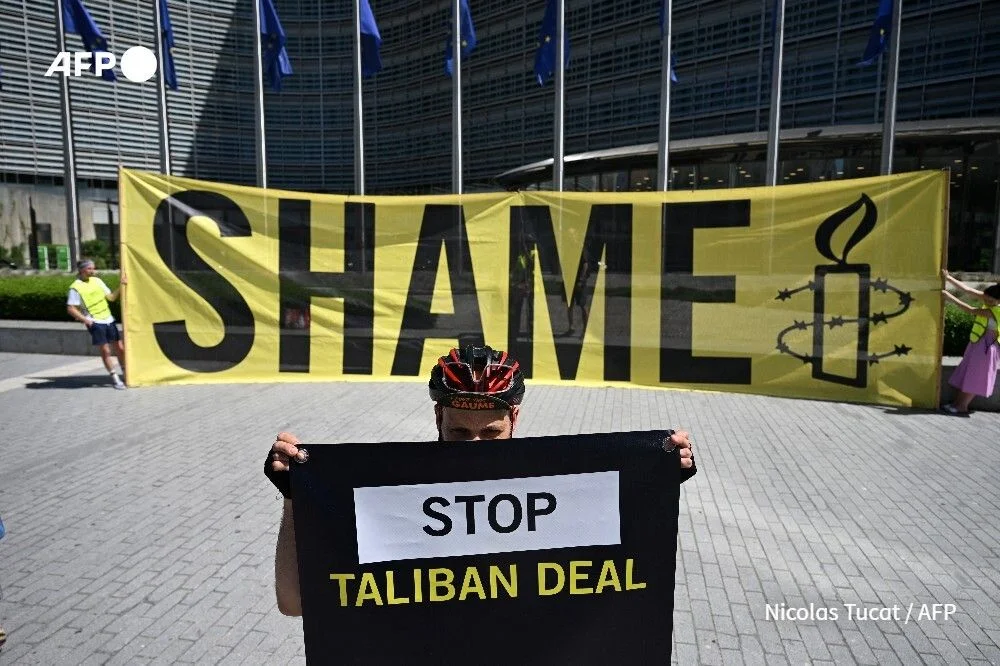
Amnesty International organized targeted demonstrations outside the European Commission offices, labeling the negotiations a “slap in the face” to the values Belgium and the broader EU claim to defend. Activists highlighted the severe ethical contradictions of returning individuals to a state where the UN warns millions face starvation, and where women and girls have been systematically erased from public life, barred from education past age 12, and excluded from nearly all public spaces.
Regional Fragmentations and the Push for Hardline Asylum Policies
To facilitate the meeting, Belgium issued five strictly managed, one-day visas following intensive domestic security assessments. The travel documents were tightly restricted, preventing the Afghan officials from entering the broader, border-free Schengen area.
The Brussels summit follows months of unilateral enforcement actions by individual European capitals. Frustrated by the lack of centralized repatriation channels, Germany has already deported over 100 Afghan nationals with criminal convictions via specialized charter flights managed through Qatari mediation, while Austria has moved forward with identical hardline protocols.
With approximately 20 EU member states expressing immediate interest in executing forced returns to Kabul, European Migration Chief Magnus Brunner stated that Brussels simply had no other choice than to engage the de facto authorities to protect European domestic security.