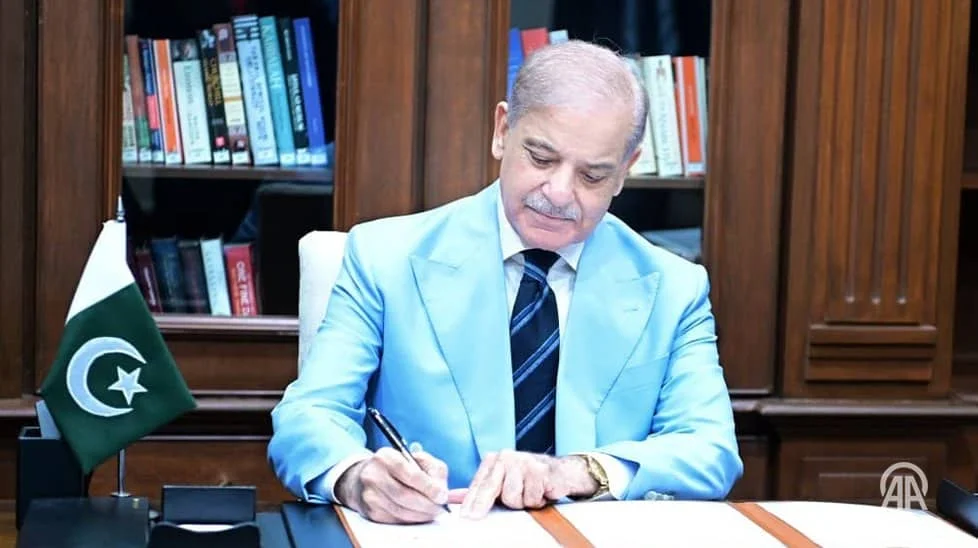





In a major diplomatic declaration on Tuesday, Pakistani Prime Minister Shehbaz Sharif stated that Iran’s ballistic missile program was completely excluded from the text of the newly signed Islamabad Memorandum of Understanding (MoU) between Tehran and Washington.
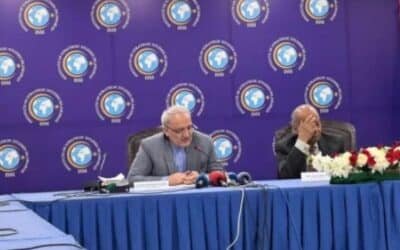
Speaking during a high-stakes bilateral summit with visiting Iranian President Masoud Pezeshkian in Islamabad, Prime Minister Sharif moved to firmly dispel rumors regarding the scope of the peace framework. He asserted that limitations on Iran’s conventional defense assets were never a component of the mediated trilateral talks.
📌 Iran’s ballistic missiles ‘never on the table’ in US talks: Pakistan
🗣️ ‘There cannot be double standards, two standards, that some countries can have ballistic missiles and Iran shouldn’t have (them),’ Prime Minister Shehbaz Sharif adds https://t.co/nQb59pTTN0 pic.twitter.com/8ngSPZ9NRA
— Anadolu English (@anadoluagency) June 23, 2026
Establishing Facts Over Impressions: No Missile Prohibitions in Accord
The Prime Minister explicitly rejected interpretations from political factions seeking to modify the enforcement criteria of the 14-point framework agreement, which was digitally signed last week by U.S. President Donald Trump and President Pezeshkian to halt regional theater warfare.
“I would say with the fullest command at my domain that this MoU does not mention ballistic missiles,” Prime Minister Sharif declared. “It was never on the table, it was never on the agenda, and the Iranian side never even wanted to discuss about it. So that is not an impression—that is a fact of the matter.”
Condemning Regional Double Standards and Double-Dealing
Addressing the broader geopolitical dynamics, Prime Minister Sharif criticized what he characterized as standard Western duplicity concerning sovereign security architectures in South and West Asia. He argued that denying Iran defensive deterrence capabilities while ignoring identical defense programs elsewhere represents an unsustainable imbalance in international lawfare.
-
The Anti-Duplicity Position: “There cannot be double standards, two standards, that some countries can have ballistic missiles and Iran shouldn’t have them,” Sharif stated. “You cannot digest this kind of duplicity.”
-
Neutralizing the “Spoilers”: The Prime Minister explicitly warned of active “spoilers” within international political networks working to scuttle the fragile peace deal before the expiration of the 60-day roadmap. He added that these entities “don’t want the Iranian nation, a great nation, to come out of the ashes of war and touch the zenith of glory.”
Sustained Mediation and Solidarity Following Strategic Loss
President Pezeshkian’s high-profile arrival in Islamabad marks his first international tour since the United States and Israel launched extensive kinetic operations on February 28, hitting multiple cities across Iran. The conflict came to a halt on April 8, following a temporary ceasefire secured by the joint diplomatic efforts of Pakistan and Qatar.
Prime Minister Sharif extended formal condolences to the Iranian state for the loss of thousands of precious lives during the conflict, including Iran’s Supreme Leader Ayatollah Ali Khamenei. Conveying complete solidarity from the people of Pakistan, Sharif announced that a high-level Pakistani state delegation will travel to Tehran next week to attend the late Supreme Leader’s formal funeral ceremonies, while Sharif himself will conduct subsequent technical state consults in the Iranian capital.
The Prime Minister extended deep gratitude to Turkish President Recep Tayyip Erdogan, Qatari Emir Sheikh Tamim bin Hamad al-Thani, Saudi Crown Prince Mohammed bin Salman, and Egyptian President Abdel Fattah el-Sisi for fully backing Islamabad’s intense diplomatic channels. He reaffirmed that Pakistan will remain an active, unyielding facilitator of dialogue until an enduring regional security architecture is locked into place under terms defined by honor and mutual dignity.