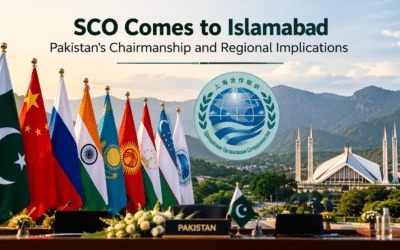




Marking the historic 25th anniversary of the Shanghai Cooperation Organization (SCO), the body’s freshly instated Secretary-General, Nurlan Yermekbayev, has delivered a sweeping address praising the foundational contributions of the Republic of Kazakhstan.
Speaking at the high-level expert symposium, The Shanghai Cooperation Organization: Evolution and Transformation for 25 years, Yermekbayev detailed how the Euro-Asian bloc has transformed from a localized security alignment into a massive cornerstone of global governance, now encompassing 10 member states that represent over 40% of the human population.
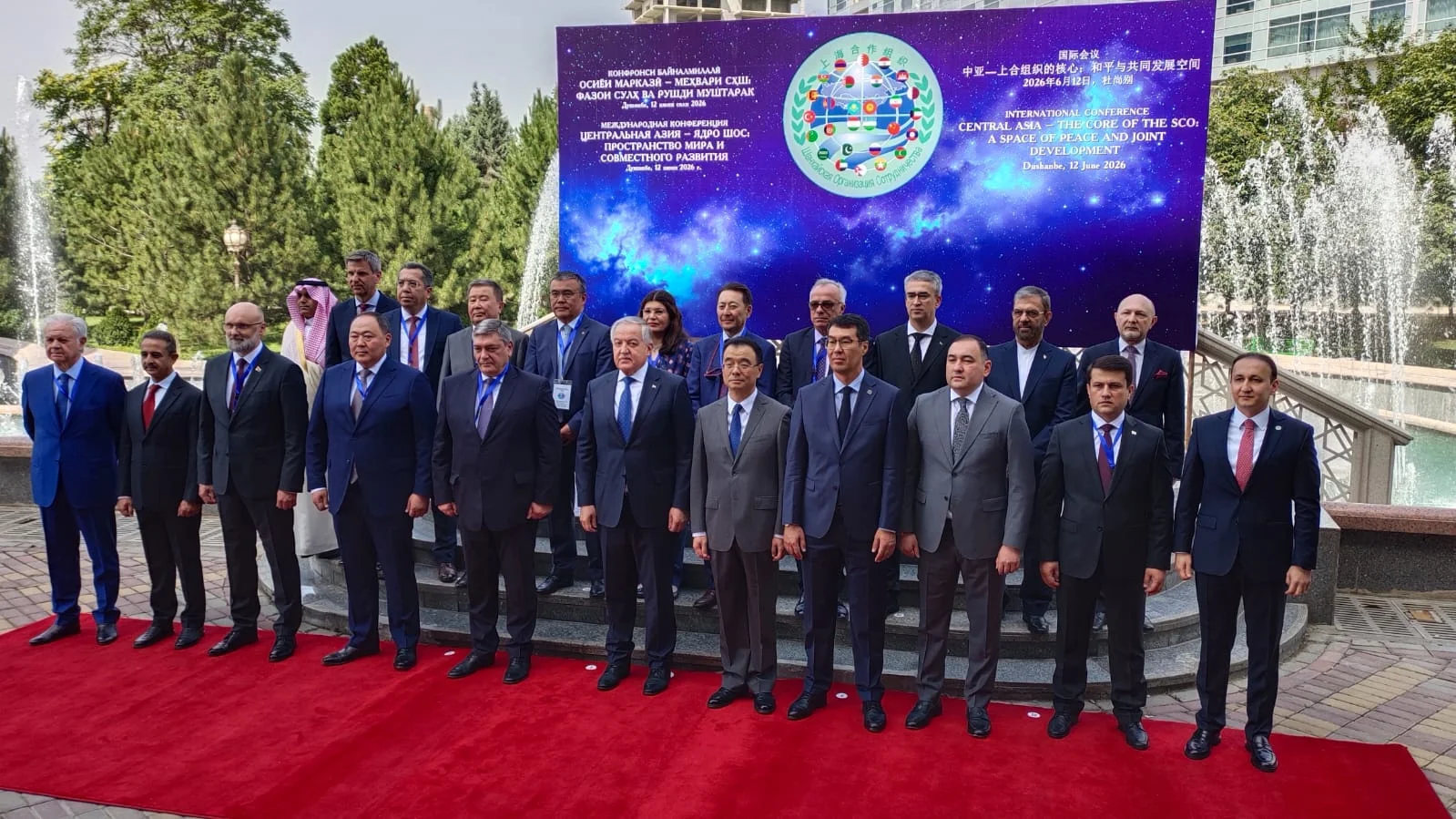
In #Dushanbe: #CICA Secretary General @KairatSarybay attends #ShanghaiCooperationOrganization #25thAnniversary conference.
Sharing a history as responses to #Asia‘s call for #dialogue, he called for deeper synergy between #CICA & #SCO in #security, #transport & #digitalization… pic.twitter.com/hCjfL7Pkcc
— CICA (@CicaSecretariat) June 12, 2026
1. The Astana Catalyst: Institutionalizing “SCO Plus”
A significant portion of the anniversary retrospective focused on Kazakhstan’s highly consequential 2023–2024 SCO Chairmanship, a period marked by deep polarization in international affairs.
-
Consensus-Building: Under Kazakh leadership, the alliance succeeded in hammering out common regional positions on critical geopolitical flashpoints, including the ongoing Israel-Palestine conflict, alongside developing shared defensive postures against cross-border terrorist threats.
-
The SCO Plus Framework: The landmark 2024 Astana Summit permanently altered the bloc’s diplomatic architecture by introducing the “SCO Plus” format. This institutional upgrade successfully integrated official member states, observers, dialogue partners, and international organizations into a singular, cohesive negotiating matrix.
-
The Long-Term Action Roadmaps: The summit culminated in the adoption of the historic Astana Declaration along with 20 structural decisions, including the 2024–2029 Anti-Drug Strategy, the 2030 Energy Cooperation Strategy, and the Economic Development Action Plan.
2. The Mathematical Weight of the Bloc
Secretary-General Yermekbayev presented updated economic and demographic data demonstrating that the SCO has evolved into an un-ignorable global economic engine:
-
Demographic Reach: 3.4 billion people reside within the active SCO zone.
-
Macroeconomic Power: The bloc controls 25% of global GDP and 15% of total international trade.
-
Intra-Bloc Trade Surge: Driven by a push for local-currency settlements and integrated transit corridors, intra-SCO trade surged 7%, reaching a record $700 billion.
The institutional gravity of the organization continues to pull outward; while Mongolia and Afghanistan retain observer status, 15 nations have formal status as dialogue partners, and an additional 20 states have officially logged expressions of interest to join the cooperative framework.
CRITICAL ANALYSIS: MODERNIZING THE BLOC AMID COLD WAR 2.0
The SCO’s 25th anniversary arrives at a critical structural junction. As the Eurasian alliance enters its second quarter-century, its sheer size has transformed it from an agile regional security mechanism into a complex, multi-layered multilateral system that must adapt to survive tomorrow’s hybrid threats.
The Modernization Imperative
Secretary-General Yermekbayev’s explicit call for the “modernization” of permanent bodies and a deeper integration of the academic and expert communities is a candid acknowledgement of an internal bottleneck. The SCO’s decision-making process—governed by strict consensus—frequently suffers from bureaucratic inertia.
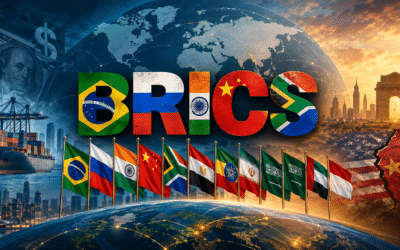
As the bloc expands from its original core to include diverse economic giants like India, Pakistan, and Iran, balancing competing national interests becomes exponentially harder. To prevent the organization from stagnating into a purely rhetorical forum, the Secretariat is pivoting toward functional, non-ideological platforms for practical dialogue.
Cyber Security and Financial Architecture
Kazakhstan’s recent pioneering proposal to create a dedicated SCO platform to combat internet fraud is a prime example of this pragmatic pivot. Modern asymmetric warfare is fought primarily in the digital gray zone. For a bloc representing a quarter of global wealth, regional security can no longer be defined solely by troop deployments along physical frontiers. It must encompass shared cyber defense protocols, cross-border cryptographic policing, and the hardening of digital trade networks against extra-regional disruption.
Furthermore, the 7% leap to $700 billion in intra-bloc trade underscores a quiet, structural decoupling from Western financial mechanisms. Faced with sweeping unilateral sanctions against several member states, the SCO has systematically used its Energy Cooperation Strategy to build alternative logistical networks and banking corridors.
The Takeaway: At 25, the Shanghai Cooperation Organization is no longer a junior partner in international relations; it is the primary vehicle for a multipolar world order. However, its ultimate success in the next 25 years will depend not on adding more dialogue partners, but on whether its new leadership can transform its massive economic scale into efficient, digitized security institutions capable of responding to real-time hybrid crises.