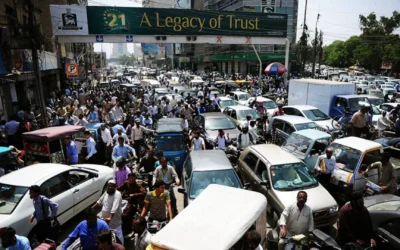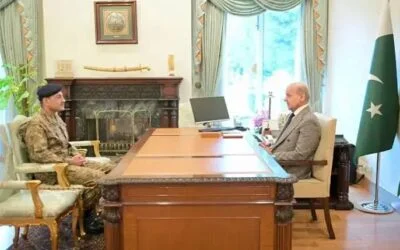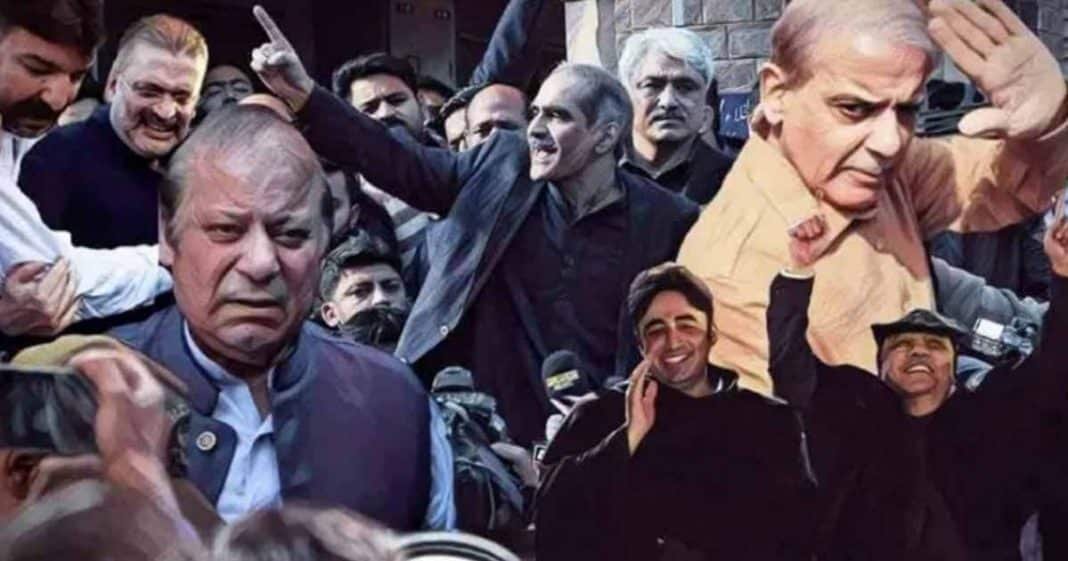


In Pakistan’s contemporary political landscape, substantive dialogue has been sidelined by a relentless barrage of personal attacks, character assassinations, and political vendettas. The shift from issue-based debates to confrontational, personality-driven rhetoric has eroded public trust, undermined institutional legitimacy, and deepened polarization. Political discourse—once centered on development, reform, and national interest—has become a theatre of personal insults, legal offensives, and media manipulation.
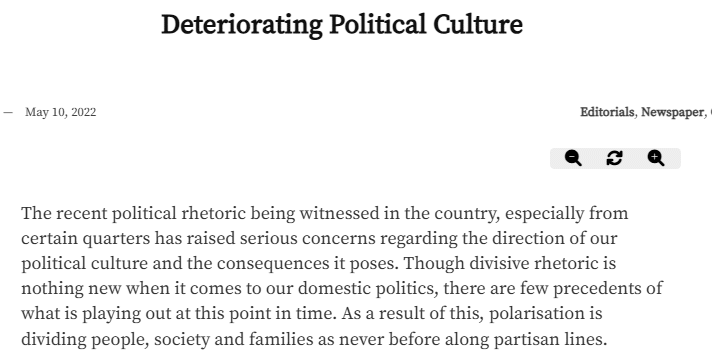
Source: The Nation
From Parliamentary Debate to Political Theater
The Pakistani Parliament, meant to be a forum for democratic deliberation, has increasingly devolved into a battleground of accusations. During recent sessions, lawmakers from both treasury and opposition benches have engaged in verbal clashes, often ignoring legislative agendas in favor of targeted slander.
Even televised debates and press conferences have become less about articulating policies on energy, economy, education or security, and more about maligning opponents as “thieves,” “traitors,” or “agents of foreign powers.”
A 2023 report by the Pakistan Institute of Legislative Development and Transparency (PILDAT) noted that over 40% of the time in parliamentary proceedings was consumed by non-legislative content, mostly partisan attacks rather than structured policy discussions.
Weaponization of Accountability and Legal Tools
The disintegration of discourse is compounded by the misuse of legal and investigative institutions to settle political scores. The use of the National Accountability Bureau (NAB) and Federal Investigation Agency (FIA) for politically motivated cases has become a recurring theme across governments—civilian and military alike.
Opposition leaders have faced serial arrests under corruption allegations, while those in power are seldom touched. This tit-for-tat pattern reinforces the perception that governance is being replaced by grievance management.
Social Media: Amplifier of Polarization
Platforms like X (formerly Twitter), Facebook, and YouTube have amplified the deterioration. Political parties now deploy digital wings to shape narratives, launch smear campaigns, and trend hashtags attacking rivals. Cyber harassment, doxing, and misogynistic trolling—particularly targeting women in politics—have become commonplace.
For instance, Journalist Asma Shirazi was subjected to coordinated online abuse after criticizing government economic policy in 2022, reflecting how dissent is increasingly viewed as betrayal rather than democratic engagement.
Tweet from @asmashirazi:
“If facts are inconvenient, label them ‘anti-state’. If a woman speaks, call her ‘biased’. This is not democracy. This is bullying in disguise.”
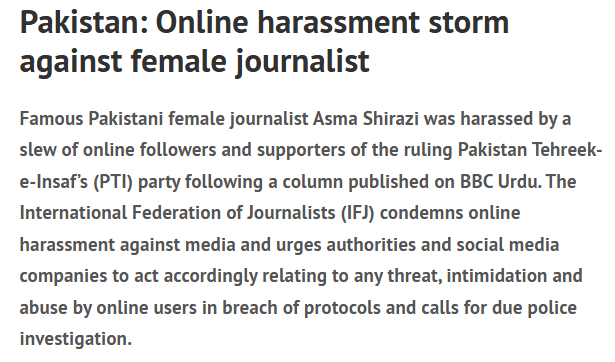
Source: IFJ
Impact on Public Discourse and Policy Formation
The consequences of this decline are manifold:
- Policy Vacuum: Issues like inflation, water security, climate adaptation, health infrastructure, and education reform receive scant attention. Parliamentary time and media space are hijacked by political dramas rather than legislative agendas.
- Erosion of Democratic Norms: Public debates that should cultivate consensus now deepen division. Constructive criticism is conflated with disloyalty, chilling dissent and limiting civic participation.
- Youth Disillusionment: According to a 2024 Gallup Pakistan survey, 62% of urban youth believe political discourse in Pakistan is “toxic” and “non-substantive,” contributing to political apathy and declining voter engagement.
Is a Reset Possible?
Restoring a substantive political dialogue will require:
- Institutional Neutrality: Accountability mechanisms and judiciary must operate impartially to rebuild credibility.
- Media Reform: Newsrooms should resist sensationalism and invest in policy journalism.
- Civic Education: Voter awareness campaigns must prioritize issue-based analysis over partisan loyalty.
- Political Will: Leaders across party lines must commit to a code of democratic conduct—eschewing personal attacks in favor of structured debate.
Pakistan’s political discourse is in crisis—not merely because of social media toxicity or partisan posturing, but because of the systematic erosion of policy-driven dialogue. When political survival hinges on optics, vendetta, and vilification, governance suffers. A mature democracy demands not just electoral cycles, but deliberative spaces where ideas—not insults—compete.
If Pakistan’s leadership is serious about national progress, the battle of words must shift from character to competence, from loyalty tests to legislative blueprints. Only then can political discourse be restored as a public good rather than a private battlefield.