




Following an intense day of high-stakes political haggling and an extended federal cabinet session chaired by Prime Minister Shehbaz Sharif, Finance Minister Muhammad Aurangzeb is preparing to lay down the federal budget for Fiscal Year 2026-27 (FY26-27) before a heavily fortified Parliament House.
الحمدللہ اس بجٹ کو بہت محنت اور خلوص سے تیار کیا گیا ہے، اور پاکستان کی عظیم قوم کی فلاح و بہبود کو اولین ترجیح دی گئی ہے۔
— Shehbaz Sharif (@CMShehbaz) June 12, 2026
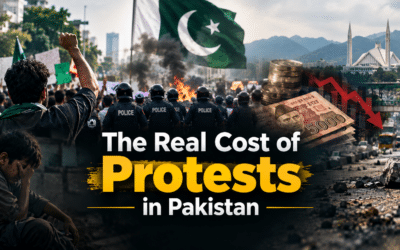
The unveiling of the national financial plan arrives amidst unprecedented security cordons on Constitution Avenue, where security personnel completely sealed all entry points to isolate the building from active street protests staged by the Secretariat Group demanding immediate salary increases.
The budget is a high-stakes balancing act: it introduces sweeping new tax measures worth Rs 660 billion to Rs 700 billion to appease multilateral lenders, while simultaneously trying to protect the middle class and finance critical strategic needs through historic cuts to provincial development.
1. Target Relief vs. Broad Revenue Extraction
The revenue framework reveals a highly calculated, fragmented approach to income tax adjustment:
-
The Salaried Bracket Winners: Targeted relief is explicitly hardwired for mid- to upper-level income earners making between Rs 230,000 and Rs 341,000 per month.
-
The Frozen Middle: Conversely, the largest segment of white-collar workers—those earning between Rs 100,000 and Rs 183,000 per month—will see zero tax adjustments, leaving them vulnerable to ongoing inflationary pressures.
-
The “Faceless” Tax Transition: To combat the sprawling informal economy, Aurangzeb announced a transition to a “faceless” digital retail taxation system, expanding on the recently launched Fixed Tax Asaan Scheme, which aims to formalize small shops with annual turnovers up to Rs 200 million.
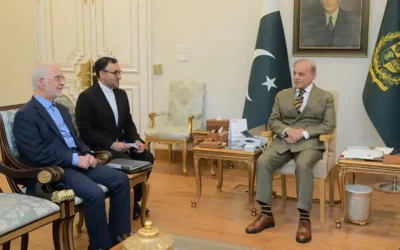
اسلام آباد : 12 جون، 2026
وزیراعظم محمد شہباز شریف سے متحدہ قومی موومنٹ کے وفد کی ملاقات ہوئی
وفد کی قیادت متحدہ قومی موومنٹ کے کنوینر اور وزیر برائے وفاقی تعلیم و پیشہ ورانہ تربیت ڈاکٹر خالد مقبول صدیقی نے کی. وفد میں وزیر برائے قومی صحت سید مصطفیٰ کمال اور ارکین قومی اسمبلی… pic.twitter.com/cktThKvveX
— Prime Minister’s Office (@PakPMO) June 12, 2026
2. The “Strategic Needs” Compromise: Trimming the Federation
To secure a consensus for the budget, the ruling PML-N and its key coalition ally, the PPP, executed a dramatic structural intervention on Monday to generate a Rs 1 trillion capital pool for national security and strategic requirements.
-
The NEC Scalpel: The National Economic Council (NEC) drastically trimmed the collective development blueprint to Rs 3.218 trillion, hacking Rs 1.046 trillion away from the initial Annual Plan Coordination Committee (APCC) clearances.
-
The Provincial Burden: Punjab bore the brunt of the fiscal tightening, seeing its provincial development plan slashed by 49%. Balochistan’s Rs 308 billion uplift plan remained entirely untouched due to its sensitive security profile.
-
The Development Freeze: The finance minister confirmed that the freeze on provincial development programs will persist well beyond a single year to maintain a continuous stream of an estimated Rs 900 billion in extra resources for federal strategic mandates.
3. Outgoing Economic Performance (FY25-26 Report Card)
The Pakistan Economic Survey 2025-26, released on Wednesday, revealed an economy operating under severe exogenous stress but demonstrating structural resilience:
| Metric | Achieved (FY25-26) | Target | Sector Performance |
| GDP Growth | 3.7% | 4.2% | Driven by 4.09% expansion in Services |
| Agriculture | 2.89% | 4.5% | Strained by war-related fertilizer spikes |
| Industry | 3.5% | 4.3% | Supported by a 6.1% boom in Large-Scale Manufacturing |
| Per Capita Income | $1,901 | — | Up from $1,751 in the previous fiscal cycle |
The total size of the economy grew by 11% to a historic record of Rs 126.87 trillion, though total exports fell by 5%, dragged down heavily by a $1.5 billion drop in rice and sugar exports.
CRITICAL ANALYSIS: THE RADICAL CENTRALIZATION OF THE WALLET
The FY26-27 budget represents a fundamental alteration of Pakistan’s fiscal federalism. It marks the moment the center clawed back financial hegemony from the provinces under the umbrella of “strategic necessity.”
The Fiscal Devolution Deception
By forcing a multi-year freeze on provincial development programs and hacking Punjab’s uplift budget in half, the Shehbaz government has effectively suspended the spirit of the 18th Amendment without altering the constitution. The center’s extraction of Rs 900 billion to Rs 1 trillion from local development to feed a centralized “strategic needs” fund proves that the national debt crisis has made classical devolution economically unfeasible.
While protecting Balochistan’s budget prevents immediate political blowback in a sensitive zone, starving Punjab—the agricultural and industrial engine—of infrastructure development will inevitably limit GDP growth capacity for FY27.
[Provincial Development Hacked 49%] ➔ [Rs 1 Trillion Pulled to Center] ➔ [Starves Local Infra Projects]
The Retailer Confrontation
Furthermore, the reliance on the “Faceless Tax Operating Model” and the Fixed Tax Asaan Scheme to formalize retailers is an extremely high-risk strategy. Historically, Pakistan’s powerful retail trader unions have broken successive governments through shutter-down strikes whenever tax collectors approached their ledgers.
By weaponizing a digital, non-contact system to pull Rs 700 billion in new revenue from this specific sector, the state is banking on technology to bypass political resistance. If the retail cartels resist, the government risks paralyzing local supply chains at a time when the economy is already trying to absorb export shocks from a $1.5 billion decline in agricultural commodities.
The Takeaway: The FY26-27 budget is a fortress engineered to survive external shocks and satisfy multilateral observers. However, by squeezing the lower-middle class while offering selective relief to upper-income earners, and by starving provincial infrastructure to feed federal strategic mandates, the state is borrowing from tomorrow’s growth to pay for today’s survival.