

A Sudden Shock that rewrote Supply Lines
When Russia’s invasion of Ukraine and the cascade of Western sanctions began in 2022, Europe confronted a new reality. Long-standing gas and oil relationships could no longer be treated as stable geopolitical infrastructure. The combination of political pressure, contractual disputes and physical damage to undersea pipelines forced governments and energy companies to re-think where they would buy fuel, how much to store, and how to keep lights on in the winter months. The shock was not just short-term price volatility, it set in motion structural changes to supply chains that are still playing out in 2025.
You May Like to Read: The ‘New Energy Policy:’ The Political and Economic Challenges of Importing Russian Oil and Gas
From Pipelines to Uncertainty: The Nord Stream turning point
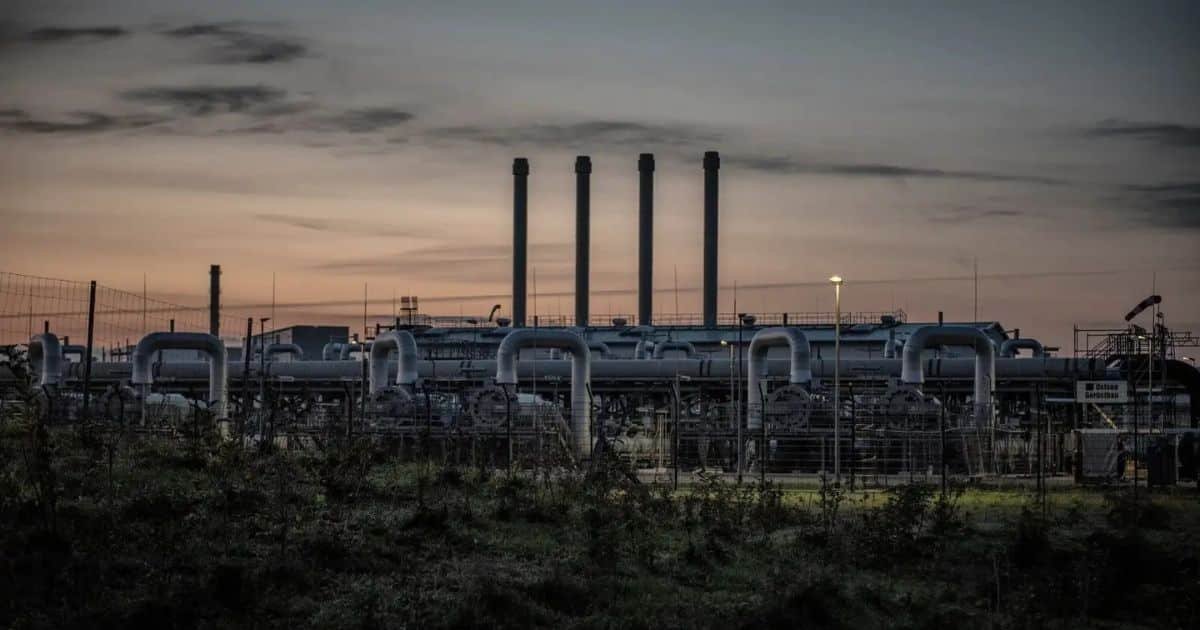
One of the clearest turning points came with the damage to the Nord Stream pipelines in September 2022. The explosions and ensuing investigations made plain that large fixed pipelines, once considered secure arteries, were vulnerable to geopolitical risk and sabotage. That event accelerated Europe’s drive to reduce reliance on Russian pipeline gas, because political decisions and security incidents could close off major supply routes almost overnight. The pipeline disruptions therefore acted as both symbol and catalyst for a wider reshaping of energy flows.
A Rapid Decline in Russian Share of EU Gas Imports
The result of policy, commercial shifts and infrastructure damage is stark in the numbers. Where Russian deliveries once supplied a very large share of the bloc’s gas, Eurostat and energy commentators report a substantial fall in Russian-sourced gas into the EU between 2021 and 2025. That drop reflects a mix of deliberate diversification, long-term supply contracts being renegotiated or ended, and the redirection of flows through new suppliers and LNG terminals. The near-term effect? Europe faces a different map of suppliers and a different set of strategic relationships than it did three years ago.
LNG to the Rescue, and to New Vulnerabilities
To replace missing pipeline volumes, European buyers turned heavily to liquefied natural gas. Imports rose sharply as Europe signed short and long-term contracts with exporters in the United States, Qatar and elsewhere while building out regasification capacity.The IEA forecasted in April 2025 a 25% rise in European LNG imports for the year, equivalent to about 33 billion cubic meters. As the continent scrambled to refill storages and keep industry and power plants running. But LNG is not a perfect substitute. It is more expensive, exposes buyers to global price volatility, and increases Europe’s exposure to suppliers far from its borders and to global shipping bottlenecks.
The Domestic Strain: Storage, Costs and Politics
At home, the scramble to adapt caused political headaches and economic pain. Governments introduced incentives to save gas, revived coal or kept idled plants online, and prioritized filling storage ahead of winter months. Germany’s storage tracking and other EU-level monitoring became a political yardstick; meeting storage targets was heralded as success, while any shortfall raised alarms about household bills and industrial output. The strain also exposed different capacities across member states, wealthier or better-connected countries could secure alternative supplies more easily than others, producing a new set of internal tensions. Recent EU agreements to loosen some gas storage rules indicate continuing political negotiations balancing costs, supply security, and social-economic impacts of the energy transition.
Geopolitics of New Suppliers and an Uncertain LNG Market
The shift away from Russian pipeline gas has deep geopolitical consequences. The United States and Qatar emerged as major suppliers, changing diplomatic and trade priorities in Brussels and in national capitals. The ShaleMag report from July 2025 details how the U.S. and Qatar are replacing Russian gas as top European suppliers. The U.S. is the leading LNG supplier to the EU, with 45-53% of the LNG import share in 2024-25. Qatar’s North Field expansion will boost its LNG volumes after 2026, reshaping EU trade relations.
At the same time, market observers warn that the rapid build-out of LNG export capacity; particularly from the U.S., risks oversupply by the middle of the decade, which could depress prices and upend the commercial logic that underpinned emergency contracts. Policymakers must now manage the double challenge of securing affordable supplies while not locking Europe into new single-source dependencies.
You May Like to Read: United States to Urge G7 to Impose High Tariffs on China, and India Over Russian Oil Purchases
Policy Response: Diversify, Store, and Accelerate Clean Energy
European institutions have responded with a mix of emergency measures and longer-term planning. The bloc set tighter storage rules, accelerated connection projects between member states, and pushed investment in regasification terminals and interconnectors. At the same time, several policy papers and parliamentary briefs have argued that the only sustainable way out of the energy security trap is faster deployment of renewables, smarter grids, and policies that reduce overall fossil-fuel demand. That approach aims both to blunt Russia’s leverage and to insulate Europe from global fossil-fuel swings.
You May Like to Read: The New Energy Map: How Geopolitics is Redrawing Global Power
Concluding: Lessons for South Asia and Final Thoughts
For countries like Pakistan, the European experience offers clear lessons: diversifying import routes and suppliers matters, but so does building resilient domestic systems, storage, demand management and accelerated clean energy investment. Europe’s reorientation was costly and politically difficult precisely because it was done under duress. Planning ahead, investing in domestic alternatives and keeping options open can help countries avoid the sudden squeeze that catches economies unprepared. The energy shocks of 2022–25 did not simply reorder Europe’s fuel bills; they rewired its strategic relationships and proved that energy security and foreign policy are now inseparable.
You May Like to Read:
- The Arctic as a New Front: The Geopolitical Scramble for Resources and Shipping Routes
- Energy Transition in South Asia: Is Pakistan Doomed to Remain Hydrocarbon Dependent?
- Federal Government Declares Climate, and Agriculture Emergency | Lifts Ban on New Gas Connections
- India to Maintain Russian Oil Imports Despite International Pressure