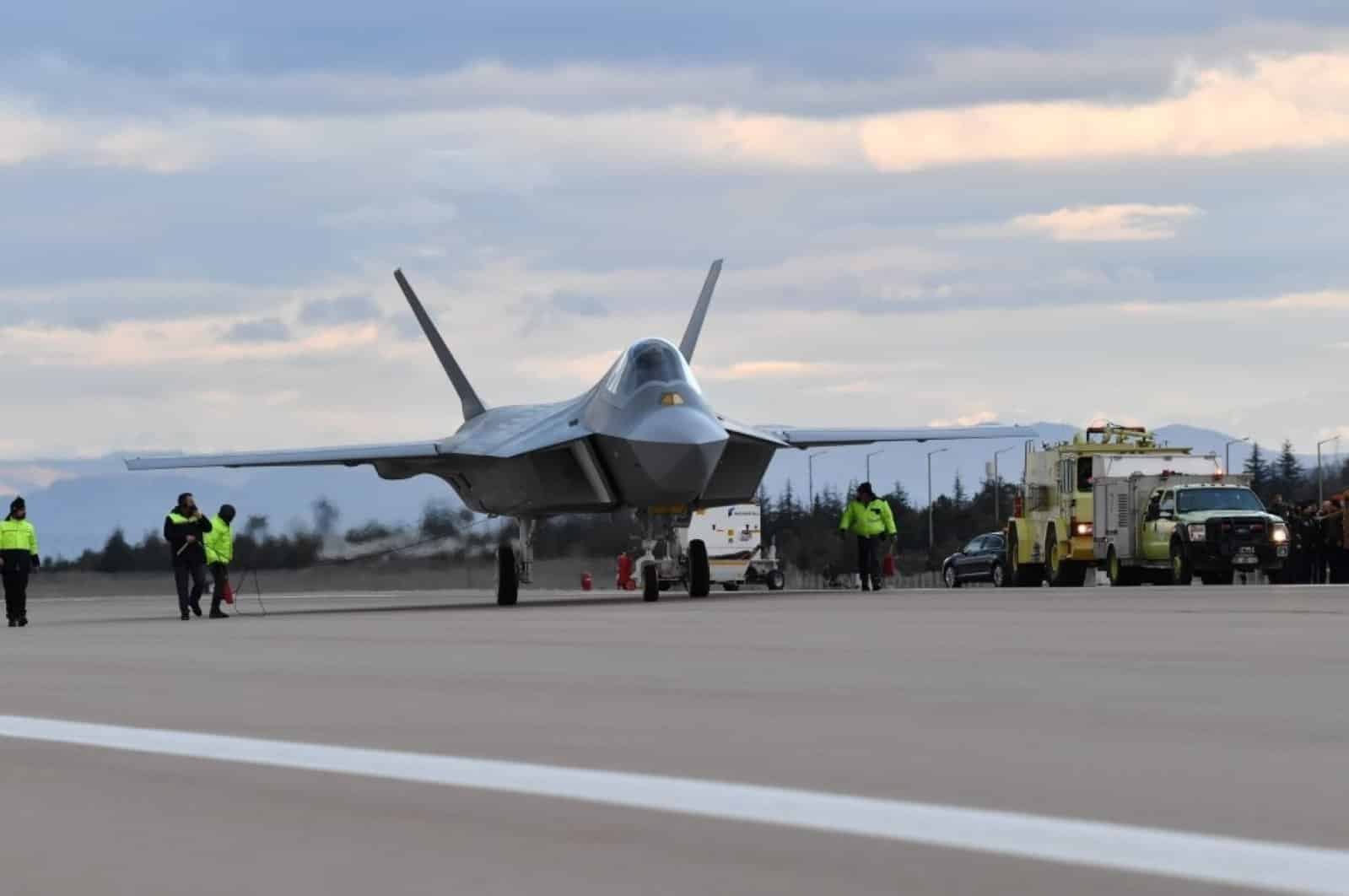





On the eve of the high-stakes 2026 NATO Summit in Ankara, the hosting administration of President Recep Tayyip Erdogan has effectively turned a prolonged Western procurement bottleneck into a powerful showcase of national defense sovereignty. As US President Donald Trump touches down in the Turkish capital, defense analysts confirm that Washington is prepared to finalize a major clearance package unlocking dozens of crucial jet engines for Turkey’s flagship domestic fifth-generation stealth fighter project, the TAI KAAN.
The anticipated executive shift signals a major pragmatic breakthrough for Ankara’s independent aerospace goals, demonstrating that Turkey’s firm refusal to compromise its national air defense architecture has successfully forced Washington back to the negotiating table.
NATO leaders plan to unveil arms deals worth tens of billions of dollars in Ankara on July 7 to show they are heeding US calls to spend more to defend Europe before joining President Trump for a summit https://t.co/FJMMBIkJiz
— Reuters (@Reuters) July 7, 2026
Unlocking the KAAN Production Pipeline
At the center of the diplomatic breakthrough is a substantial $700 million package submitted by the Trump administration for congressional notification, covering approximately 80 General Electric F110 turbofan engines.
-
Breaking the Gridlock: While Turkey received an initial baseline batch of 10 F110-GE-129E engines last September to power its initial flying prototypes, additional supplies had been gridlocked by political friction in Washington linked to Turkey’s 2017 sovereign acquisition of the Russian S-400 missile defense system.
-
Transition to Series Production: The formal clearing of these export barriers will allow Turkish Aerospace Industries (TAI) to move seamlessly from the initial flight-test campaign into low-rate serial production, systematically building out the KAAN platforms designed to replace the Turkish Air Force’s legacy fleet of F-16s.
-
The Path to True Autonomy: Defense Minister Yasar Guler has consistently emphasized that while the American powerplants provide an immediate operational bridge, Turkey’s ultimate objective remains absolute self-sufficiency. Preliminary design phases for an entirely indigenous, fully stealth-capable Turkish turbofan engine are already well underway.
Geopolitical Leverage and Global Export Potential
The strategic determination of Ankara has reshaped the balance of power within the military alliance. When Washington short-sightedly expelled Turkey from the joint strike fighter initiative in 2019 and imposed Countering America’s Adversaries Through Sanctions Act (CAATSA) restrictions, the move was intended to cripple Turkish defense production. Instead, it served as an extraordinary catalyst for indigenous innovation.
By accelerating the KAAN project, Turkey has confidently advanced into the hyper-exclusive global club of nations capable of manufacturing fifth-generation combat aircraft.
The international defense market has reacted rapidly to Turkey’s rising aerospace prominence. While traditional European initiatives—such as the joint Franco-German Future Combat Air System (FCAS)—remain bogged down by bureaucratic inertia and design disputes, the KAAN stands out as a highly credible, tangible alternative.
Indonesia has already signed a major $10 billion contract to acquire 48 of the advanced Turkish fighters, while defense partnerships are rapidly expanding across the Middle East and North Africa, with Egypt and Azerbaijan joining formal co-production and development frameworks.
High Morale: The Executive Overrule on the F-35
While institutional factions within the US Congress continue to demand that Ankara completely divest from its sovereign S-400 systems to lift CAATSA sanctions, the political momentum has shifted decisively in Turkey’s favor. Sources ahead of the bilateral palace talks report that President Trump is actively exploring executive pathways to bypass congressional deadlock and fully re-establish Turkey’s access to the F-35 program.
For Ankara, the unfolding summit is an absolute validation of its strategic patience and unyielding sovereign policy. By refusing to bow to external defense dictates, Turkey has not only preserved its independent air defense network but has also forced the United States to actively accommodate its defense industrial base. Whether or not the F-35 program is formally restored, Turkey leaves the negotiating table on its own terms—backed by a rapidly maturing, globally sought-after domestic stealth fighter program that ensures its skies remain entirely under sovereign command.