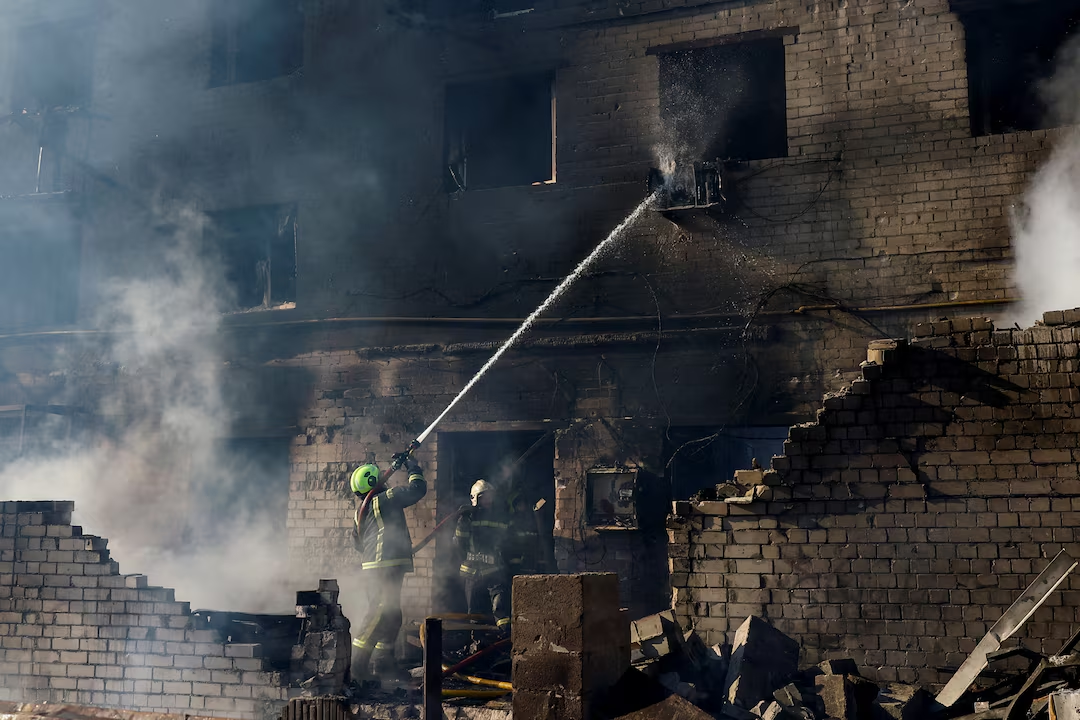




The Ukrainian capital has been struck by a massive, dual-wave Russian missile and drone bombardment, resulting in the deaths of at least 11 people and injuring 56 others across the metropolitan region. The heavy bombardment marks the second catastrophic aerial assault on Kyiv in less than a week, structurally targeting residential infrastructure and compounding the city’s worst civilian casualty toll of the year.
According to Tymur Tkachenko, head of the Kyiv City Military Administration, the coordinated overnight strike severely damaged more than 15 high-rise residential structures. Emergency search-and-rescue teams are actively tunneling through unstable concrete rubble, particularly in Kyiv’s historic Podilskyi district, where a residential high-rise suffered a direct kinetic impact. Local officials warn that the current death toll is expected to rise as clearing operations continue.
Russia carried out a massive air attack on Ukraine a day before the leaders of NATO countries are set to meet for their annual summit https://t.co/hRHlyT2HGc
— Bloomberg (@business) July 6, 2026
Technical Scale of the Aerial Incursion
The Ukrainian Air Force Command described the operation as one of the most dense saturation attacks documented in recent months, demonstrating a complex mix of cruise, ballistic, and loitering munitions designed to overwhelm localized air defenses:
-
The Attack Volume: Russian aerospace forces launched a total of 68 long-range missiles alongside 351 low-altitude attack drones.
-
Chronology of the Waves: Air raid sirens sounded nationwide as waves of detonations systematically rocked Kyiv over a span of several hours, with distinct impact clusters recorded at 1:40 AM, 2:10 AM, and 3:15 AM local time.
-
Collateral Infrastructure Damage: Debris and direct strikes crippled civilian quarters across four main city districts, forcing thousands of residents to seek emergency shelter in underground metro networks.
Outside the capital perimeter, provincial administrative centers reported one civilian fatality and 10 injuries resulting from falling interception fragments.
Geopolitical Timing and Stalled Frontlines
The timing of the bombardment carries profound geopolitical significance. In a national televised address delivered just hours before the missiles were unsealed, Ukrainian President Volodymyr Zelenskyy revealed that military intelligence had accurately predicted a major Russian strike explicitly timed to destabilize Western diplomatic resolve.
The attack coincides directly with the 250th anniversary of American independence and acts as an aggressive prelude to the high-stakes NATO Summit commencing tomorrow in Ankara, Turkey.
The escalating long-range air war underscores a broader, grinding strategic reality. U.S. and European defense officials note that the 1,200-kilometer frontline has effectively frozen over the past few months, with neither conventional army capable of executing decisive territorial breakthroughs. In response to the battlefield stalemate, both combatants have aggressively expanded deep-theater strikes:
-
The Ukrainian Strategy: Kyiv has systematically widened its deployment of long-range domestic drones, primarily targeting critical Russian energy infrastructure, oil refineries, and supply lines to choke Moscow’s logistical war machine.
-
The Crimson Blackout: Demonstrating this capability, a successful Ukrainian strike hit energy infrastructure near the strategic Black Sea port of Sevastopol in Russian-occupied Crimea on Monday, completely knocking out municipal electricity grids.
Upcoming Ankara Diplomatic Dynamic
The theater of conflict is slated to shift rapidly to the diplomatic arena in Turkey. President Zelenskyy is scheduled to travel directly to Ankara for a high-stakes, face-to-face meeting on Wednesday with U.S. President Donald Trump on the sidelines of the NATO summit.
The upcoming meeting follows a series of lengthy weekend phone calls placed by President Trump to both Zelenskyy and Russian President Vladimir Putin. White House officials briefing reporters under condition of anonymity confirmed that the Trump administration feels a severe “sense of urgency” to force a cessation of hostilities and break the ongoing military deadlock.
While Kyiv attempts to utilize the Ankara summit to lock in long-term Western defense production guarantees and integrated air-defense procurement, European allies remain braced for intense internal debates. President Trump is expected to use the Turkish summit to personally demand that European member states immediately accelerate defense spending quotas to take primary responsibility for continental security. Meanwhile, Moscow’s latest multi-missile barrage serves as a stark reminder of the immense kinetic leverage the Kremlin intends to maintain ahead of any future negotiated settlement.