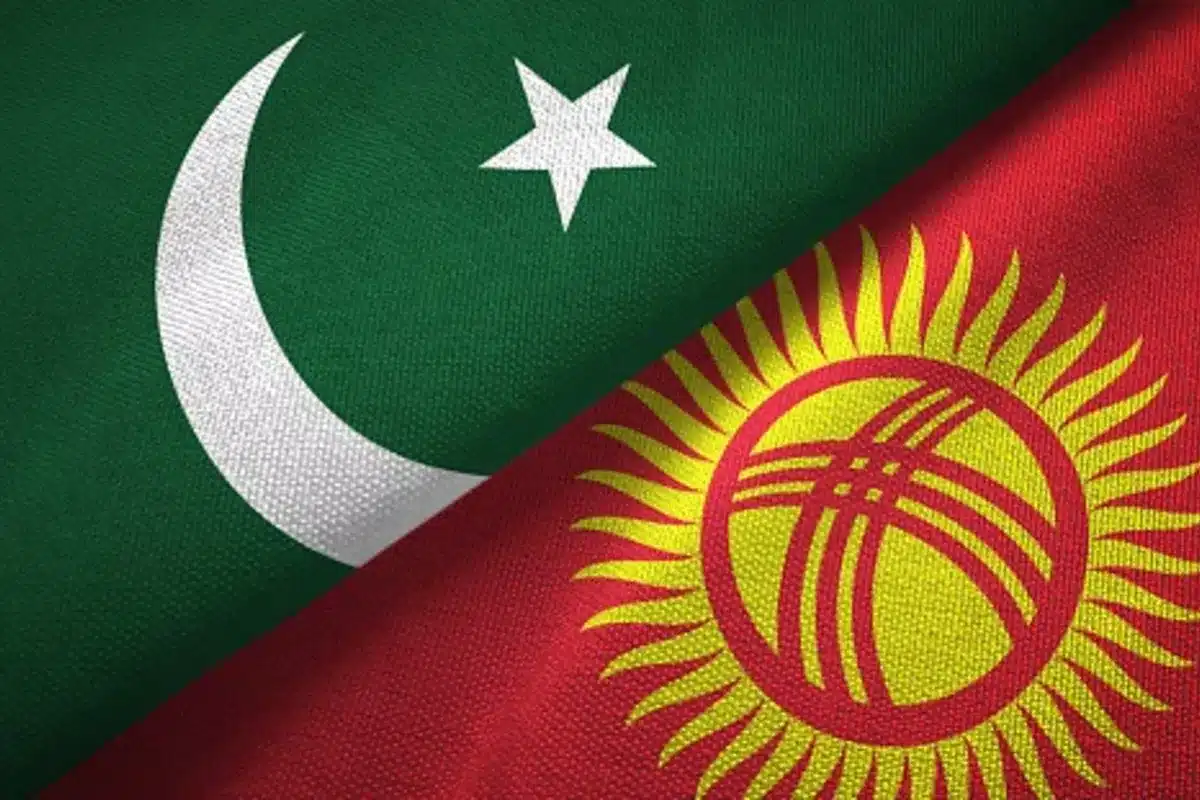

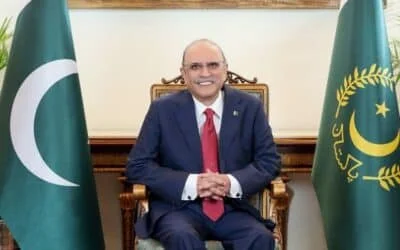


In a major diplomatic step forward for Pakistan’s “Vision Central Asia” policy, President Asif Ali Zardari and Kyrgyz President Sadyr Zhaparov issued a comprehensive joint statement charting an ambitious path toward an official strategic partnership.
The high-level bilateral talks, held during President Zardari’s official four-day state visit to the Kyrgyz Republic, culminated in an explicit roadmap aimed at cementing trans-regional transport infrastructure, maximizing economic integration, and expanding institutional cooperation.
Two sides express readiness to establish “a strategic partnership” with a focus on trade, economic and investment cooperation. https://t.co/XNICKFXgqm
— Dawn.com (@dawn_com) July 7, 2026
Expanding the Central-South Asian Economic Corridor
The two heads of state prioritized economic, trade, and investment cooperation, directing their respective ministries to convert existing memoranda into actionable business ventures. The core pillars of this expanded economic framework include:
-
Energy Integration (CASA-1000): Both leaders underscored the strategic importance of the CASA-1000 Project, highlighting it as a vital clean-energy link designed to transmit surplus hydropower from Central Asia to power-starved grids in South Asia.
-
Industrial Diversification: The leaders identified significant untapped potential for joint ventures across several key sectors, including mining, agriculture, textiles, light industries, and the rapidly growing halal market.
-
Pharmaceuticals and Healthcare: To facilitate smoother market access, both nations agreed to harmonize medical regulations and pursue collaborative ventures in manufacturing vaccines, biological products, and essential medicines.
Strategic Trans-Regional Logistics and Seaport Access
A major focus of the delegation-level talks centered on overcoming geographical barriers through robust transit, transport, and logistics networks.
President Zardari and President Zhaparov pledged to upgrade multimodal transport systems, establishing highly favorable conditions to significantly increase cargo volumes moving through international transit corridors. Crucially, the talks focused on the practical utilization of Pakistan’s deep-sea ports—including Gwadar and Karachi—to grant landlocked Kyrgyzstan and the broader Eurasian Economic Union (EAEU) direct maritime access to global shipping lanes.
Transnational Security and Geopolitical Recognition
On matters of regional stability, the competent authorities of both nations pledged to expand intelligence and security coordination to combat contemporary asymmetric threats, including terrorism, extremism, cybercrime, irregular migration, and narcotics trafficking.
The joint statement also reflected mutual diplomatic backing on the global stage:
-
Multilateral Support: President Zardari congratulated Kyrgyzstan on its historic election as a non-permanent member of the United Nations Security Council (UNSC) for the 2027–2028 term, vowing close coordination as Pakistan wraps up its own consecutive 2025–2026 UNSC term.
-
Lauding the Islamabad MoU: President Zhaparov highly commended Pakistan’s active, constructive diplomatic mediation in the Middle East conflict, specifically praising Pakistan’s pivotal role in facilitating the landmark “Islamabad MoU” between the United States and Iran. Both sides expressed firm optimism that the agreement will serve as the foundation for lasting regional peace.
Deepening Historic and Socio-Cultural Ties
Reflecting on the deep-rooted cultural ties between the two nations, President Zardari recalled his historic initial visit to the country alongside former Prime Minister Benazir Bhutto, noting that the two republics are bound by a shared faith, history, and the ancient heritage of the Silk Route.
To bring the peoples of both nations closer, the leaders committed to enhancing air connectivity and expanding youth, scientific, and medical public health exchanges. As a testament to this growing cultural proximity, Pakistan formally accepted Kyrgyzstan’s invitation to participate in the upcoming VI World Nomad Games, scheduled to take place in late summer.