




In a major development that could accelerate the finalization of the “Islamabad Memorandum of Understanding (MoU)”, the United Arab Emirates has engineered a quiet, multi-billion-dollar financial workaround with the Islamic Republic of Iran.
According to an exclusive investigative report by Reuters, citing four high-level regional and diplomatic sources, Abu Dhabi has agreed to unlock between $10 billion and $20 billion in commercial assets and frozen accounts. The extraordinary financial pivot is structured as a direct, transactional quid pro quo: a complete unfreezing of capital in exchange for an absolute halt to Iranian drone and ballistic missile attacks on the wealthy Gulf state.
While the UAE Ministry of Foreign Affairs has issued an aggressive, categorical denial of any capital flight, regional officials confirm that a first critical installment of $3 billion has already been cleared and delivered to Tehran.
1. Slicing the Tranches: The Cost of Commercial Survival
The scale of the secret arrangement exposes the immense toll the months-long conflict has taken on the UAE’s hyper-connected economic infrastructure:
-
The Disputed Figures: Two regional sources confirmed to Reuters a baseline agreement of $10 billion, while two alternative intelligence sources with direct knowledge of the text put the total financial package at a staggering $20 billion.
-
The First Liquidity Inflow: Multiple sources confirmed that a $3 billion opening tranche has already been processed through the banking system to verify the mechanism’s viability.
-
The Official Denial: Within hours of the leak, the UAE Foreign Ministry launched a aggressive counter-narrative, stating that the country “categorically denies reports circulating in some international media outlets regarding the transfer or conversion of any funds… no frozen Iranian funds have been released, transferred, or moved.”
2. Guest House Diplomacy: The Tahnoon-IRGC Track
The mechanics of the breakthrough were not hammered out in open multilateral settings, but through highly secretive intelligence pipelines in Abu Dhabi and Tehran.
-
The Miranshah Intercept: Behind-the-scenes negotiations quickened pace last week when a senior delegation from the Islamic Revolutionary Guard Corps (IRGC) quietly landed in Abu Dhabi. The generals were hosted directly at the private guest house of Sheikh Tahnoon bin Zayed Al Nahyan, the UAE’s powerful National Security Adviser and Deputy Ruler of Abu Dhabi.
-
The Return Verification: Following the initial intelligence-sharing sessions at Sheikh Tahnoon’s estate, a team of Emirati financial and diplomatic officials flew directly to Tehran to solidify the transaction ledger and map out the shipping/aviation safety guarantees.
CRITICAL ANALYSIS: THE “RED LINE” EXHAUST VALVE
The UAE’s multi-billion-dollar transaction with Tehran is a masterpiece of realpolitik that acts as a vital exhaust valve for the broader, Pakistan-mediated US-Iran peace negotiations.
The Plausible Deniability Equation
The deep contradiction between Reuters’ detailed leaks and the UAE Foreign Ministry’s categorical denial is an intentional, calculated diplomatic maneuver. This arrangement provides a brilliant geopolitical workaround that allows both Washington and Tehran to maintain their respective domestic “red lines” ahead of the European peace summit this weekend.
By funneling the money through Dubai’s complex banking network—where billions in Iranian deposits have been immobilized under secondary U.S. sanctions—the Trump administration can look the other way while maintaining Vice President JD Vance’s public position that “the Iranians are not receiving any cash” directly from American coffers. Iran can claim a massive financial victory to satisfy hardline clerics in Tehran, while the White House can insist it has conceded nothing upfront.
Saving the Dubai Hub Status
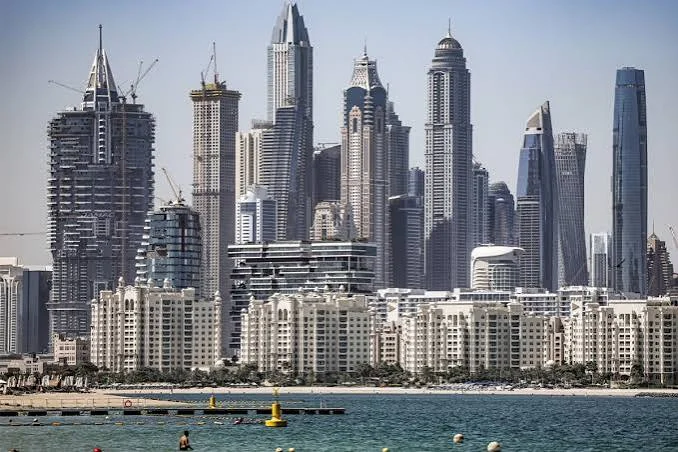
For Abu Dhabi, the decision to unlock up to $20 billion is a matter of absolute commercial survival, not ideological alignment. The initial weeks of the conflict shattered the carefully cultivated illusion of absolute security that underpins the UAE’s entire economic model. When Iranian suicide drones and cruise missiles struck critical infrastructure—including the May 4 attack on Fujairah port and fires near Dubai International Airport—it emptied luxury hotels and triggered an exodus of Western expatriates.
By paying this de-facto security premium, the UAE has successfully bought immunity. The fact that Iran has not launched a direct strike on Emirati soil since May 4—instead diverting its kinetic attention toward unhedged targets in Kuwait and Bahrain—proves that the “guest house diplomacy” executed by Sheikh Tahnoon has yielded an immediate, high-value dividend for Dubai’s real estate and aviation sectors.
The Contagion of Regional Bilateralism
The most alarming revelation within the intelligence brief is that Iran has already approached at least two other Gulf Arab countries to duplicate this exact transactional blueprint. This demonstrates that the unified Arab coalition the U.S. attempted to build is rapidly fracturing into localized, bilateral non-aggression pacts.
Wealthy Gulf states are realizing that Western military umbrellas cannot fully protect their exposed glass towers from saturation drone strikes. By weaponizing its asymmetric leverage, Tehran is successfully dismantling regional containment, systematically converting its military threats into massive, immediate liquidity injections before the final peace accord is even signed.
The Takeaway: The unfreezing of funds via Abu Dhabi is the real-world lubricant making the upcoming European summit possible. While official diplomats bicker over terms and issue public denials to appease domestic audiences, the intelligence chiefs have already recognized the ground reality: in modern asymmetric warfare, financial accommodation is often the only viable alternative to total commercial ruin.