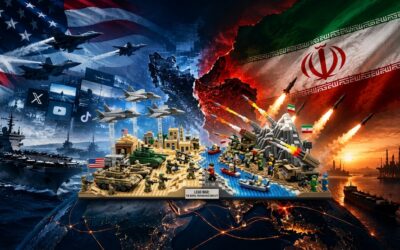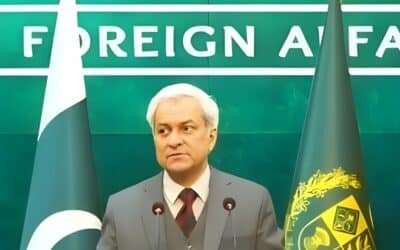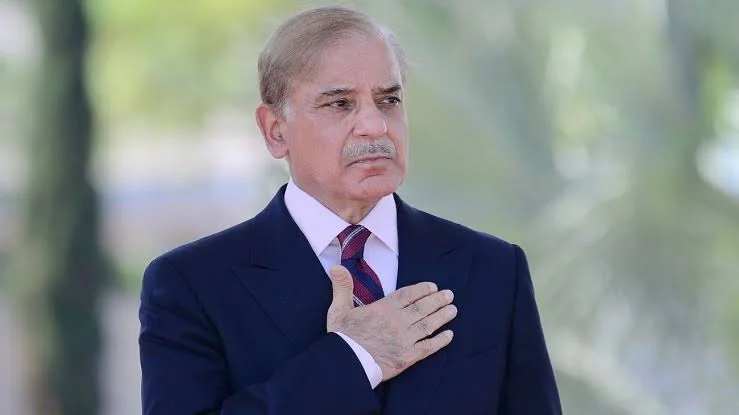





In a historic diplomatic confirmation that has fundamentally shifted the geopolitical landscape of the Middle East, Prime Minister Shehbaz Sharif announced on Friday that a “final agreed-upon” text has been achieved to permanently end the war between the United States and the Islamic Republic of Iran.
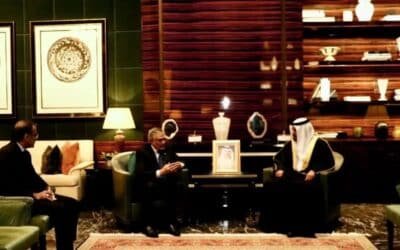
The breakthrough—codified by Iranian Foreign Minister Abbas Araghchi as the “Islamabad Memorandum of Understanding (MoU)”—serves as the culmination of intense backchannel mediation spearheaded by Pakistan and Qatar since the conflict ignited on February 28.
The announcement follows a dramatic 24-hour window in which U.S. President Donald Trump aborted a massive, multi-theater bombing campaign following direct communication with the highest levels of Iranian leadership, paving the way for an extraordinary weekend signing summit in Europe.
Amid ongoing intense mediation efforts by Pakistan, we are fully aware of incessant misinformation campaign being waged by those who want to sabotage the peace deal. Setting aside the noise, we can confirm that a final, agreed upon text of the peace deal has been reached and…
— Shehbaz Sharif (@CMShehbaz) June 12, 2026
1. Countering the “Sabotage” Narrative
With a definitive text finalized in writing, leaders from Washington, Islamabad, and Tehran launched a coordinated public relations blitz to control the narrative and suppress a wave of global speculation.
-
The Prime Minister’s Caution: Writing on X, PM Shehbaz Sharif confirmed Pakistan’s central role in finalizing the implementation phase, declaring: “Peace has never been this close as it is now.” However, the premier sharply cautioned against an “incessant misinformation campaign being waged by those who want to sabotage the peace deal.”
-
The Iranian Validation: Foreign Minister Abbas Araghchi echoed this sentiment, validating Pakistan’s diplomatic stewardship by formally naming the draft the “Islamabad MoU” and urging international media to halt destabilizing rumors.
2. The White House Framework: “Zero Cash” Upfront
Faced with immediate domestic backlash from congressional hawks, the Trump administration moved swiftly to clarify the rigid structural mechanics of the transaction.
-
Trump’s Pushback: On Truth Social, President Trump rejected leaked reports regarding lopsided concessions, asserting that the rumors had “nothing to do with the terms that were agreed to, in writing,” while warning Tehran that they must “get their act together, and fast.”
-
The Vance Doctrine: Vice President JD Vance—slated by the White House to potentially sign the accord in Europe this weekend—issued an explicit programmatic breakdown on X to dispel “fake information”:
“First, the Iranians are not receiving any cash, and no funds are being released for simply signing a deal or attending a meeting,” Vance wrote. “The deal is structured to ensure that the US and its allies’ concerns are prioritised, and that if the Islamic Republic of Iran meets its obligations, then economic benefits will flow to them and to the entire region.”
3. The Brink of Total War: From Apache Crash to Eleventh-Hour Pivot
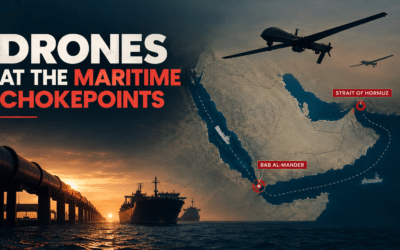
The path to the Islamabad MoU was nearly derailed on Wednesday night when a U.S. Apache attack helicopter went down near the strategic chokepoint of the Strait of Hormuz, instantly shattering the tenuous April ceasefire.
A violent, 24-hour kinetic exchange ensued, with Trump openly threatening to launch catastrophic strikes against Iran’s core defense assets and oil infrastructure. However, a multi-national diplomatic intervention—encompassing the United States, Israel, Saudi Arabia, the UAE, Qatar, Turkiye, Pakistan, Bahrain, Kuwait, Jordan, and Egypt—successfully averted the cliff edge, freezing the strikes in exchange for a finalized, written peace framework.
CRITICAL ANALYSIS: THE TRIUMPH OF THE ISLAMABAD CORRIDOR
The finalization of the Islamabad MoU represents one of the most remarkable turnarounds in modern diplomatic history, shifting the international paradigm from the brink of a catastrophic resource war to a structured peace matrix within a 48-hour window.
The Structural Genesis: Beyond the 21-Hour Deadlock
To understand the resilience of the Islamabad MoU, one must trace it back to the grueling, inconclusive 21-hour negotiation marathon hosted in Pakistan in April. While critics labeled those initial talks a failure, the current text proves that the structural parameters—including maritime security guarantees for the Strait of Hormuz, conditional sanctions relief, and verified enrichment caps—were meticulously mapped out during that session.
When Wednesday’s Apache crash threatened an uncontainable regional escalation, Pakistan and Qatar did not have to invent a peace framework; they simply had to activate the pre-negotiated “Islamabad draft” as an emergency exit ramp for both Trump and Ayatollah Mojtaba Khamenei.
The Strategic Leak Counter-Strategy
The aggressive, simultaneous Twitter and Truth Social interventions by PM Shehbaz, Trump, Vance, and Araghchi expose a secondary battlefront: the information war. A deal of this magnitude—implicitly requiring Israel’s baseline acquiescence and a conditional freeze on frozen oil revenues—faces immense resistance from entrenched defense sectors and regional spoilers.
By pre-emptively labeling critical press reports as an “incessant misinformation campaign” and explicitly ruling out “upfront cash transfers,” the Trump-Vance ticket is insulated against domestic political attacks ahead of the November midterm elections. The narrative has been successfully shifted from a “concession to Tehran” to a “structured, compliance-based transaction” that prioritizes American and allied security first.
Pakistan’s Elevated Position as a Global Balancer
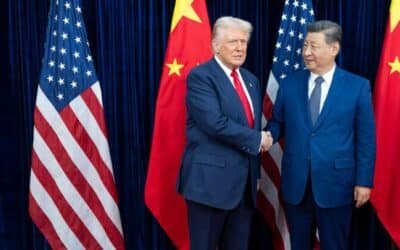
For Pakistan, the formal branding of the text as the “Islamabad Memorandum of Understanding” by the Iranian state is a monumental victory for its foreign policy architecture. It solidifies Pakistan’s status as a unique global balancer—one of the few nations capable of maintaining deep defense ties with Gulf partners and China, possessing a trusted channel to Tehran, and commanding a highly functional diplomatic ear in Trump’s White House.
By anchoring this multi-state transaction, Islamabad has elevated its soft power status from a regional actor to an indispensable guarantor of global maritime commerce and international food security.
The Takeaway: The Islamabad MoU is an intricately engineered compromise born under extreme military duress. While Vice President JD Vance prepares to head to Europe to sign the text, the real work begins in the implementation phase. The deal is deliberately built on verification rather than trust; if the upcoming European summit succeeds, it will rewrite the security architecture of the Middle East, proving that complex, multipolar diplomacy can still triumph over raw brinkmanship.